-
Use Cases
-
Resources
-
Pricing
Sony is a Japanese multinational conglomerate founded in 1946 by Masaru Ibuka and Akio Morita in Tokyo. Originally named Tokyo Tsushin Kogyo (Tokyo Telecommunications Engineering Corporation), the company pioneered iconic products such as the transistor radio, the Trinitron television, the Walkman, the PlayStation console, and the CD. Over the decades, Sony expanded from consumer electronics into music, movies, financial services, and gaming, becoming one of the world's most influential technology and entertainment companies. More Less
Sep 1945
% complete
In September 1945, after the end of World War II, Masaru Ibuka started a radio repair shop in the bomb-damaged Shirokiya department store building in the Nihonbashi district of Tokyo.
Image source: Sony
May 7, 1946
% complete
The next year, Ibuka was joined by his wartime research colleague Akio Morita, and on 7 May 1946 they founded a company called Tokyo Tsushin Kogyo K.K., marking the beginning of Sony's history as a Japanese multinational conglomerate dating back to 1946.
1950 - 2000
% complete
Sony played a significant role in the tech industry in the second half of the 20th century alongside Hewlett-Packard and IBM.
1958
% complete
Following its first success in the American consumer market, Tokyo Tsushin Kogyo changed its name to Sony in 1958 as people outside Japan struggled to pronounce the original name.
1960
% complete
Sony established Sony Corporation of America in 1960, the company's first subsidiary in America.
Image source: Sony Corporation of America
1970 - 2000
% complete
Sony played a major role in the development of Japan as a powerful exporter during the late 20th century.
2006
% complete
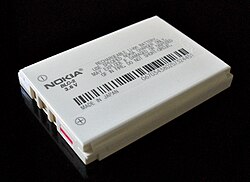
Sony had been the leader in the rechargeable battery industry until a massive defective battery scandal occurred in 2006, ending its dominance in that market.
Image source: Lithium-ion battery
Dec 2006
% complete
Sony's headquarters moved to Minato, Tokyo from Shinagawa, Tokyo around the end of 2006.
1954
% complete
Although American companies Regency Electronics and Texas Instruments built the first transistor radio as a joint venture in 1954, it would be Ibuka's company that made them commercially successful for the first time.
Image source: Transistor radio
1955 - 1968
% complete
By the mid-1950s, American teens had begun buying portable transistor radios in huge numbers, helping to propel the fledgling industry from an estimated 100,000 units in 1955 to 5,000,000 units by the end of 1968.
Aug 1955
% complete
In August 1955, Tokyo Tsushin Kogyo released the Sony TR-55, Japan's first commercially produced transistor radio.
Image source: TR-55
May 1956
% complete
In May 1956, the company released the TR-6, which featured an innovative slim design and sound quality capable of rivaling portable tube radios.
1957
% complete
In 1957, Tokyo Tsushin Kogyo came out with the TR-63 model, then the smallest (112 × 71 × 32 mm) transistor radio in commercial production.
1957
% complete
The TR-63 of 1957 cracked open the U.S. market and launched the new industry of consumer microelectronics.
1961
% complete
In 1961, Sony launched the world's first compact transistor VTR, the PV-100.
1963
% complete
Following the success of the PV-100 compact transistor VTR, this led to the official launch of the VP-1100 two years later.
1967
% complete
Sony also launched the world's first integrated circuit radio, the ICR-100, in 1967.
1968
% complete
In 1968, Sony launched the legendary color television set, the Trinitron.
1968 - 2006
% complete
The Trinitron was the reason that Sony had been the world's largest TV manufacturer in terms of annual revenue until 2006.
1969
% complete
In 1969, Sony launched the Sony TC-50, a compact cassette recorder.
1973
% complete
1975
% complete
In 1975, Sony launched the Betamax, which took part and lost in the video format war.
Image source: Betamax
1979
% complete
1981
% complete
The year 1981 is considered a starting point of the Digital Revolution with Sony launching the world's first Compact Disc player, the Sony CDP-101, with the Compact Disc itself being a new data storage format co-developed by Sony and Philips.
Image source: Sony CDP-101
1981
% complete
The Sony Mavica, released in 1981, is a prototype of the world's first commercial electronic still camera.
Image source: Sony Mavica
1991
% complete
In 1991, Sony released the first commercial lithium-ion battery jointly with Asahi Kasei and had been the leader in the rechargeable battery industry until a massive defective battery scandal occurred in 2006.
1998
% complete
Sony introduced Memory Stick, a flash memory storage format, in 1998, a year earlier than the announcement of the SD card.
Image source: Memory Stick
Jun 2006
% complete
In June 2006, Sony released the Blu-ray Disc format, a high-definition optical disc format developed by the company in association with the Blu-ray Disc Association, of which Sony is a member alongside Philips, Panasonic and LG Electronics.
Image source: Blu-ray
1983
% complete
In 1983, Sony Corporation began selling the Hit Bit product line for the MSX, which included computers, and also published video games for the system — its first entry into game publishing. It sold well in Japan, South America, Spain (through Sony Spain) and Europe, but was never released in North America.
Image source: MSX
1983 - 1991
% complete
Sony's genesis into video game publishing was a predecessor to Sony Music Entertainment Japan (formerly CBS Sony Group), which later turned out Famicom games and evolved into Sony Computer Entertainment (now Sony Interactive Entertainment), and CSG Imagesoft, which became Sony Electronic Publishing with Sony Imagesoft as one of its labels in 1991, later evolving into Sony Computer Entertainment America and Europe (now part of Sony Interactive Entertainment).
Image source: Sony Interactive Entertainment
Or browse the full history timeline directory, with more than 2,000 topics.
This History of Sony timeline was generated with the help of AI, using information found on the internet.
We work hard to keep these timelines accurate, but mistakes do get through. If you spot one, email us at [email protected] and we'll fix it for future visitors.
Generate yours with AI or build it from scratch, for free.
Export your timeline, add your own events, edit or remove AI-generated events, and much more
No credit card required.
Cancel anytime.
Cancel anytime.
You can create an unlimited number of timelines with up to 10 events on each one, customize how they look, export them to PDF, PNG, PowerPoint, CSV, and Excel, and share them with a link. Paid plans raise the event limit and add features like spreadsheet imports and collaborators.
Yes. You can cancel your subscription from your account page at any time, and you will not be charged again. Your subscription stays active for the rest of the period you already paid for.
Yes. We will email you a reminder before the annual renewal, and we will also email you a receipt.
Yes. You can email us within 15 days of any payment, and we will issue you a full refund.
Check out our pricing docs or send us an email anytime: [email protected].