-
Use Cases
-
Resources
-
Pricing
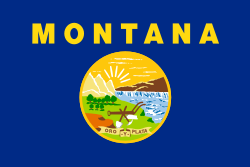
The history of Montana spans thousands of years, beginning with Indigenous peoples such as the Crow, Blackfeet, and Salish. European exploration began with the Lewis and Clark Expedition in 1805, followed by the fur trade, gold rushes of the 1860s, and rapid settlement driven by mining and ranching. Montana became the 41st U.S. state on November 8, 1889, and its economy later diversified into agriculture, timber, energy, and tourism centered on natural treasures like Glacier and Yellowstone National Parks. More Less
Jul 1805 - Sep 1806
% complete
The Corps of Discovery, led by Meriwether Lewis and William Clark, traversed Montana twice during its journey to the Pacific and back. The expedition navigated the Missouri River, crossed the daunting Bitterroot Range with the help of Sacagawea, and documented the geography, wildlife, and Native nations of the region.
Image source: Lewis and Clark Expedition
Nov 1807
% complete
Spanish-American fur trader Manuel Lisa built Fort Raymond at the confluence of the Yellowstone and Bighorn rivers, establishing the first permanent Euro-American trading post in what would become Montana. The fort anchored the Upper Missouri fur trade for several years.
Image source: Manuel Lisa
1824
% complete
American and British fur companies intensified beaver trapping across Montana's streams and mountains during the 1820s. Mountain men such as Jedediah Smith and Jim Bridger worked the region, and trading posts like Fort Union became hubs of commerce between trappers and Native peoples.
Image source: Fur trade in Montana
1841
% complete
Jesuit missionary Pierre-Jean De Smet established St. Mary's Mission near present-day Stevensville among the Bitterroot Salish (Flathead) people. It was the first permanent Catholic mission in the Northwest and marked the beginning of sustained missionary activity in Montana.
Image source: Pierre-Jean De Smet
1846
% complete
Established by traders Alexander Culbertson and James A. Kennerly, Fort Benton grew from a fur trading post into the world's furthest inland port. Steamboats from St. Louis made it the gateway to the Northwest, fueling commerce and settlement in the region for decades.
Image source: Fort Benton, Montana
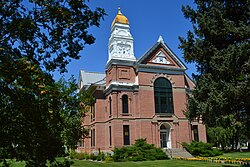
Jul 1862
% complete
John White's discovery of gold at Grasshopper Creek triggered Montana's first major gold rush. Thousands of prospectors flooded into the area, giving rise to the boomtown of Bannack, which became the first territorial capital of Montana.
Image source: Bannack, Montana
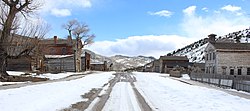
May 26, 1863
% complete
One of the richest placer gold deposits ever found was struck in Alder Gulch, spawning the booming towns of Virginia City and Nevada City. Within months tens of thousands of miners arrived, making it one of the largest gold camps in North America.
Image source: Virginia City, Montana
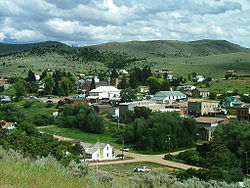
1881
% complete
Marcus Daly purchased the Anaconda silver mine near Butte, which proved to sit atop one of the world's greatest copper deposits. With electrification driving copper demand, Daly and rivals like William A. Clark turned Butte into a booming mining city known as 'the Richest Hill on Earth.'
Image source: Anaconda Copper
Sep 8, 1883
% complete
The Northern Pacific Railroad drove its last spike near Gold Creek, Montana, completing the second transcontinental railroad. Rail access transformed Montana's economy, enabling large-scale mining, cattle ranching, wheat farming, and settlement across the territory.
Image source: Northern Pacific Railway
1917
% complete
Amid wartime conditions, miners in Butte and metalworkers across Montana launched major strikes demanding better pay and safety following the Speculator Mine disaster, which killed 168 men. The labor unrest prompted harsh crackdowns, including the lynching of union organizer Frank Little.
Image source: Butte, Montana
Jun 8, 1917
% complete
A cable fire in the Granite Mountain/Speculator Mine trapped hundreds of men underground; 168 died in the worst hard-rock mining disaster in American history up to that time. The tragedy sparked massive protests and strikes in Butte and reshaped mining safety regulation.
Image source: Speculator Mine disaster
1983
% complete
Falling copper prices forced Atlantic Richfield (which had absorbed Anaconda) to shut down Butte's remaining underground mines, ending a century of hard-rock mining there. The abandoned Berkeley Pit began filling with acidic water, becoming one of the largest Superfund sites in America.
Image source: Berkeley Pit
2008 - 2015
% complete
Hydraulic fracturing in the Bakken formation beneath the Williston Basin triggered an energy boom around Sidney and other eastern Montana communities. Rapid growth brought jobs, infrastructure strain, and environmental concerns before prices fell and activity slowed after 2015.
Image source: Williston Basin
Jan 1864
% complete
Responding to rampant lawlessness and road agent robberies during the gold rush, citizen vigilance committees hanged Sheriff Henry Plummer and members of his alleged gang of road agents. The vigilante movement became legendary in Montana history, though modern historians debate whether Plummer truly led the gang.
Image source: Henry Plummer
May 26, 1864
% complete
President Abraham Lincoln signed the act creating Montana Territory out of portions of Idaho and Dakota territories, with Sidney Edgerton serving as its first governor. The name derived from the Spanish word 'montaña,' meaning mountain, reflecting the region's rugged landscape.
Image source: Montana Territory
Nov 8, 1889
% complete
President Benjamin Harrison proclaimed Montana the 41st state after voters ratified its constitution. Helena replaced Virginia City as the capital, and Joseph Toole was elected the new state's first governor as Montana entered the Union amid rapid economic growth.
Image source: History of Montana
Jun 25, 1876 - Jun 26, 1876
% complete
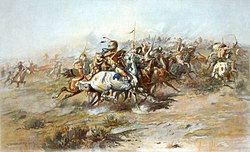
Lakota, Northern Cheyenne, and Arapaho forces led by Sitting Bull and Crazy Horse decisively defeated Lieutenant Colonel George Armstrong Custer's 7th Cavalry along the Little Bighorn River in southeastern Montana. Custer and over 260 of his men were killed in one of the most famous battles of the Great Sioux War.
Image source: Battle of the Little Bighorn
Oct 5, 1877
% complete
After a 1,170-mile fighting retreat toward Canada, Chief Joseph's band of Nez Perce was intercepted by U.S. Army forces in northern Montana. Following a siege, Joseph famously surrendered, delivering his poignant speech declaring he would 'fight no more forever.'
Image source: Battle of Bear Paw
1882
% complete
Under pressure from expanding railroads and settlers, the Crow Nation ceded millions of acres of its reservation in south-central Montana through successive agreements. The reductions dramatically shrank tribal lands, part of a broader pattern of dispossession across the territory.
Image source: Crow Indian Reservation
1996
% complete
The Confederated Salish and Kootenai Tribes assumed management of the National Bison Range on their reservation in western Montana and later co-managed it with the federal government. In 2020, Congress transferred the range fully into trust ownership, returning stewardship of the refuge and its bison herd to the tribes.
Image source: CSKT Bison Range
Dec 2019
% complete
After more than 150 years of effort and decades of petitions, the Little Shell Tribe of Chippewa Indians of Montana received formal federal recognition. The landless tribe, descended from Ojibwe who migrated west, finally gained government-to-government status with the United States.
1909 - 1920
% complete
Spurred by the Enlarged Homestead Act, promotional railroads, and wet years, hundreds of thousands of homesteaders poured into eastern Montana to claim 320-acre plots. The population boom collapsed when drought and depression struck in the 1920s, emptying many rural counties.
Image source: Homestead Acts
May 11, 1910
% complete
President William Howard Taft signed legislation creating Glacier National Park, preserving over a million acres of spectacular peaks, glaciers, and alpine lakes in northwestern Montana. The park became a centerpiece of tourism and conservation in the American West.
Image source: Glacier National Park (U.S.)
Nov 7, 1916
% complete
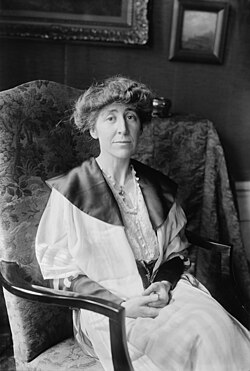
Four years before national women's suffrage, Montanans elected Jeannette Rankin to the U.S. House of Representatives, making her the first woman ever seated in Congress. A committed pacifist, she voted against U.S. entry into both World War I and World War II.
Image source: Jeannette Rankin
1919 - 1930
% complete
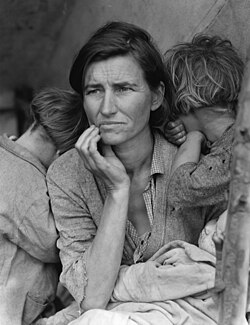
Years of drought, plummeting crop prices, and bank failures ravaged Montana's farm economy beginning in 1919. Tens of thousands left the state, banks closed across the plains, and Montana suffered some of the hardest economic times of any state during the interwar period.
Image source: Great Depression in the United States
1933 - 1940
% complete
As a flagship Public Works Administration project, thousands of workers built the enormous earthen Fort Peck Dam on the Missouri River, the largest hydraulic-fill dam in the world. The project employed over 10,000 people and created the town of Wheeler and the Fort Peck Lake reservoir.
Image source: Fort Peck Dam
Jul 15, 1933
% complete
After more than a decade of difficult construction, the Going-to-the-Sun Road opened, crossing the Continental Divide at Logan Pass. It was the first road designed specifically for automobile sightseeing in a national park and is now a National Historic Landmark.
Image source: Going-to-the-Sun Road
Dec 7, 1941 - Sep 2, 1945
% complete
Roughly one-tenth of Montana's population served in the armed forces during World War II — one of the highest per-capita rates in the nation. The state also contributed metals from Butte's mines, agricultural products, and prisoner-of-war and internment camps, including one holding Japanese Americans at Fort Missoula.
Image source: Montana World War II Army Airfields
2020
% complete
Driven by remote work migration and lifestyle appeal, Montana ranked among the nation's fastest-growing states following the 2020 census. Rapid growth in Bozeman, Missoula, and the Flathead Valley brought economic vitality but also rising housing costs and debates over land use and conservation.
Image source: Montana
Or browse the full history timeline directory, with more than 2,000 topics.
This History of Montana timeline was generated with the help of AI, using information found on the internet.
We work hard to keep these timelines accurate, but mistakes do get through. If you spot one, email us at [email protected] and we'll fix it for future visitors.
Generate yours with AI or build it from scratch, for free.
Export your timeline, add your own events, edit or remove AI-generated events, and much more
No credit card required.
Cancel anytime.
Cancel anytime.
You can create an unlimited number of timelines with up to 10 events on each one, customize how they look, export them to PDF, PNG, PowerPoint, CSV, and Excel, and share them with a link. Paid plans raise the event limit and add features like spreadsheet imports and collaborators.
Yes. You can cancel your subscription from your account page at any time, and you will not be charged again. Your subscription stays active for the rest of the period you already paid for.
Yes. We will email you a reminder before the annual renewal, and we will also email you a receipt.
Yes. You can email us within 15 days of any payment, and we will issue you a full refund.
Check out our pricing docs or send us an email anytime: [email protected].