-
Use Cases
-
Resources
-
Pricing
The history of Nevada spans thousands of years, beginning with Indigenous peoples such as the Paiute, Shoshone, and Washoe. Spanish and Mexican influence gave way to American settlement following the 1848 Mexican-American War. The discovery of the Comstock Lode in 1859 triggered a silver mining boom that accelerated Nevada's path to statehood on October 31, 1864, during the Civil War—earning it the nickname 'Battle Born State.' In the 20th century, legalized gambling (1931) and the construction of Hoover Dam transformed Las Vegas into a world-famous entertainment destination, while Reno developed alongside it. Nevada remains the fastest-growing state in much of modern U.S. history. More Less
1000
% complete
For centuries before European arrival, the Shoshone, Northern and Southern Paiute, and Washoe peoples lived throughout the Great Basin region, developing lifeways adapted to the harsh desert environment through hunting, gathering, and seasonal migration.
Image source: Indigenous peoples of the Great Basin
1829
% complete
Mexican scout Rafael Rivera became the first person of European ancestry to venture into the Las Vegas Valley while scouting a route along the Old Spanish Trail, opening the area to future trade and exploration.
Image source: Rafael Rivera
1844
% complete
Explorer John C. Frémont mapped much of the Great Basin during his expeditions, including the Carson River route. His widely published reports encouraged American settlement of the West and brought the Nevada region to national attention.
Image source: John C. Frémont
Feb 2, 1848
% complete
Following the Mexican–American War, the Treaty of Guadalupe Hidalgo ceded vast territories, including present-day Nevada, from Mexico to the United States, transferring control of the region to American governance.
Image source: Treaty of Guadalupe Hidalgo
1851
% complete
Mormon pioneers built a trading post at Mormon Station near present-day Genoa, establishing the first permanent non-native settlement in Nevada and serving emigrants traveling the California Trail.
Image source: Mormon Station State Historic Park
Jun 14, 1855
% complete
A group of Mormon missionaries led by William Bringhurst constructed an adobe fort at the Las Vegas Springs to convert local Native Americans and support travel between Salt Lake City and San Bernardino. The settlement was abandoned within a few years.
Image source: Old Las Vegas Mormon Fort State Historic Park
Mar 2, 1861
% complete
With tensions between Mormon leaders and federal officials rising, Congress created the Nevada Territory out of western Utah Territory, with James W. Nye appointed as its first governor as the Civil War began.
Image source: Nevada Territory
1864
% complete
Named after frontiersman Kit Carson, Carson City was selected as Nevada's territorial and later state capital, cementing its role as the center of government even as mining towns dominated the economy.
Image source: Carson City, Nevada
Oct 31, 1864
% complete
President Abraham Lincoln proclaimed Nevada a state just days before his reelection, partly to bolster Union support during the Civil War. Its silver wealth earned it the nickname 'the Silver State.'
Image source: Nevada
1859
% complete
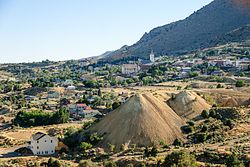
Prospectors Patrick McLaughlin and Peter O'Riley struck rich silver ore on the Comstock Lode in western Nevada, triggering one of the greatest mining rushes in American history and transforming Virginia City into a booming metropolis.
Image source: Comstock Lode
1860 - 1880
% complete
Virginia City grew explosively around the Comstock mines, attracting miners, speculators, and entrepreneurs. At its height, it was one of the most important industrial cities west of Denver, producing hundreds of millions of dollars in gold and silver.
Image source: Virginia City, Nevada
May 10, 1869
% complete
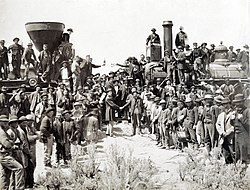
The Central Pacific Railroad drove its tracks across northern Nevada, connecting Reno, Wadsworth, and Elko to the rest of the nation. The railroad revolutionized transportation of ore, supplies, and people throughout the state.
Image source: First transcontinental railroad
1870
% complete
The Virginia & Truckee Railroad connected the Comstock mines to processing mills in Carson City, becoming one of the richest short-line railroads in America and symbolizing the industrial might of Nevada mining.
Image source: Virginia and Truckee Railroad
1873
% complete
The 'Big Bonanza' discovered by the Consolidated Virginia mine yielded enormous quantities of high-grade silver ore, making millionaires like John W. Mackay and extending the Comstock boom for another decade.
Image source: Bonanza
1900
% complete
Jim Butler's discovery of silver-rich ore at Tonopah sparked a new mining boom that revived Nevada's stagnant economy after decades of decline following the Comstock bust.
Image source: Tonopah, Nevada
1902 - 1910
% complete
The Goldfield gold rush drew thousands of prospectors and investors, briefly making Goldfield the largest city in Nevada. Labor unrest culminated in a violent 1907 miners' strike, and fires and declining ore grades ended its prosperity.
Image source: Goldfield, Nevada
1927
% complete
Nevada shortened its divorce waiting period to six months, then further reduced it, spawning a thriving 'divorce industry' that drew celebrities and ordinary Americans alike and complemented the growing gaming business.
Image source: Medical tourism
Mar 19, 1931
% complete
Hoping to lift the state out of Depression-era hardship, Nevada legalized wide-open gambling, paving the way for the casino industry that would come to define the state's economy and identity.
Image source: Gambling in the United States
Apr 20, 1931 - Mar 1, 1936
% complete
Thousands of workers descended on Black Canyon to build Hoover Dam, providing flood control, irrigation, and hydroelectric power. The project supplied jobs during the Great Depression and fueled growth in nearby Las Vegas.
Image source: Hoover Dam
Dec 26, 1946
% complete
Mobster Bugsy Siegel opened the lavish Flamingo Hotel on the Los Angeles highway south of downtown, pioneering the luxury resort casino model and helping transform the Las Vegas Strip into a world-famous destination.
Image source: Flamingo Las Vegas
Jan 27, 1951
% complete
The United States began atmospheric nuclear weapons testing at the Nevada Test Site northwest of Las Vegas. Mushroom clouds were visible from the city, and testing continued for four decades, leaving a lasting environmental and cultural legacy.
Image source: Nevada Test Site
1964
% complete
The hit film Viva Las Vegas, starring Elvis Presley and Ann-Margret, glamorized Las Vegas entertainment and cemented the city's reputation as the entertainment capital of the world.
Image source: Viva Las Vegas
1967 - 1970
% complete
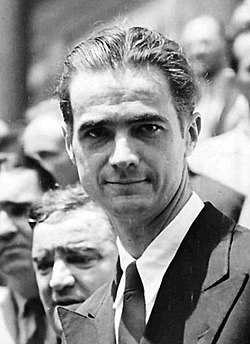
Reclusive billionaire Howard Hughes bought the Desert Inn hotel-casino and went on to acquire multiple Strip properties, bringing legitimate corporate investment into a gaming industry previously dominated by organized crime.
Image source: Howard Hughes
1969
% complete
Nevada passed legislation allowing publicly traded corporations to own casinos, opening the door for Wall Street investment and the rise of the modern mega-resort era on the Las Vegas Strip.
Image source: History of Las Vegas
Dec 5, 1973
% complete
Kirk Kerkorian's MGM Grand Hotel opened in Las Vegas with over 2,000 rooms, the largest hotel in the world at the time, signaling the shift toward enormous themed resort complexes.
1987
% complete
Congress designated Yucca Mountain in Nevada as the sole candidate site for storing the nation's spent nuclear fuel. The proposal faced fierce opposition from Nevadans and remains politically contested and unbuilt.
Image source: Yucca Mountain nuclear waste repository
Nov 22, 1989
% complete
Steve Wynn's Mirage introduced volcano shows, dolphin habitats, and family-friendly spectacle, sparking a construction boom of billion-dollar resorts that reshaped the Las Vegas Strip in the 1990s.
Image source: The Mirage
Dec 1995
% complete
Downtown Las Vegas unveiled the Fremont Street Experience, a pedestrian mall covered by a massive LED canopy displaying light shows, helping revive the historic casino corridor against competition from the Strip.
Image source: Fremont Street Experience
Jul 2016
% complete
Tesla opened its massive battery factory east of Reno, one of the largest buildings in the world, marking a significant diversification of Nevada's economy beyond gaming, tourism, and mining into advanced manufacturing.
Image source: Gigafactory Nevada
Or browse the full history timeline directory, with more than 2,000 topics.
This History of Nevada timeline was generated with the help of AI, using information found on the internet.
We work hard to keep these timelines accurate, but mistakes do get through. If you spot one, email us at [email protected] and we'll fix it for future visitors.
Generate yours with AI or build it from scratch, for free.
Export your timeline, add your own events, edit or remove AI-generated events, and much more
No credit card required.
Cancel anytime.
Cancel anytime.
You can create an unlimited number of timelines with up to 10 events on each one, customize how they look, export them to PDF, PNG, PowerPoint, CSV, and Excel, and share them with a link. Paid plans raise the event limit and add features like spreadsheet imports and collaborators.
Yes. You can cancel your subscription from your account page at any time, and you will not be charged again. Your subscription stays active for the rest of the period you already paid for.
Yes. We will email you a reminder before the annual renewal, and we will also email you a receipt.
Yes. You can email us within 15 days of any payment, and we will issue you a full refund.
Check out our pricing docs or send us an email anytime: [email protected].