-
Use Cases
-
Resources
-
Pricing
1440
% complete
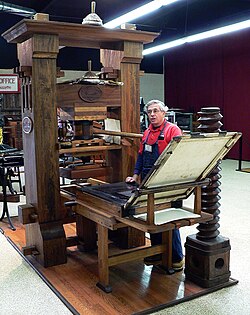
Johannes Gutenberg's invention of the movable type printing press around 1440 revolutionized the dissemination of information. It made mass production of printed materials possible, laying the technological foundation for the eventual rise of newspapers.
Image source: Printing press
1502
% complete
In the early 16th century, printed news pamphlets known as 'newssheets' or 'newsbooks' began circulating in Europe, reporting events like battles and royal decrees. These irregular publications bridged the gap between handwritten newsletters and regular newspapers.
Image source: Newsbook
Sep 1605
% complete
Johann Carolus's 'Relation aller Fürnemmen und gedenckwürdigen Historien', published in Strasbourg in September 1605, is widely recognized as the world's first weekly newspaper, marking the birth of regularly scheduled news publication.
Image source: 1605
1621
% complete
The Corante, first published in London in September 1621, was the earliest English-language newspaper. It translated foreign news for English readers and set the stage for the growth of the British press.
Nov 1665
% complete
Founded during the Great Plague when the court moved to Oxford, the Oxford Gazette (later the London Gazette) became the first official government newspaper of England, establishing a model of state-sanctioned journalism that continues today.
Image source: The London Gazette
Sep 25, 1690
% complete
Benjamin Harris published the first multi-page newspaper in British North America in Boston. It was suppressed after just one issue because it lacked a license and contained critical commentary, but it marked the beginning of American newspaper history.
Image source: Publick Occurrences Both Forreign and Domestick
Mar 11, 1702
% complete
The Daily Courant, launched in London by Elizabeth Mallet, was England's first daily newspaper. Its success demonstrated that there was sufficient demand for daily news, transforming the pace of journalism.
Image source: The Daily Courant
Apr 24, 1704
% complete
Published by postmaster John Campbell, the Boston News-Letter was the first continuously published newspaper in colonial America, providing shipping lists, political news, and advertisements for over seven decades.
Image source: The Boston News-Letter
Aug 4, 1735
% complete
The acquittal of publisher John Peter Zenger on charges of seditious libel established an important precedent for freedom of the press in America, arguing that truth should be a defense against libel charges.
Image source: John Peter Zenger
Sep 21, 1783
% complete
Following the Revolutionary War, the Pennsylvania Evening Post converted from tri-weekly to daily publication, becoming the first daily newspaper in the United States and signaling the growing appetite for frequent news.
Image source: The Pennsylvania Evening Post
Dec 15, 1791
% complete
Ratified as part of the Bill of Rights, the First Amendment prohibited Congress from abridging freedom of speech or of the press, providing constitutional protection for newspapers and journalists in the United States.
Image source: First Amendment to the United States Constitution
1814
% complete
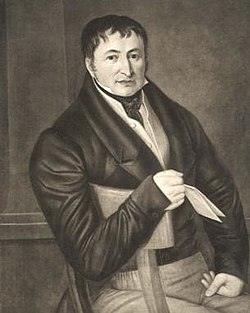
Koenig's steam-driven cylinder press dramatically increased printing speed, allowing The Times of London to print over 1,000 sheets per hour. This innovation enabled newspapers to reach mass audiences at lower costs.
Image source: Friedrich Koenig
Sep 3, 1833
% complete
Benjamin Day's New York Sun sold for just one cent, making news affordable for working-class readers. Funded largely by advertising rather than subscriptions, it pioneered the mass-market business model that transformed American journalism.
Image source: The Sun (New York City)
1844
% complete
Samuel Morse's telegraph line between Washington and Baltimore allowed news to travel almost instantaneously across distances, fundamentally changing how quickly newspapers could report distant events and leading to the creation of wire services.
Image source: Telegraphy
May 1846
% complete
Five New York newspapers formed the Associated Press to share the cost of telegraphing news from the Mexican-American War front. It became the world's largest news agency, supplying content to thousands of outlets.
Image source: Associated Press
1863
% complete
William Bullock's rotary press printed on continuous rolls of paper at unprecedented speeds, allowing large metropolitan dailies to print tens of thousands of copies per hour and fueling the expansion of mass-circulation journalism.
Image source: Rotary printing press
1883
% complete
Joseph Pulitzer's acquisition of the New York World began an era of sensationalist, competition-driven journalism. William Randolph Hearst's entry into New York publishing intensified the rivalry, characterized by bold headlines, illustrations, and sensational crime coverage.
Image source: Yellow journalism
1886
% complete
Ottmar Mergenthaler's Linotype machine allowed operators to cast entire lines of metal type mechanically, vastly speeding up newspaper production and enabling larger editions with more pages at reduced cost.
Image source: Linotype machine
Oct 25, 1896
% complete
Adolph Ochs purchased the struggling New York Times and introduced its famous slogan, committing the paper to serious, comprehensive journalism. Under his leadership, the Times became one of the most respected newspapers in the world.
1902 - 1912
% complete
Investigative journalists like Ida Tarbell and Lincoln Steffens exposed corporate monopolies, political corruption, and social injustices in magazines and newspapers, spurring major reforms including antitrust actions and food safety laws.
Image source: Muckraker
Jun 1917
% complete
Established through Joseph Pulitzer's bequest to Columbia University, the Pulitzer Prizes became journalism's most prestigious awards, recognizing excellence in reporting, editorial writing, photography, and public service.
Image source: Pulitzer Prize
Nov 1920
% complete
KDKA in Pittsburgh broadcast the results of the Harding-Cox presidential election, marking the start of commercial radio in the US. Radio offered immediate news delivery, forcing newspapers to adapt with deeper analysis and features.
Image source: History of radio
Aug 7, 1933
% complete
Founded by journalist Heywood Broun during the Depression, the Newspaper Guild organized reporters and other newspaper workers to fight for better wages, job security, and professional standards in the industry.
Image source: NewsGuild-CWA
1950
% complete
As television sets spread rapidly through American homes, TV newscasts offered visual, immediate coverage of major events. Newspapers saw declining influence as the primary source of breaking news but retained strength in analysis and local coverage.
Jun 17, 1972 - Aug 9, 1974
% complete
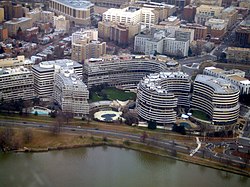
Bob Woodward and Carl Bernstein of The Washington Post investigated the Watergate break-in and its cover-up, ultimately contributing to President Nixon's resignation. The story inspired a generation of journalists and cemented the watchdog role of the press.
Image source: Watergate scandal
Sep 15, 1982
% complete
Gannett's USA Today introduced a nationally distributed newspaper featuring concise stories, colorful graphics, and weather maps. Its visual style influenced newspaper design across the country and proved demand for a national daily.
1991
% complete
Tim Berners-Lee's World Wide Web created new possibilities for distributing news online. By the mid-1990s, major newspapers were launching websites, beginning the industry's long transition from print to digital delivery.
Image source: World Wide Web
2000
% complete
Classified ads migrated to sites like Craigslist and eBay while display advertising shifted online, eroding the revenue base that had sustained newspapers for decades and triggering widespread layoffs, closures, and consolidation.
Image source: Decline of newspapers
Jun 2007
% complete
The launch of the iPhone ushered in the smartphone era, changing how people consume news. Readers increasingly accessed headlines through apps and social media, pushing publishers to develop mobile-first strategies and paywalls.
Image source: Digital journalism
Mar 2011
% complete
The New York Times introduced its metered paywall in March 2011, charging readers for full digital access after a limited number of free articles. The strategy proved successful and was adopted widely across the industry as a key revenue source.
Image source: Paywall
Or browse the full history timeline directory, with more than 2,000 topics.
This History of Newspapers timeline was generated with the help of AI, using information found on the internet.
We work hard to keep these timelines accurate, but mistakes do get through. If you spot one, email us at [email protected] and we'll fix it for future visitors.
Generate yours with AI or build it from scratch, for free.
Export your timeline, add your own events, edit or remove AI-generated events, and much more
No credit card required.
Cancel anytime.
Cancel anytime.
You can create an unlimited number of timelines with up to 10 events on each one, customize how they look, export them to PDF, PNG, PowerPoint, CSV, and Excel, and share them with a link. Paid plans raise the event limit and add features like spreadsheet imports and collaborators.
Yes. You can cancel your subscription from your account page at any time, and you will not be charged again. Your subscription stays active for the rest of the period you already paid for.
Yes. We will email you a reminder before the annual renewal, and we will also email you a receipt.
Yes. You can email us within 15 days of any payment, and we will issue you a full refund.
Check out our pricing docs or send us an email anytime: [email protected].