-
Use Cases
-
Resources
-
Pricing
Opera is a dramatic art form combining music, singing, acting, and stagecraft that originated in Italy around 1600. This timeline traces opera's evolution through the Baroque era, the rise of Mozart's classical works, Italian bel canto, Wagnerian music drama, verismo, and contemporary innovations, highlighting the composers and milestones that shaped this enduring theatrical tradition. More Less
1598
% complete
Jacopo Peri's Dafne, composed with Jacopo Corsi in Florence around 1598, is widely regarded as the first opera. Created by members of the Florentine Camerata who sought to revive Greek drama through sung declamation, the work established the model of a drama entirely set to music, though its score survives only in fragments.
Image source: Dafne
Oct 6, 1600
% complete
Jacopo Peri's Euridice premiered at the Palazzo Pitti in Florence for the wedding of Maria de' Medici to King Henry IV of France. It is the earliest surviving complete opera, demonstrating the new stile rappresentativo of dramatic singing that defined the genre's beginnings.
Image source: Euridice (Peri)
Feb 24, 1607
% complete
Claudio Monteverdi's L'Orfeo premiered at the Mantuan court, marking the arrival of the first great masterpiece of opera. Its rich orchestration, expressive recitative, and emotional depth elevated the young genre from courtly experiment to serious art form.
Image source: L'Orfeo
1637
% complete
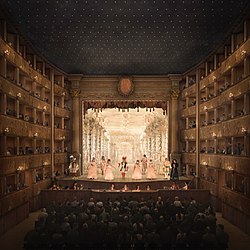
The Teatro San Cassiano opened in Venice as the world's first public opera house, making opera accessible to paying audiences rather than only aristocratic courts. This commercialization transformed opera into a popular entertainment industry centered on Venice.
Image source: Teatro San Cassiano
1642
% complete
Monteverdi's final opera, L'incoronazione di Poppea, premiered in Venice during carnival season. Its morally ambiguous characters, human passions, and psychological realism represented a new secular direction for Venetian opera.
Image source: L'incoronazione di Poppea
1672
% complete
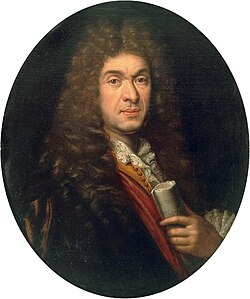
Jean-Baptiste Lully acquired the royal privilege for opera in France and developed the tragédie en musique, blending ballet, chorus, and spectacle. His works with librettist Philippe Quinault created a distinctly French operatic tradition centered on the Académie Royale de Musique.
Image source: Jean-Baptiste Lully
1689
% complete
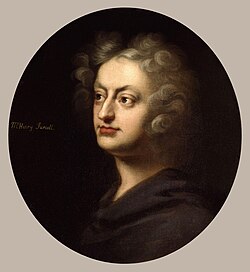
Henry Purcell's Dido and Aeneas was performed at a girls' boarding school in Chelsea, becoming the landmark of early English opera. Dido's lament 'When I am laid in earth' remains one of the most celebrated arias in the repertoire.
Image source: Dido and Aeneas
1711
% complete
George Frideric Handel settled in London, where his Rinaldo premiered in 1711, the first Italian opera written specifically for the English stage. Over the following decades he dominated London opera with a series of masterly opere serie featuring star castrati.
Image source: George Frideric Handel
Oct 1, 1733
% complete
Jean-Philippe Rameau's first opera, Hippolyte et Aricie, premiered in Paris and provoked the 'Lullistes versus Ramistes' debate. Its harmonic daring and theatrical brilliance established Rameau as Lully's great successor in French opera.
Image source: Hippolyte et Aricie
1752 - 1754
% complete
The visit of an Italian bouffon troupe performing Pergolesi's La serva padrona ignited the Querelle des Bouffons, a pamphlet war between supporters of Italian comic opera and defenders of French tradition. The debate reshaped aesthetic thinking about opera across Europe.
Oct 5, 1762
% complete
Christoph Willibald Gluck's Orfeo ed Euridice premiered at the Burgtheater in Vienna, launching his reform of opera seria. Gluck sought to strip away excessive vocal display and make music serve the drama, profoundly influencing the future of the genre.
Image source: Orfeo ed Euridice
Jan 29, 1781
% complete
Mozart's Idomeneo premiered at the Cuvilliés Theatre in Munich, representing the summit of opera seria. Its dramatic choruses, psychologically rich characters, and orchestral mastery pointed toward Mozart's later operatic achievements.
Image source: Idomeneo
May 1, 1786
% complete
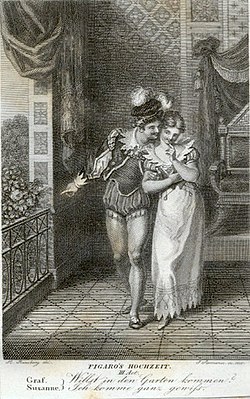
Mozart's The Marriage of Figaro, with a libretto by Lorenzo Da Ponte based on Beaumarchais's controversial play, premiered at the Burgtheater. Its brilliant ensemble writing and social commentary made it one of the greatest comic operas ever created.
Image source: The Marriage of Figaro
Oct 29, 1787
% complete
Don Giovanni received its triumphant premiere in Prague, where audiences adored Mozart. Blending comedy and supernatural drama, it became known as a dramma giocoso and stands among the most performed operas worldwide.
Image source: Don Giovanni
Sep 30, 1791
% complete
The Magic Flute premiered at the Theater auf der Wieden just weeks before Mozart's death. A Singspiel infused with Masonic symbolism, fairy-tale spectacle, and profound music, it quickly became one of the most beloved operas of all time.
Image source: The Magic Flute
Nov 20, 1805
% complete
Beethoven's only opera, Fidelio, premiered at the Theater an der Wien during the French occupation of Vienna. After revisions, it became a monument of German opera celebrating marital devotion, freedom, and heroic rescue.
Image source: Fidelio
Feb 20, 1816
% complete
Rossini's The Barber of Seville premiered at the Teatro Argentina in Rome amid disruptions from rival partisans. It soon became the quintessential Italian comic opera, showcasing sparkling ensemble writing and the bel canto style.
Image source: The Barber of Seville
Jun 18, 1821
% complete
Carl Maria von Weber's Der Freischütz premiered at the Königliches Schauspielhaus in Berlin, founding German Romantic opera. Its folk melodies, supernatural Wolf's Glen scene, and national character inspired Wagner and generations of German composers.
Image source: Der Freischütz
Dec 26, 1831
% complete
Vincenzo Bellini's Norma premiered at Milan's Teatro alla Scala. Its title role, demanding extraordinary vocal control and dramatic depth, became the supreme test for sopranos and a pinnacle of bel canto tragedy.
Image source: Norma (opera)
1842 - 1843
% complete
Richard Wagner achieved his breakthrough with the premiere of Rienzi in Dresden in October 1842, followed by The Flying Dutchman in January 1843. These works began his path toward music drama and the transformation of operatic art.
Image source: Der fliegende Holländer
Mar 9, 1842
% complete
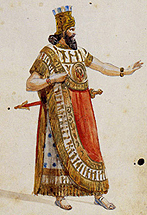
Giuseppe Verdi's third opera, Nabucco, triumphed at La Scala, with the chorus 'Va, pensiero' becoming an anthem of Italian nationalism. The success launched Verdi's decades-long dominance of Italian opera.
Image source: Nabucco
Oct 19, 1845
% complete
Wagner's Tannhäuser premiered at the Semperoper in Dresden, exploring the conflict between sensual and spiritual love. Its innovative fusion of drama and music advanced his concept of the Gesamtkunstwerk.
Image source: Tannhäuser (opera)
1852 - 1874
% complete
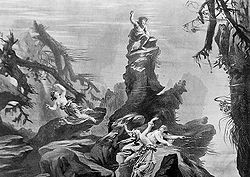
Between 1848 and 1874 Wagner created Der Ring des Nibelungen, a monumental tetralogy of Das Rheingold, Die Walküre, Siegfried, and Götterdämmerung. Using leitmotifs and continuous music, he revolutionized the very conception of what opera could be.
Image source: Der Ring des Nibelungen
Mar 6, 1853
% complete
La traviata premiered in Venice, initially a failure due to casting, but rapidly became one of the most performed operas in history. Its intimate contemporary story of Violetta's sacrifice redefined operatic realism.
Image source: La traviata
Jun 10, 1865
% complete
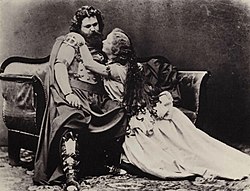
Tristan und Isolde finally premiered in Munich after years of delays. Its chromatic harmony, beginning with the famous 'Tristan chord,' destabilized traditional tonality and exerted enormous influence on the future of Western music.
Image source: Tristan und Isolde
Mar 3, 1875
% complete
Bizet's Carmen premiered at the Opéra-Comique to lukewarm reception, and Bizet died three months later. It soon became one of the most popular operas ever written, praised for its vivid characters, Spanish color, and dramatic honesty.
Image source: Carmen
Aug 13, 1876 - Aug 31, 1876
% complete
Wagner's purpose-built Festspielhaus opened in Bayreuth with the first complete performance of the Ring cycle. Its hidden orchestra pit and darkened auditorium introduced revolutionary staging conventions that shaped modern opera production.
Image source: Bayreuth Festival
Jul 26, 1882
% complete
Wagner's final opera, Parsifal, premiered at the second Bayreuth Festival. Designated a 'Bühnenweihfestspiel' (stage-consecrating festival play), it was restricted to Bayreuth performances until 1903 and marked the culmination of his artistic vision.
Image source: Parsifal
May 17, 1890
% complete
Mascagni's Cavalleria rusticana won the publisher Sonzogno's competition and premiered in Rome, igniting the verismo movement. Its raw depiction of passion and violence among Sicilian peasants brought everyday realism into Italian opera.
Image source: Cavalleria rusticana
May 21, 1892
% complete
Ruggero Leoncavallo's Pagliacci premiered at the Teatro Dal Verme in Milan, cementing verismo's popularity. Often paired with Cavalleria rusticana as Cav/Pag, it features the famous aria 'Vesti la giubba.'
Image source: Pagliacci
Feb 1, 1896
% complete
Puccini's La bohème premiered at the Teatro Regio in Turin under Arturo Toscanini. Its tender portrayal of bohemian artists in Parisian garrets became one of the most beloved and frequently performed operas in the repertoire.
Image source: La bohème
Jan 14, 1900
% complete
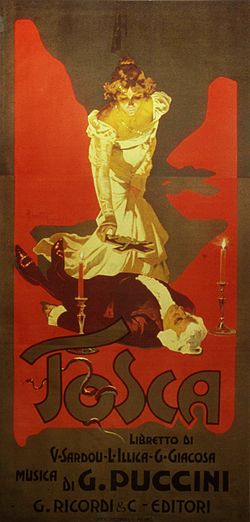
Tosca premiered at the Teatro Costanzi in Rome, a taut melodrama of jealousy, torture, and political intrigue set against the backdrop of Napoleonic-era Rome. It exemplified Puccini's gift for theatrical intensity and soaring melody.
Image source: Tosca
Apr 30, 1902
% complete
Debussy's only completed opera premiered at the Opéra-Comique, offering a luminous alternative to Wagnerism. Its understated, speech-like vocal writing and impressionist orchestration opened new paths for twentieth-century opera.
Image source: Pelléas et Mélisande (opera)
Dec 9, 1905
% complete
Richard Strauss's Salome premiered at the Semperoper in Dresden, scandalizing audiences with its dissonance and decadent subject matter. Based on Oscar Wilde's play, it made Strauss the leading German opera composer of his generation.
Image source: Salome (opera)
Jan 26, 1911
% complete
Der Rosenkavalier, Strauss's collaboration with librettist Hugo von Hofmannsthal, premiered in Dresden to immense acclaim. Its waltzes, comedic warmth, and the Marschallin's poignant final trio made it an enduring favorite.
Image source: Der Rosenkavalier
Oct 10, 1935
% complete
George Gershwin's Porgy and Bess premiered at the Alvin Theatre, blending opera, jazz, and African American folk idioms in a story of Catfish Row. Songs like 'Summertime' became classics, and the work entered the international opera repertoire.
Image source: Porgy and Bess
Feb 24, 1937
% complete
Alban Berg's twelve-tone opera Lulu premiered in Zurich two years after his death, left incomplete at Act Three. Friedrich Cerha's completion allowed full performances from 1979, confirming it as a landmark of modernist opera.
Image source: Lulu (opera)
Jun 7, 1945
% complete
Benjamin Britten's Peter Grimes premiered at Sadler's Wells, revitalizing English opera after World War II. Its portrait of an outsider destroyed by his community established Britten as the foremost British opera composer since Purcell.
Image source: Peter Grimes
Sep 11, 1951
% complete
Stravinsky's neoclassical opera, with a libretto by W. H. Auden and Chester Kallman inspired by Hogarth's engravings, premiered at La Fenice. It marked the summit of his neo-classical period and a major twentieth-century English-language opera.
Image source: The Rake's Progress
Jul 25, 1976
% complete
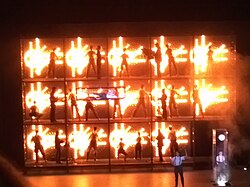
Philip Glass's Einstein on the Beach, created with director Robert Wilson, premiered at the Avignon Festival before touring to major cities. Its nearly five hours of minimalist repetition without conventional narrative redefined opera for the contemporary era.
Image source: Einstein on the Beach
Or browse the full history timeline directory, with more than 2,000 topics.
This History of Opera timeline was generated with the help of AI, using information found on the internet.
We work hard to keep these timelines accurate, but mistakes do get through. If you spot one, email us at [email protected] and we'll fix it for future visitors.
Generate yours with AI or build it from scratch, for free.
Export your timeline, add your own events, edit or remove AI-generated events, and much more
No credit card required.
Cancel anytime.
Cancel anytime.
You can create an unlimited number of timelines with up to 10 events on each one, customize how they look, export them to PDF, PNG, PowerPoint, CSV, and Excel, and share them with a link. Paid plans raise the event limit and add features like spreadsheet imports and collaborators.
Yes. You can cancel your subscription from your account page at any time, and you will not be charged again. Your subscription stays active for the rest of the period you already paid for.
Yes. We will email you a reminder before the annual renewal, and we will also email you a receipt.
Yes. You can email us within 15 days of any payment, and we will issue you a full refund.
Check out our pricing docs or send us an email anytime: [email protected].