-
Use Cases
-
Resources
-
Pricing
200 BCE
Parchment made from prepared animal skins became an important alternative to papyrus in the ancient Mediterranean. Its durability and ability to be folded into codices helped support the preservation and circulation of manuscripts, although it differed from paper in both material and manufacture.
Image source: Parchment

105 CE
Chinese court official Cai Lun was traditionally credited in 105 CE with reporting an improved method of making paper from materials such as bark, hemp waste, rags, and fishing nets. Earlier paper-like materials existed, but his association with standardized improvements made him central to the conventional history of paper.
Image source: Cai Lun

150 CE
Archaeological finds from Han-era China, including fragments dating from the second century CE, demonstrate that paper-like sheets were being made and used before or around Cai Lun's period. These discoveries show that papermaking developed gradually rather than appearing in a single invention.
Image source: History of paper

200 CE
During the later Han period, paper increasingly served practical purposes in China, including writing, wrapping, and administrative record keeping. Its relative lightness and lower cost gradually complemented bamboo strips and silk.
265 CE - 420 CE
Papermaking became more established during the Jin dynasty, when paper was used for literary, bureaucratic, religious, and artistic purposes. Improvements in fiber preparation and sheet formation helped make it a durable part of Chinese material culture.
400 CE
Chinese Buddhist communities adopted paper for copying sutras, devotional texts, and religious images. Religious demand encouraged the production of large numbers of inexpensive written and printed sheets and helped spread technical expertise.
Image source: Chinese Buddhism

960 CE
The Song dynasty developed government-backed paper currency after earlier experiments with merchant deposit notes and regional instruments. Paper money demonstrated that paper could function not only as a writing surface but also as a trusted medium of economic exchange.
Image source: Paper Money

610 CE
Papermaking techniques reached Korea by the early seventh century through cultural and religious contacts with China. Korean makers developed high-quality papers used for Buddhist texts, official documents, calligraphy, and traditional crafts.
610 CE
According to Japanese tradition, the Buddhist monk Damjing introduced papermaking from Korea in 610 CE. Japan refined the craft using fibers such as kōzo and produced washi, a durable paper used in writing, art, architecture, and daily life.
700 CE
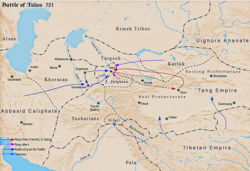
Chinese papermaking knowledge moved westward along trade and diplomatic routes into Central Asia. Cities in the region became important intermediaries in transmitting paper technology toward the Islamic world.
This History of Paper timeline was generated with the help of AI, using information found on the internet.
We work hard to keep these timelines accurate, but mistakes do get through. If you spot one, email us at [email protected] and we'll fix it for future visitors.
Generate yours with AI or build it from scratch, for free.