-
Use Cases
-
Resources
-
Pricing
PayPal is an American multinational financial technology company that operates a widely used online payments system. Founded in 1998 as Confinity by Max Levchin, Peter Thiel, and Luke Nosek, it merged with X.com (founded by Elon Musk) in 2000, was acquired by eBay in 2002, and became an independent publicly traded company in 2015. PayPal pioneered secure digital money transfers and played a foundational role in the growth of e-commerce worldwide. More Less
Mar 1, 1998
% complete
Max Levchin, Peter Thiel, and Luke Nosek founded Confinity in San Francisco, initially developing cryptography software for handheld devices. The company would soon pivot toward digital payments, laying the groundwork for what would become PayPal.
Mar 1, 1999
% complete
Elon Musk founded X.com, an online financial services and email payments company. X.com would become Confinity's chief rival in the emerging online payments space before the two companies merged.
Oct 1, 1999
% complete
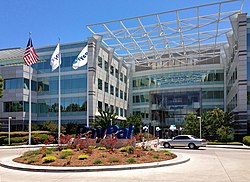
Confinity launched PayPal, a service allowing users to send money via email using Palm Pilots and later the web. The service quickly gained traction among eBay users who needed a convenient way to exchange payments.
Image source: PayPal
Mar 1, 2000
% complete
Rival online payment companies X.com and Confinity merged in March 2000, combining their resources in a bid to dominate the fast-growing online payments market. Elon Musk became CEO of the combined company.
Jun 1, 2001
% complete
After internal struggles over strategy, Elon Musk was replaced as CEO and the merged company dropped the X.com name, rebranding itself entirely as PayPal to focus on its successful email-based payment service.
Feb 15, 2002
% complete
PayPal held its initial public offering on the NASDAQ under the ticker symbol PYPL, selling shares at $13 each. The IPO came just months before the company's acquisition, making it one of the shortest-lived public companies of the era.
Jul 8, 2002 - Oct 3, 2002
% complete
eBay announced it would acquire PayPal for $1.5 billion in stock, completing the deal in October 2002. PayPal had become the dominant payment method for eBay transactions, making the acquisition a natural fit that integrated payments directly into the auction platform.
Image source: EBay

Jan 1, 2003
% complete
Following the eBay acquisition, PayPal accelerated its international expansion, launching services in the United Kingdom and other European markets, allowing cross-border transactions and multi-currency support.
Oct 1, 2003
% complete
PayPal rolled out its Buyer Protection program, offering reimbursement for purchases that never arrived or differed significantly from their descriptions. This policy boosted consumer confidence and helped drive adoption of online shopping.
Aug 1, 2005
% complete
PayPal entered the Chinese market through a partnership with eBay's EachNet, marking a significant step in its global expansion strategy despite intense local competition from Alibaba's Alipay.
Mar 1, 2006
% complete
PayPal surpassed 100 million registered accounts worldwide, cementing its position as one of the largest online payment services and demonstrating the rapid mainstream adoption of digital payments.
Mar 1, 2006
% complete
PayPal introduced PayPal Mobile, enabling users to send money using text messages and later smartphone apps, an early move into mobile commerce that anticipated the smartphone revolution.
Nov 1, 2009
% complete
PayPal opened its payments platform to outside developers, allowing third-party applications to integrate PayPal payments. This 'PayPal X' initiative aimed to make PayPal the default payment layer across the internet.
Aug 18, 2011
% complete
PayPal acquired Zong, a mobile payments company that let users charge purchases to their phone bills, for approximately $240 million, strengthening PayPal's mobile payment capabilities.
Image source: Zong (mobile network)
Mar 1, 2012
% complete
PayPal launched PayPal Here, a mobile card reader and app allowing small merchants to accept credit card payments on smartphones, competing directly with Square in the point-of-sale market.
Apr 1, 2012
% complete
David Marcus, formerly head of PayPal Mobile, was promoted to president of PayPal. He pushed the company to modernize its products and embrace mobile-first design during his tenure.
Image source: David A. Marcus
Sep 26, 2013
% complete
PayPal acquired payments company Braintree, owner of the popular Venmo app, for $800 million. The deal brought developer-friendly payment tools and peer-to-peer payments technology into the PayPal family.
Sep 30, 2014
% complete
Activist investor Carl Icahn began publicly pressuring eBay to separate PayPal, arguing both companies would be more valuable independently. His campaign ultimately succeeded in convincing eBay's board.
Image source: Carl Icahn
Jul 20, 2015
% complete
PayPal completed its separation from eBay, becoming an independent publicly traded company on NASDAQ under ticker PYPL. Dan Schulman was named CEO, and the split allowed PayPal to pursue partnerships beyond eBay.
Nov 2, 2015
% complete
PayPal acquired Xoom, a digital money transfer service specializing in international remittances, for approximately $1.09 billion, expanding its cross-border money movement capabilities.
Image source: Xoom (money transfer service)
2016
% complete
Venmo, acquired through the Braintree purchase, exploded in popularity among younger users for splitting bills and peer-to-peer payments, processing billions of dollars annually and becoming a cultural phenomenon in the United States.
Jul 1, 2016
% complete
PayPal signed landmark agreements with Visa and Mastercard, ending years of friction. The deals improved transaction flows, enabled PayPal integration with bank cards, and expanded PayPal's acceptance at physical points of sale.
Feb 1, 2017
% complete
PayPal widely released One Touch, allowing customers to complete purchases without repeatedly logging in, significantly reducing checkout friction and boosting merchant conversion rates.
May 17, 2018
% complete
PayPal acquired Swedish point-of-sale company iZettle for $2.2 billion, its largest acquisition at the time, dramatically expanding its in-person payments presence across Europe and Latin America.
Image source: Zettle
Jun 1, 2018
% complete
PayPal entered the Fortune 500 for the first time following strong post-spinoff growth, reflecting its transformation into one of America's largest financial technology companies.
Image source: Fortune 500
Oct 4, 2019
% complete
PayPal withdrew from Facebook's Libra Association, the ambitious global cryptocurrency project, citing regulatory concerns. Its departure triggered a wave of withdrawals by other major partners.
Image source: Diem (digital currency)
Nov 20, 2019 - Jan 6, 2020
% complete
PayPal completed its acquisition of shopping and rewards platform Honey for approximately $4 billion, its largest deal ever, adding coupon-finding and price-tracking tools to strengthen consumer engagement.
Image source: PayPal Honey
Aug 31, 2020
% complete
PayPal introduced Pay in 4, a buy now pay later installment product allowing US customers to split purchases into four interest-free payments, entering the rapidly growing BNPL market.
Oct 21, 2020
% complete
PayPal announced support for buying, selling, and holding cryptocurrencies including Bitcoin, Ethereum, Litecoin, and Bitcoin Cash within its platform, bringing digital assets to tens of millions of users.
Feb 1, 2021
% complete
PayPal reported reaching over 377 million active accounts heading into 2021 and continued growing past 400 million, driven by pandemic-era e-commerce acceleration and new product adoption.
Or browse the full history timeline directory, with more than 2,000 topics.
This History of PayPal timeline was generated with the help of AI, using information found on the internet.
We work hard to keep these timelines accurate, but mistakes do get through. If you spot one, email us at [email protected] and we'll fix it for future visitors.
Generate yours with AI or build it from scratch, for free.
Export your timeline, add your own events, edit or remove AI-generated events, and much more
No credit card required.
Cancel anytime.
Cancel anytime.
You can create an unlimited number of timelines with up to 10 events on each one, customize how they look, export them to PDF, PNG, PowerPoint, CSV, and Excel, and share them with a link. Paid plans raise the event limit and add features like spreadsheet imports and collaborators.
Yes. You can cancel your subscription from your account page at any time, and you will not be charged again. Your subscription stays active for the rest of the period you already paid for.
Yes. We will email you a reminder before the annual renewal, and we will also email you a receipt.
Yes. You can email us within 15 days of any payment, and we will issue you a full refund.
Check out our pricing docs or send us an email anytime: [email protected].