
-
Use Cases
-
Resources
-
Pricing
Charles Babbage (1791–1871) was an English mathematician, philosopher, inventor, and mechanical engineer, widely regarded as the 'Father of the Computer.' He is best known for designing the Difference Engine and the Analytical Engine, the latter being a general-purpose mechanical computer that anticipated modern computing concepts such as programmability, memory, and conditional branching. More Less
Dec 26, 1791
% complete
Charles Babbage was born in London, England, likely on December 26, 1791, the son of Benjamin Babbage, a wealthy banker. He would grow up to become one of the most influential figures in mathematics and computing.
1803
% complete
Due to frail health, Babbage was sent to a boarding school in Totnes, Devon, to aid his recovery. During this period he developed a passion for mathematics that would shape his future career.
1810
% complete
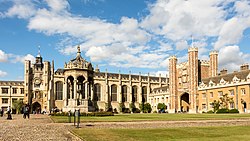
Babbage entered Trinity College, Cambridge, where he found himself more advanced in mathematics than his tutors. His time there cemented his reputation as a brilliant young mathematician.
Image source: Trinity College, Cambridge
1812
% complete
At Cambridge, Babbage co-founded the Analytical Society with John Herschel and George Peacock, aiming to replace Newton's notation for calculus with Leibniz's more rigorous continental notation.
1814
% complete
Babbage moved to Peterhouse, Cambridge, where he received an honorary degree in mathematics in 1814 without having taken the traditional examinations, owing to his exceptional mathematical ability.
Image source: Peterhouse, Cambridge
Jul 25, 1814
% complete
Babbage married Georgiana Whitmore, with whom he would have eight children, though only a few survived childhood. The couple settled in London, where Babbage pursued his scholarly interests.
1816
% complete
At just 24 years old, Babbage was elected a Fellow of the Royal Society, one of the highest honors in British science, recognizing his early contributions to mathematics.
Image source: Royal Society
1820
% complete
Babbage helped establish the Astronomical Society of London (later the Royal Astronomical Society), serving as one of its founding members and contributing to efforts to improve astronomical calculations.
Image source: Royal Astronomical Society
1824
% complete
The Astronomical Society awarded its inaugural Gold Medal to Babbage for his invention of the Difference Engine and his contributions to improving mathematical tables used in astronomy and navigation.
Image source: Gold Medal of the Royal Astronomical Society
Sep 1, 1827
% complete
Babbage suffered profound personal losses when his wife Georgiana died in September 1827, following the deaths of two of their children earlier that year. These tragedies deeply affected him and prompted an extended tour of Europe.
Image source: Charles Babbage
1828 - 1839
% complete
Babbage accepted the prestigious Lucasian Professorship of Mathematics at the University of Cambridge, the chair once held by Isaac Newton. Notably, he never delivered a single lecture during his eleven-year tenure.
Image source: Lucasian Professor of Mathematics
1829
% complete
Following his European travels, where he studied scientific institutions across Italy and Germany, Babbage published works comparing standards of measurement and scientific practice abroad.
Image source: Charles Babbage
1821
% complete
While working with John Herschel to check astronomical tables, Babbage reportedly exclaimed that he wished these calculations could be done by steam. This frustration inspired his idea for a machine to automatically compute polynomial functions.
1822
% complete
Babbage demonstrated a small working model capable of computing polynomial functions, convincing the government of the potential value of funding a full-scale Difference Engine.
Jul 3, 1822
% complete
Babbage published a letter to the president of the Royal Society outlining his proposal for a calculating engine that could compute and print mathematical tables mechanically, eliminating human error.
1823 - 1833
% complete
The British government provided substantial funding for the full-scale Difference Engine No. 1. Engineer Joseph Clement was hired to build it, but the ambitious project faced repeated delays, cost overruns, and disputes, ultimately being abandoned before completion.
Image source: Difference engine
1847 - 1849
% complete
Babbage designed an improved, simpler Difference Engine No. 2 using only about 8,000 parts, but despite its elegant design, he failed to secure funding to build it. A faithful version was finally constructed by the Science Museum in London between 1985 and 1991.
1830
% complete
In this influential polemic, Babbage criticized the management of British scientific institutions and accused the Royal Society of neglecting science, sparking major reform debates in the scientific community.
1831
% complete
Partly in response to his own criticisms, Babbage helped establish the British Association for the Advancement of Science, creating a new national forum for scientific research and discussion.
Image source: British Science Association
1832
% complete
This pioneering work analyzed industrial production and division of labor, earning Babbage recognition as a founder of operations research and a precursor to modern management theory.
1832
% complete
Babbage was elected a foreign associate of the Académie des sciences in Paris, a rare honor reflecting his international scientific standing.
Image source: French Academy of Sciences
1837
% complete
Babbage contributed an unconventional entry to the Bridgewater Treatises series, arguing that natural laws programmed into machines could explain apparent miracles, blending his computational thinking with theology and philosophy.
Image source: Ninth Bridgewater Treatise
1852
% complete
In his later years Babbage pursued diverse interests, including archaeology and antiquarian studies, publishing observations on historic London sites such as the Temple Church.
Image source: Temple Church
1864
% complete
In his autobiography, Babbage recounted his life, feuds, and inventions, famously expressing regret that no complete calculating engine had been built during his lifetime and detailing the workings of the Analytical Engine.
Oct 18, 1871
% complete
Babbage died at his home in Marylebone, London, at age 79, with parts of his brain preserved for science. Though many of his machines were never completed, his vision anticipated modern computing and earned him posthumous recognition as the 'father of the computer.'
Jun 5, 1833
% complete
Babbage met Ada Lovelace, daughter of Lord Byron, at a party. She became fascinated by his engines, corresponded extensively with him, and went on to develop ideas about programming the Analytical Engine far beyond mere calculation.
Image source: Ada Lovelace
1834
% complete
While working on the Difference Engine, Babbage conceived a far more ambitious general-purpose computing machine. The Analytical Engine featured a mill (processor) and store (memory) and could be programmed with punched cards, anticipating modern computers by a century.
Image source: Analytical engine
1835
% complete
Babbage adopted punched cards, as used in Joseph Marie Jacquard's automated weaving looms, to encode instructions and data for the Analytical Engine, enabling programmable computation.
Image source: Jacquard machine
1842
% complete
Prime Minister Robert Peel's government formally withdrew support for Babbage's projects, deciding not to fund the Analytical Engine. Without backing, Babbage financed much of the work himself while continuing designs until his death.
1843
% complete
Ada Lovelace translated an Italian article on the Analytical Engine and added extensive annotations including what is considered the first published computer algorithm. Her notes envisioned computers manipulating symbols beyond numbers, though Babbage did not fully embrace her broader vision.
Or browse the full history timeline directory, with more than 2,000 topics.
This Charles Babbage timeline was generated with the help of AI, using information found on the internet.
We work hard to keep these timelines accurate, but mistakes do get through. If you spot one, email us at [email protected] and we'll fix it for future visitors.
Generate yours with AI or build it from scratch, for free.
Export your timeline, add your own events, edit or remove AI-generated events, and much more
No credit card required.
Cancel anytime.
Cancel anytime.
You can create an unlimited number of timelines with up to 10 events on each one, customize how they look, export them to PDF, PNG, PowerPoint, CSV, and Excel, and share them with a link. Paid plans raise the event limit and add features like spreadsheet imports and collaborators.
Yes. You can cancel your subscription from your account page at any time, and you will not be charged again. Your subscription stays active for the rest of the period you already paid for.
Yes. We will email you a reminder before the annual renewal, and we will also email you a receipt.
Yes. You can email us within 15 days of any payment, and we will issue you a full refund.
Check out our pricing docs or send us an email anytime: [email protected].