-
Use Cases
-
Resources
-
Pricing
Charles Dickens (1812–1870) was one of the greatest English novelists of the Victorian era, renowned for works such as Oliver Twist, A Christmas Carol, David Copperfield, Great Expectations, and A Tale of Two Cities. His vivid characters and social criticism highlighted the hardships faced by the poor in industrial England. More Less
Feb 7, 1812
% complete
Charles John Huffam Dickens is born in Landport, Portsmouth, England, the second of eight children of John and Elizabeth Dickens. His father worked as a clerk in the Navy Pay Office, and the family moved frequently during his early childhood.
Image source: Charles Dickens
1817 - 1822
% complete
The Dickens family moves to Chatham, Kent, where young Charles spends the happiest years of his childhood. He explores the countryside, reads voraciously from his father's small library, and develops a love of storytelling that would shape his future career.
Image source: Chatham, Kent
1824
% complete
John Dickens is imprisoned in the Marshalsea debtors' prison in London. At just twelve years old, Charles is forced to leave school and work at Warren's Blacking Warehouse, a traumatic experience that profoundly influenced his later novels about poverty and social injustice.
Image source: Marshalsea
Feb 1824
% complete
Dickens works ten-hour days pasting labels on bottles of shoe polish for meager wages. The humiliation and hardship of this period left deep psychological scars and became a wellspring for characters like David Copperfield and Oliver Twist.
Image source: Shoe polish
1827 - 1828
% complete
After his family's finances stabilize, Dickens leaves the blacking warehouse and becomes a junior clerk at the law firm of Ellis and Blackmore. His exposure to the legal world gave him material for satirical portrayals of lawyers and the Court of Chancery in novels like Bleak House.
1829
% complete
Dickens learns shorthand and works as a freelance reporter, eventually covering parliamentary debates for the Mirror of Parliament and the Morning Chronicle. The fast-paced work honed his writing skills and sharpened his eye for character and political absurdity.
Image source: Hansard
Dec 1833
% complete
Dickens publishes his first story, 'A Dinner at Poplar Walk,' in the Monthly Magazine under the pen name 'Boz.' The success of these comic sketches of London life led to the 1836 collection Sketches by Boz, launching his literary reputation.
Image source: Sketches by Boz
Apr 1836 - Nov 1837
% complete
Published in twenty monthly installments, The Posthumous Papers of the Pickwick Papers makes Dickens famous almost overnight. The comic adventures of Mr. Pickwick and Sam Weller captivated readers and established the serial format that defined Dickens's career.
Image source: The Pickwick Papers
Feb 1837 - Apr 1839
% complete
Oliver Twist, published in monthly parts in Bentley's Miscellany, exposes the harsh realities of workhouses, child labor, and criminal underworlds in Victorian England. Its famous characters include Fagin, the Artful Dodger, and the murderous Bill Sikes.
Image source: Oliver Twist
Apr 1838 - Oct 1839
% complete
Nicholas Nickleby attacks the abusive Yorkshire boarding schools known as dotheboys halls. The novel's exposure of cruelty at institutions like Dotheboys Hall sparked public outrage and contributed to reforms in education.
Image source: Nicholas Nickleby
Dec 19, 1843
% complete
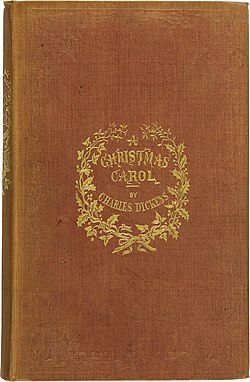
A Christmas Carol in Prose, Being a Ghost-Story of Christmas is an instant triumph. The tale of Ebenezer Scrooge's redemption by the ghosts of Christmas Past, Present, and Yet to Come became one of the most beloved stories in the English language and helped shape modern Christmas traditions.
Image source: A Christmas Carol
Jan 1846 - Apr 1848
% complete
Dombey and Son marks a turning point in Dickens's artistry, with tighter plotting and deeper psychological insight. The novel explores pride, commerce, and family through the story of a shipping magnate obsessed with having a son to carry on his firm.
Image source: Dombey and Son
May 1849 - Nov 1850
% complete
David Copperfield draws heavily on Dickens's own life, including his work at the blacking warehouse and his rise as a writer. Dickens called it his 'favourite child,' and its memorable characters include the optimistic Micawber and the sinister Uriah Heep.
Image source: David Copperfield
Mar 1850 - 1859
% complete
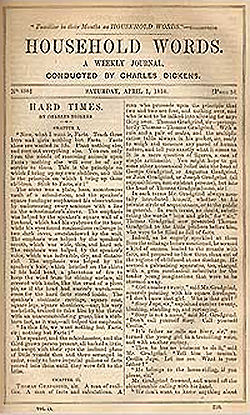
Dickens edits Household Words, a weekly journal covering fiction, social reform, and current affairs. The magazine published his own novels A Tale of Two Cities and Hard Times in serial form before being succeeded by All the Year Round.
Image source: Household Words
Mar 1852 - Sep 1853
% complete
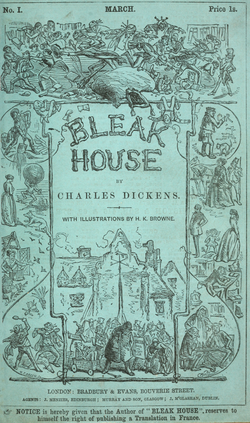
Bleak House delivers a scathing indictment of the Court of Chancery's endless litigation and exposes public health crises in London slums. Its dual narrative technique and fog-drenched atmosphere are considered among Dickens's greatest achievements.
Image source: Bleak House
Apr 1854 - Aug 1854
% complete
Hard Times, set in the industrial town of Coketown, critiques utilitarian philosophy, factory conditions, and the dehumanization of workers. Serialized in Household Words, it is Dickens's shortest major novel and his most direct engagement with industrial society.
Image source: Hard Times (novel)
Dec 1855 - Jun 1857
% complete
Little Dorrit revisits the theme of debtors' prisons from Dickens's childhood, with the Marshalsea at its center. The novel attacks bureaucracy through the Circumlocution Office and explores wealth, imprisonment, and redemption.
Image source: Little Dorrit
Apr 1859 - Nov 1859
% complete
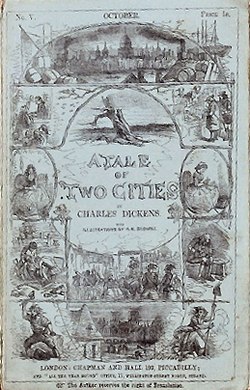
Set during the French Revolution, A Tale of Two Cities opens with the famous line 'It was the best of times, it was the worst of times.' Sydney Carton's sacrificial death remains one of literature's most moving finales, and the novel became Dickens's best-selling work in America.
Image source: A Tale of Two Cities
Dec 1860 - Aug 1861
% complete
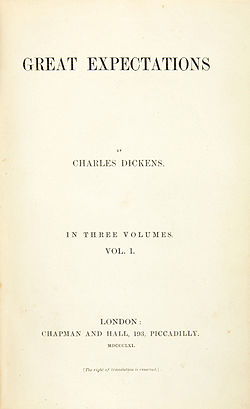
Great Expectations follows the orphan Pip's rise and fall as a gentleman, exploring class, ambition, and guilt. The haunting figures of Miss Havisham and the convict Magwitch, along with the marshes of Kent, make it one of Dickens's most acclaimed works.
Image source: Great Expectations
May 1864 - Nov 1865
% complete
Our Mutual Friend, Dickens's last completed full-length novel, is a dark satire on money, class, and the Thames river scavengers. Its intricate plotting and psychological depth are often seen as anticipating modern fiction.
Image source: Our Mutual Friend
Apr 1870 - Sep 1870
% complete
Dickens's final novel, a murder mystery set in Cloisterham, is left unfinished at his death after only six of a planned twelve installments. Its unresolved mystery has inspired countless attempts at completion and endless speculation about the ending.
Image source: The Mystery of Edwin Drood
Apr 2, 1836
% complete
Dickens marries Catherine Hogarth, daughter of journalist George Hogarth. The couple would have ten children together, though the marriage grew strained over the years and ended in separation in 1858.
Image source: Catherine Dickens
Jun 1858
% complete
Dickens and Catherine formally separate after twenty-two years of marriage. The split caused a public scandal, with rumors linking Dickens to actress Ellen Ternan. Dickens published a personal statement defending himself, which damaged his popularity temporarily.
Jun 9, 1865
% complete
Dickens is traveling with Ellen Ternan when the train derails at Staplehurst, Kent, killing ten people. Dickens heroically aids the injured, but the traumatic event haunted him for the rest of his life and is believed to have affected his declining health.
Image source: Staplehurst rail crash
Jun 8, 1870
% complete
After a full day of work on Edwin Drood at his home in Higham, Kent, Dickens suffers a massive stroke. He dies the following day, having spent his last hours doing what he loved most: writing.
Image source: Gads Hill Place
Jan 1842 - Jun 1842
% complete
Dickens tours America to champion international copyright law, receiving an enthusiastic welcome. However, he was disillusioned by slavery, spitting, and piracy of his works, recording his impressions in American Notes and satirizing the country in Martin Chuzzlewit.
Image source: American Notes
Apr 1858 - Mar 1870
% complete
Dickens performs dramatic readings of his own works to packed audiences across Britain, America, and Ireland. His emotionally charged performances of the murder from Oliver Twist and the death of Little Nell were legendary, though the exhausting tours took a toll on his health.
Nov 1867 - Apr 1868
% complete
Dickens returns to America for a grueling series of readings in Boston, New York, and other cities, earning a substantial fortune. Despite failing health, he gave over seventy performances, and audiences embraced him with renewed enthusiasm.
1870
% complete
Dickens's works are continually adapted for stage, film, and television, and his characters like Scrooge, Oliver Twist, and Miss Havisham have entered the global cultural lexicon. The term 'Dickensian' endures to describe vivid characters and scenes of urban poverty, cementing his status as one of literature's most influential figures.
Jun 9, 1870
% complete
Charles Dickens dies at age 58 and is buried in Poets' Corner at Westminster Abbey, despite his wish for a modest private funeral. Thousands mourn him worldwide, and he is remembered as the greatest novelist of the Victorian era.
Image source: Poets' Corner
1872 - 1874
% complete
Dickens's close friend John Forster publishes a three-volume biography that draws on Dickens's autobiographical fragment and personal letters. The Life of Charles Dickens remains a foundational source for understanding the author's life and creative process.
Image source: John Forster (biographer)
Or browse the full history timeline directory, with more than 2,000 topics.
This Charles Dickens timeline was generated with the help of AI, using information found on the internet.
We work hard to keep these timelines accurate, but mistakes do get through. If you spot one, email us at [email protected] and we'll fix it for future visitors.
Generate yours with AI or build it from scratch, for free.
Export your timeline, add your own events, edit or remove AI-generated events, and much more
No credit card required.
Cancel anytime.
Cancel anytime.
You can create an unlimited number of timelines with up to 10 events on each one, customize how they look, export them to PDF, PNG, PowerPoint, CSV, and Excel, and share them with a link. Paid plans raise the event limit and add features like spreadsheet imports and collaborators.
Yes. You can cancel your subscription from your account page at any time, and you will not be charged again. Your subscription stays active for the rest of the period you already paid for.
Yes. We will email you a reminder before the annual renewal, and we will also email you a receipt.
Yes. You can email us within 15 days of any payment, and we will issue you a full refund.
Check out our pricing docs or send us an email anytime: [email protected].