
-
Use Cases
-
Resources
-
Pricing
Pentecostalism is a Christian movement emphasizing the work of the Holy Spirit, including spiritual gifts such as speaking in tongues, healing, prophecy, and baptism in the Holy Spirit. Emerging in the early twentieth century, it developed into one of the world's fastest-growing Christian traditions. More Less
1830
John Nelson Darby extensively popularized pre-tribulation rapture theology in the 1830s. The teaching later became widely influential in the United States, particularly through the circulation of the Scofield Reference Bible.
1831
Historians identify late 19th-century radical evangelical revival movements in the United States and Great Britain as important sources for Pentecostalism. A revival reported in 1831 also displayed characteristics later associated with Pentecostal revivals.
Image source: Pentecostalism
1887
Albert Benjamin Simpson founded the Christian and Missionary Alliance in 1887. Simpson and his organization became influential in early Pentecostalism, especially in the later development of the Assemblies of God.
1890 - 1905
Early Pentecostals embraced teachings on divine healing associated with Albert Benjamin Simpson, John Alexander Dowie, Adoniram Judson Gordon, and Maria Woodworth-Etter. These ideas helped shape Pentecostal expectations concerning miraculous healing.
1896
John Alexander Dowie founded the Christian Catholic Apostolic Church in 1896. His healing ministry and teachings became an important early influence on Pentecostals.
1900
Holiness Pentecostalism emerged in the early 20th century among adherents of the Wesleyan-Holiness movement. Christian revivalism and expectation of Christ's Second Coming energized these believers and helped create the setting in which Pentecostalism developed.
Image source: Holiness movement
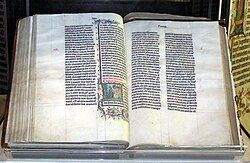
1900
In 1900, American evangelist and faith healer Charles Parham began teaching that speaking in tongues was the biblical evidence of baptism with the Holy Spirit.
1900
Charles Parham, who had been raised as a Methodist, established Bethel Bible School near Topeka, Kansas, in 1900. The school became the setting for an influential early Pentecostal experience.
Jan 1, 1901
After a watch-night service on January 1, 1901, students at Parham's Bible school prayed for and received baptism with the Holy Spirit. Speaking in tongues was understood as the accompanying evidence.
1910
In 1910, Alma White, leader of the Pillar of Fire Church, published Demons and Tongues, a book criticizing the Pentecostal movement.
1910
William Durham of Chicago first articulated the Finished Work doctrine in 1910. It placed sanctification at the moment of salvation and taught that Christians subsequently grow progressively in grace.
1911
After 1911, most new Pentecostal denominations adopted Finished Work sanctification. Many Pentecostals consequently rejected the Wesleyan doctrine of entire sanctification and emphasized conversion and Spirit baptism as two definite crisis experiences.
1901 - 1905
Parham closed his Topeka school after 1901 and undertook a four-year revival tour through Kansas and Missouri, spreading his teaching about Spirit baptism and initial evidence.
1904 - 1905
The Welsh Revival of 1904–1905 prompted intense speculation among radical evangelicals worldwide, especially in the United States, about an approaching outpouring of the Spirit that would renew Christianity.
1905
Parham moved to Houston, Texas, in 1905 and started a Bible training school. His ministry there helped transmit Pentecostal teaching to future revival leaders.
1906
William Seymour traveled to Los Angeles in 1906. His preaching there sparked the revival that became the central early event in the formation of modern Pentecostalism.
1906 - 1909
Seymour's preaching sparked a three-year-long revival at Azusa Street. The meetings drew participants from diverse backgrounds and helped disseminate Pentecostal practices and theology internationally.
1906 - 1924
From 1906 to 1924, Pentecostals often defied prevailing social, cultural, and political norms supporting racial segregation and Jim Crow laws. The early revival movement maintained a notable interracial character.
Apr 9, 1906 - Apr 14, 1906
The revival first broke out on Monday, April 9, 1906, at 214 Bonnie Brae Street in Los Angeles. It moved five days later, on Friday, April 14, to 312 Azusa Street.
Dec 1906
By December 1906, Durham had returned to Europe. He is credited with beginning Pentecostal movements in Sweden, Norway, Denmark, Germany, France, and England.
1907
Through Durham's ministry, Italian immigrant Luigi Francescon received the Pentecostal experience in 1907. He later established Italian Pentecostal congregations in the United States, Argentina, and Brazil.
1907
After 1907, William Howard Durham, pastor of Chicago's North Avenue Mission, returned to the Midwest and laid groundwork for the movement's expansion across that region.
1907
By 1907, American missionaries had established a Pentecostal presence in Liberia, making Africa one of the first regions outside the United States to receive the movement's message.
1908
Florence Crawford, an associate of Seymour, brought the Pentecostal message to the American Northwest. By 1908, her work had formed what became the Apostolic Faith Church, a Holiness Pentecostal denomination.
1908
American missionaries were established in South Africa by 1908, extending the early Pentecostal movement into southern Africa.
1908
Giacomo Lombardi led the first Pentecostal services in Italy in 1908, helping establish the movement in the country.
1908
John G. Lake, a follower of John Alexander Dowie who had experienced Pentecostal Spirit baptism, traveled to South Africa in 1908. His work contributed to the formation of the Apostolic Faith Mission of South Africa and the Zion Christian Church.
Nov 1910
In November 1910, two Swedish Pentecostal missionaries arrived in Belém, Brazil. Their work established the movement that became the Assembleias de Deus, or Assemblies of God of Brazil.
1911 - 1914
By 1911, many white ministers were distancing themselves from an existing Pentecostal arrangement under African-American leader Bishop Charles Harrison Mason. Mason and other African-American leaders were not invited to the initial 1914 fellowship.
Image source: Assemblies of God
1913 - 1916
The Oneness teaching emerged as a controversial new issue at a 1913 camp meeting. Amid the controversy, the Assemblies of God rejected it, and many churches and pastors withdrew or were forced to withdraw from the denomination in 1916.
1914
In 1914, about 300 predominantly white Pentecostal ministers and laypeople gathered in Hot Springs, Arkansas, to create the General Council of the Assemblies of God, a national Pentecostal fellowship.
1919
To avoid confusion, the church changed its name to the Church of the Nazarene in 1919.
Image source: Church of the Nazarene
1924
One Pentecostal church maintained an interracial identity until 1924, when its white ministers withdrew and formed Pentecostal Church, Incorporated.
Image source: Church of God in Christ
1928
In 1928, the World Christian Fundamentals Association labeled Pentecostalism “fanatical” and “unscriptural,” reflecting the movement's continuing rejection by many fundamentalists.
1942
By the early 1940s, opposition to Pentecostals was giving way to cooperation with leaders of the new evangelicalism. American Pentecostals participated in founding the National Association of Evangelicals in 1942.
1947
The Pentecostal World Fellowship was founded in 1947, giving Pentecostal denominations a mechanism for interaction at international as well as national levels.
1995
In 1995, David Barrett estimated that there were 217 million denominational Pentecostals worldwide, illustrating the movement's extensive global growth.
1997 - 2009
Brian Houston, born in 1954, founded Hillsong Church and served as national president of Australian Christian Churches, the Australian branch of the Assemblies of God, from 1997 to 2009.
2006
A 2006 ten-country Pew Forum survey found that 49 percent of Pentecostals in the United States, 50 percent in Brazil, 41 percent in South Africa, and 54 percent in India said they never speak or pray in tongues.
2011
A 2011 Pew Forum study estimated that there were 279 million classical Pentecostals, representing about 4 percent of the world's population and 12.8 percent of the world's Christians.
2012
In 2012, the National Council of Evangelicals of France published a document criticizing prosperity theology. It stated that prosperity may be possible for believers but warned that an extreme version leads to materialism and idolatry.
2015
The National Council of Evangelicals of France published The Miraculous Healing in 2015. The document described medicine as one of the gifts given by God to humanity.
2025
According to a 2025 denomination census, the Assemblies of God had become the world's largest Pentecostal denomination, with 442,000 churches and 85 million adherents worldwide.
Or browse the full history timeline directory, with more than 2,500 topics.
This History of Pentecostalism timeline was generated with the help of AI, using information found on the internet.
We work hard to keep these timelines accurate, but mistakes do get through. If you spot one, email us at [email protected] and we'll fix it for future visitors.
Generate yours with AI or build it from scratch, for free.
Export your timeline, add your own events, edit or remove AI-generated events, and much more
No credit card required.
Cancel anytime.
Cancel anytime.
You can create an unlimited number of timelines with up to 10 events on each one, customize how they look, export them to PDF, PNG, PowerPoint, CSV, and Excel, and share them with a link. Paid plans raise the event limit and add features like spreadsheet imports and collaborators.
Yes. You can cancel your subscription from your account page at any time, and you will not be charged again. Your subscription stays active for the rest of the period you already paid for.
Yes. We will email you a reminder before the annual renewal, and we will also email you a receipt.
Yes. You can email us within 15 days of any payment, and we will issue you a full refund.
Check out our pricing docs or send us an email anytime: [email protected].