-
Use Cases
-
Resources
-
Pricing
Pepsi is one of the world's most iconic soft drink brands. Created by pharmacist Caleb Bradham in the late 19th century, the beverage evolved from a small-town soda fountain drink into a global powerhouse. Over more than a century, Pepsi navigated bankruptcy, fierce competition with Coca-Cola, innovative marketing campaigns, and major corporate mergers, becoming a central player in the modern beverage industry. More Less
1893
% complete
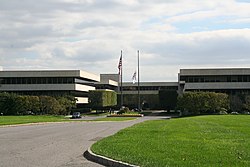
Pepsi was first invented in 1893 as "Brad's Drink" by Caleb Bradham, who sold the beverage at his drugstore in New Bern, North Carolina.
Image source: Pepsi
1898
% complete
The drink was renamed "Pepsi-Cola" in 1898 due to its formula's inclusion of essence of pepsin and its supposed digestive benefits.
Dec 24, 1902
% complete
Caleb Bradham incorporated the Pepsi-Cola Company on December 24, 1902, and in 1903 moved the bottling of Pepsi from his drugstore to a rented warehouse.
1922 - 1933
% complete
On three occasions between 1922 and 1933, the Coca-Cola Company was offered the opportunity to purchase the Pepsi-Cola Company, which it declined on each occasion.
1923
% complete
In 1923, the Pepsi-Cola Company entered bankruptcy, largely due to financial losses incurred by speculating on wildly fluctuating sugar prices as a result of World War I. It was subsequently purchased and revived by Charles Guth, who reformulated the syrup.
1909
% complete
In 1909, automobile race pioneer Barney Oldfield became the first celebrity to endorse Pepsi, describing it as "A bully drink...refreshing, invigorating, a fine bracer before a race." The advertising theme "Delicious and Healthful" was then used over the next two decades.
1940
% complete
With a radio advertising campaign featuring the popular jingle "Nickel, Nickel" – first recorded by the Tune Twisters in 1940 – Pepsi encouraged price-conscious consumers to double the volume their nickels could purchase.
1947 - 1952
% complete
The mid-20th century saw Pepsi targeting the African American market, a then-untapped demographic, with positive portrayals and endorsements from prominent figures, boosting its market share. In 1947 Walter Mack hired Edward F. Boyd, who led these efforts until he was replaced in 1952 by Harvey C. Russell. After Mack left the company in 1950, support for the black sales team faded and it was cut.
1954
% complete
One example of Pepsi's community marketing was its 1954 "Pepsi Day at the Beach" event, where New Orleans children could ride rides at an amusement park in exchange for Pepsi bottle caps.
1969
% complete
Pepsi machines were installed in the White House cafeteria when Richard Nixon, who already had a close relationship with Pepsi, assumed the American presidency in 1969.
1989 - 2015
% complete
A vitamin-enriched Pepsi variation called "Pepsi Perfect" in a special bottle was shown in the 1989 movie Back to the Future Part II in scenes set in the future year 2015. It was released as a limited-edition drink in 2015.
Image source: Back to the Future Part II
1989
% complete
In 1989, Pepsi commissioned a $5 million marketing campaign to coincide with the release of Madonna's song "Like a Prayer", but it was cancelled following strong backlash regarding the religious themes in the song's music video.
Image source: Like a Prayer (song)
1992
% complete
In 1992, the Pepsi Number Fever marketing campaign in the Philippines accidentally distributed 800,000 winning bottle caps for a 1 million peso grand prize, leading to riots and the deaths of five people.
Image source: Pepsi Number Fever
1996
% complete
In 1996, PepsiCo launched the highly successful Pepsi Stuff marketing strategy, allowing customers to collect points from purchases and redeem them for merchandise.
Image source: Pepsi Stuff
Mar 1996
% complete
Pepsiman is an official Pepsi mascot from Pepsi's Japanese corporate branch, which debuted in March 1996. In 1996, Sega-AM2 released the Sega Saturn version of Fighting Vipers featuring the character, and in 1999 KID developed a video game for the PlayStation entitled Pepsiman.
Image source: Pepsiman (video game)
1997
% complete
In 1997, after his sponsorship with Coca-Cola ended, retired NASCAR Cup Series driver Jeff Gordon signed a long-term contract with Pepsi, and he drove with the Pepsi logos on his car with various paint schemes for about two races each year, usually a darker paint scheme during nighttime races.
Image source: Jeff Gordon
1999 - 2020
% complete
From 1999 to 2020, Pepsi also had the naming rights to the Pepsi Center, an indoor sports and entertainment facility in Denver, Colorado, until the venue's new naming rights were announced on October 22, 2020.
Image source: Ball Arena
2007 - 2022
% complete
In 2007, and from 2013 to 2022, Pepsi sponsored the NFL's Super Bowl Halftime Shows. Pepsi has also sponsored the NFL Rookie of the Year award since 2002.
Image source: List of Super Bowl halftime shows
2015
% complete
Pepsi has the first global sponsorship deals with the UEFA Champions League and the UEFA Women's Champions League starting in the 2015–16 season along with the sister brand Pepsi Max, becoming the global sponsor of the competition.
Image source: UEFA Champions League
1934
% complete
During the Great Depression, Pepsi gained popularity following the introduction in 1934 of a 12-ounce (355 mL) bottle, offering more soda for the same price as competitors.
1936 - 1938
% complete
From 1936 to 1938, Pepsi-Cola's profits doubled, cementing its recovery and growth as a major American soft drink brand.
1945
% complete
The Pepsi-Cola name would be shortened to simply "Pepsi" as early as 1945, when their bottles transitioned from standard paper labels to the applied color label (ACL) process, which involved screen-printing enamel paint graphics directly onto the bottle at high temperature.
1951
% complete
The ACL labeling motif was carried over when a new bottle design and logo were introduced in mid-1951, marking an evolution in Pepsi's visual identity.
1956
% complete
Combined with company and production changes, Pepsi sales had boomed by 1956 and gradually narrowed the gap to its large competitor Coca-Cola.
1958
% complete
In 1958, the "swirl" design bottle began to be used for distributing Pepsi, becoming an iconic part of the brand's packaging history.
1959 - 1973
% complete
When Pepsi president Alfred Steele died in 1959, his widow Joan Crawford was appointed to the Board of Directors of Pepsi-Cola, a position she held until 1973, although she was not a board member of the larger PepsiCo, created in 1965.
1962 - 1969
% complete
When the drink was rebranded in 1962, two versions of the same logo with either name were used interchangeably. By 1969, the drink would almost exclusively be referred to as "Pepsi", with the full name retained for secondary uses.
1963
% complete
In 1963, the drink began to be distributed in America in larger 16-ounce (473 mL) bottles, and 12-ounce cans were introduced as well.
1964
% complete
Diet Pepsi, a second Pepsi product and the first extending the brand, was launched in 1964.
Image source: Diet Pepsi
1965
% complete
The larger PepsiCo company was created in 1965 through a merger with Frito-Lay, expanding beyond beverages and eventually helping PepsiCo overtake the Coca-Cola Company in total corporate sales.
Image source: PepsiCo
1979
% complete
While total American Pepsi sales figures never overtook that of Coca-Cola, in corporate terms PepsiCo had overtaken the Coca-Cola Company in total corporate sales in 1979, partly driven by PepsiCo's wide range of non-beverage products after its merger with Frito-Lay in 1965.
Image source: Cola wars
1980
% complete
Although total Pepsi sales never overtook that of Coca-Cola, the latter's lead in the American market had been narrowed to 1½-to-1 as of 1980 (from 5-to-1 in 1950), and Pepsi was outselling its rival in the "take-home" market, which includes supermarkets.
Nov 1984
% complete
In November 1984, PepsiCo announced that it would, at least in the US, exclusively use high-fructose corn syrup (HFCS) to sweeten its canned, bottled and fountain Pepsi-Cola, replacing cane sugar.
1985
% complete
In 1985, The Coca-Cola Company, amid much publicity, changed its formula. With the special exception of 1985, when Coca-Cola sales were fractured between New Coke and Coca-Cola Classic, Pepsi briefly outsold its rival in America.
Image source: New Coke
Jun 1997 - Dec 1997
% complete
The Project Blue design was first tested in the United States in June 1997, and was released that December in preparation for Pepsi's 100th anniversary. From 1986 to 2003, the Pepsi wordmark was typeset in a custom treatment of Handel Gothic; this logo was also used for Pepsi Throwback until 2014.
Oct 2008 - 2009
% complete
In October 2008, Pepsi announced that it would redesign its logo and re-brand many of its products by early 2009. In 2009, Pepsi, Diet Pepsi, and Pepsi Max began using all lower-case fonts for name brands.
2021 - 2025
% complete
It replaced the original formulation in many regions including Argentina and across Europe since at least 2021, with sugar being reduced by over one third from approximately 10.7 g to 7.0 g (per 100 mL) in some countries, while in Western Europe sugar was cut by more than half, to 4.6 g per 100 mL. The new formulation came into effect in Australia in 2025, done as part of PepsiCo's pro-health commitment and due to increasing sugar taxes worldwide.
Mar 2023 - 2025
% complete
In March 2023, Pepsi unveiled a new logo expected to launch in North America in late-2023, and internationally in 2024 (including 2025 in Colombia).
1952
% complete
These efforts helped make Pepsi-Cola popular in many markets, including the Middle East following the opening of a plant in Cairo, and the Beirut Daily Star referred to the "Pepsi-Cola culture" when distribution began in Lebanon in 1952.
1966
% complete
Pepsi was introduced in Romania in 1966, during the early liberalization policies of Nicolae Ceaușescu, opening a factory at Constanța in 1967.
1972
% complete
In 1972, PepsiCo struck a barter agreement with the government of the Soviet Union, in which PepsiCo was granted exportation and Western marketing rights to Stolichnaya vodka in exchange for importation and Soviet marketing of Pepsi.
1974
% complete
Notably, in 1974 Pepsi became the very first American consumer product to be produced, marketed and sold in the Soviet Union.
1988 - 1994
% complete
In 1988, PepsiCo entered the Indian market by creating a joint venture with the government of Punjab-owned Punjab Agro Industrial Corporation and Voltas India Limited. This joint venture marketed and sold Lehar Pepsi until 1991, when the use of foreign brands was allowed; PepsiCo promptly bought out its partners and ended the joint venture in 1994.
Or browse the full history timeline directory, with more than 2,000 topics.
This History of Pepsi timeline was generated with the help of AI, using information found on the internet.
We work hard to keep these timelines accurate, but mistakes do get through. If you spot one, email us at [email protected] and we'll fix it for future visitors.
Generate yours with AI or build it from scratch, for free.
Export your timeline, add your own events, edit or remove AI-generated events, and much more
No credit card required.
Cancel anytime.
Cancel anytime.
You can create an unlimited number of timelines with up to 10 events on each one, customize how they look, export them to PDF, PNG, PowerPoint, CSV, and Excel, and share them with a link. Paid plans raise the event limit and add features like spreadsheet imports and collaborators.
Yes. You can cancel your subscription from your account page at any time, and you will not be charged again. Your subscription stays active for the rest of the period you already paid for.
Yes. We will email you a reminder before the annual renewal, and we will also email you a receipt.
Yes. You can email us within 15 days of any payment, and we will issue you a full refund.
Check out our pricing docs or send us an email anytime: [email protected].