-
Use Cases
-
Resources
-
Pricing
The history of soda traces the evolution of carbonated beverages from natural mineral waters in the 18th century to artificially carbonated drinks created by pharmacists in the 1800s. Iconic brands like Coca-Cola (1886) and Pepsi (1893) transformed soda into a global industry that continues to evolve with diet, zero-sugar, and flavored varieties. More Less
1767
% complete
English chemist Joseph Priestley discovered a method of infusing water with carbon dioxide by suspending a bowl of water over a beer vat in Leeds. His 1772 paper 'Impregnating Water with Fixed Air' laid the scientific foundation for all future soda water.
Image source: Carbonated water
1771
% complete
Swedish chemist Torbern Bergman independently invented a process for producing carbonated water from chalk and sulfuric acid, contributing to the early science of artificial mineral water around the same time as Priestley.
Image source: Torbern Bergman
1783
% complete
Swiss watchmaker Johann Jacob Schweppe developed a practical process for manufacturing carbonated mineral water in Geneva, founding what would become Schweppes, one of the oldest soft drink brands still in existence.
Image source: Johann Jacob Schweppe
1790
% complete
Jacob Schweppe relocated his carbonated water business to London in 1790, where it grew rapidly. His 'Schweppes' brand became synonymous with soda water and later tonic water throughout the British Empire.
Image source: Schweppes
1807
% complete
Yale chemistry professor Benjamin Silliman purchased a soda-making apparatus from England and began selling carbonated beverages in New Haven, Connecticut, helping introduce soda water commerce to America.
Image source: Soft drink
1832
% complete
British immigrant John Matthews patented an improved apparatus for carbonating water and established a hugely successful soda fountain equipment business in New York City, earning him the title 'the Father of American Soda Water.'
Image source: John Matthews (soda water manufacturer)
1835
% complete
Pharmacies across the United States installed soda fountains, marketing carbonated drinks as health tonics. The soda fountain became a social hub, with pharmacists mixing flavored syrups into fizzy concoctions.
Image source: Soda fountain
1876
% complete
Charles Elmer Hires introduced his commercially packaged root beer kit at the Centennial Exposition in Philadelphia, turning a homemade herbal brew into one of America's most beloved soft drinks.
Image source: Root beer
1885
% complete
Pharmacist Charles Alderton created Dr Pepper at Morrison's Old Corner Drug Store in Waco, Texas. First served around 1885, it is often cited as the oldest major soft drink brand in America.
Image source: Dr Pepper
May 8, 1886
% complete
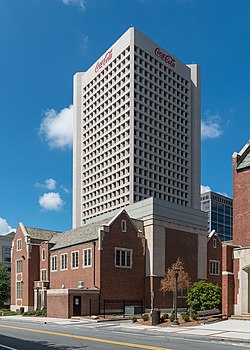
Pharmacist John Stith Pemberton created Coca-Cola at Jacobs' Pharmacy in Atlanta, Georgia. Sold initially for five cents a glass at soda fountains, it was marketed as a medicinal tonic before becoming a global beverage icon.
Image source: Coca-Cola
1888 - 1891
% complete
Businessman Asa Griggs Candler gradually bought the rights to Coca-Cola between 1888 and 1891 for a total of about $2,300. He founded The Coca-Cola Company in 1892 and transformed the drink into a national brand through aggressive marketing.
Image source: Asa Griggs Candler
1892
% complete
Asa Candler founded The Coca-Cola Company in Atlanta on January 29, 1892, formalizing the corporate structure behind the growing soft drink empire and setting the stage for its global dominance.
Image source: The Coca-Cola Company
1893
% complete
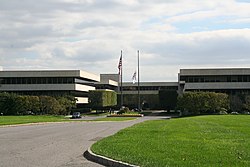
North Carolina pharmacist Caleb Bradham created 'Brad's Drink,' which he renamed Pepsi-Cola in 1898. Marketed as a digestive aid, Pepsi would grow into Coca-Cola's greatest rival.
Image source: Pepsi
1894
% complete
Joseph Biedenharn began bottling Coca-Cola in Vicksburg, Mississippi, allowing the drink to be enjoyed away from soda fountains. Bottling proved pivotal to the beverage's nationwide expansion.
1900
% complete
Improvements in extracting kola nut flavoring and mass-producing syrups during the early 1900s allowed bottlers across America to produce sodas cheaply and consistently, fueling explosive industry growth.
1905
% complete
Claud A. Hatcher of the Cole-Hatcher-Hammond Company in Columbus, Georgia developed Royal Crown (RC) Cola, which became a major regional competitor and pioneer in cola innovation.
Image source: RC Cola
Jun 30, 1906
% complete
The U.S. Pure Food and Drug Act forced soda manufacturers to accurately label ingredients and remove questionable additives like cocaine from products such as Coca-Cola, reshaping industry practices.
Image source: Pure Food and Drug Act
1907
% complete
Michael Owens' fully automated bottle-making machine, commercialized in the mid-1900s, slashed the cost of glass bottles, enabling mass distribution of bottled sodas nationwide.
Image source: Michael Joseph Owens
Nov 16, 1915
% complete
The Root Glass Company of Terre Haute, Indiana won Coca-Cola's design contest with the iconic fluted contour bottle, intended to be recognizable even in the dark or when broken, becoming one of history's most famous package designs.
1923
% complete
Pepsi went bankrupt in 1923 after speculating wildly on rising sugar prices following World War I. Roy Megargel later acquired the trademark, and Charles Guth relaunched the brand in the 1930s.
Image source: PepsiCo
1934
% complete
During the Great Depression, Pepsi introduced 12-ounce bottles priced at five cents, double Coca-Cola's six-ounce offering for the same price, dramatically boosting sales and establishing the value-based Cola War strategy.
1940
% complete
Max Keith, head of Coca-Cola Germany, developed Fanta using available wartime ingredients like whey and apple fiber after trade embargoes cut off Coca-Cola syrup supplies. Fanta was later adopted globally by Coca-Cola.
Image source: Fanta
1958
% complete
Royal Crown introduced Diet Rite in 1958, the first major diet soft sweetened with saccharin and cyclamate, opening an entirely new market segment that competitors soon rushed to enter.
Image source: Diet soft drink
1961
% complete
Coca-Cola launched Sprite as its answer to 7 Up, quickly becoming the leading lemon-lime soda in the United States and expanding the cola giants beyond the cola category.
Image source: Sprite (drink)
1963
% complete
Coca-Cola entered the diet soda market with Tab, sweetened with saccharin. It dominated the diet segment until Diet Coke arrived, becoming a cultural icon of the 1960s and 1970s.
Image source: Tab (drink)
Aug 9, 1982
% complete
Diet Coke launched in the United States, becoming the first new product to use the Coca-Cola brand name. It was an instant success, quickly overtaking Tab and becoming one of the best-selling diet sodas ever.
Image source: Diet Coke
1984 - 1990
% complete
Pepsi enlisted stars like Michael Jackson while Coke countered with Max Headroom, escalating the famous 'Cola Wars.' The rivalry defined 1980s pop culture and drove unprecedented marketing spending.
Image source: Cola wars
Apr 23, 1985 - Jul 11, 1985
% complete
Coca-Cola reformulated its flagship drink as New Coke to combat Pepsi's taste-test advantage, sparking massive consumer backlash. Within 79 days, the company restored the original formula as 'Coca-Cola Classic.'
Image source: New Coke
1992 - 1994
% complete
Pepsi launched Crystal Pepsi, a caffeine-free clear cola riding consumer demand for purity. Despite heavy hype, it flopped within two years, though it retains cult status and saw brief revivals decades later.
Image source: Crystal Pepsi
1997
% complete
Coca-Cola launched Surge to compete with Mountain Dew, part of a wave of high-caffeine, citrus-flavored 'extreme' sodas marketed toward teenagers with aggressive, edgy branding.
2000
% complete
Small producers began making artisanal sodas with natural ingredients, cane sugar, and unique flavors like ginger and hibiscus, appealing to consumers seeking alternatives to mass-produced colas.
Image source: Craft soda
2010
% complete
Mexico banned junk food and soda sales in schools amid rising obesity concerns, signaling growing government scrutiny of soft drinks worldwide and presaging broader regulatory actions.
Nov 4, 2014
% complete
Voters in Berkeley, California approved Measure D, the first soda tax in the United States, imposing a penny-per-ounce levy on sugary drinks and inspiring similar measures in cities and countries worldwide.
Aug 2017
% complete
Coca-Cola rebranded Coke Zero as Coca-Cola Zero Sugar with a reformulated recipe closer in taste to original Coca-Cola, reflecting the industry pivot toward low- and zero-sugar offerings.
Image source: Coca-Cola Zero Sugar
Apr 6, 2018
% complete
The United Kingdom implemented its sugary drink tax, prompting many manufacturers including Coca-Cola and Ribena to reformulate recipes with less sugar rather than pass costs to consumers.
Or browse the full history timeline directory, with more than 2,000 topics.
This History of Soda timeline was generated with the help of AI, using information found on the internet.
We work hard to keep these timelines accurate, but mistakes do get through. If you spot one, email us at [email protected] and we'll fix it for future visitors.
Generate yours with AI or build it from scratch, for free.
Export your timeline, add your own events, edit or remove AI-generated events, and much more
No credit card required.
Cancel anytime.
Cancel anytime.
You can create an unlimited number of timelines with up to 10 events on each one, customize how they look, export them to PDF, PNG, PowerPoint, CSV, and Excel, and share them with a link. Paid plans raise the event limit and add features like spreadsheet imports and collaborators.
Yes. You can cancel your subscription from your account page at any time, and you will not be charged again. Your subscription stays active for the rest of the period you already paid for.
Yes. We will email you a reminder before the annual renewal, and we will also email you a receipt.
Yes. You can email us within 15 days of any payment, and we will issue you a full refund.
Check out our pricing docs or send us an email anytime: [email protected].