-
Use Cases
-
Resources
-
Pricing
The history of tea traces the journey of one of the world's most beloved beverages, beginning with its legendary discovery in ancient China around 2737 BCE and evolving through centuries of cultivation, trade, ritual, and cultural exchange. Tea shaped economies, sparked revolutions, and became a cornerstone of daily life across Asia, Europe, and beyond. More Less
1000 BC
China is considered to have the earliest records of tea consumption, with possible records dating back to the 10th century BC. However, the current word for tea in Chinese only came into use in the 8th century AD, so there are uncertainties as to whether the older words used refer to the same plant.
Image source: Chinese tea culture

200 BC
The earliest physical evidence known to date, found in 2016, comes from the mausoleum of Emperor Jing of Han in Xi'an, indicating that tea was drunk by Han dynasty emperors as early as the 2nd century BCE.
Image source: Emperor Jing of Han

200
An early credible record of tea drinking dates to the 3rd century AD, in a medical text written by the Chinese physician Hua Tuo, who praised the stimulating properties of the beverage.
Image source: Hua Tuo

500 - 600
Tea use spread significantly during the 6th century AD, expanding beyond its southern Chinese heartland as trade and Buddhist practice carried the beverage to new regions.
700 - 750
Before the mid-8th century Tang dynasty, tea-drinking was primarily a southern Chinese practice. It later spread northward and became a nationwide custom during the Tang era.
700 - 1200
Steaming tea leaves was the primary process used for centuries in the preparation of tea, preserving its green color and fresh flavor before other processing methods were developed.
800
The current word for tea in Chinese only came into use in the 8th century AD. Because of this, there are uncertainties as to whether older words used in earlier texts referred to the same beverage.
1250
In the mid-13th century, the Chinese learned to process tea in a different way, moving away from steaming toward new techniques that would eventually lead to loose-leaf tea.
1285
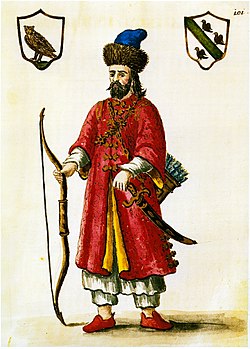
Marco Polo records the deposition of a Chinese minister of finance in 1285 for his arbitrary augmentation of the tea taxes, an early European account touching on tea's economic importance in China.
Image source: Marco Polo
1391
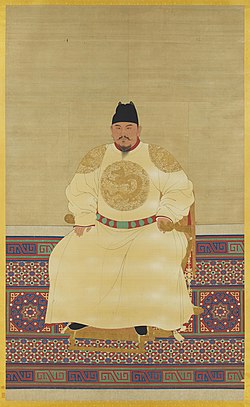
In 1391, the Hongwu emperor issued a decree that only loose tea would be accepted as a 'tribute', accelerating the shift away from compressed cake and powdered teas toward loose-leaf preparation.
Image source: Hongwu Emperor
This History of Tea timeline was generated with the help of AI, using information found on the internet.
We work hard to keep these timelines accurate, but mistakes do get through. If you spot one, email us at [email protected] and we'll fix it for future visitors.
Generate yours with AI or build it from scratch, for free.