-
Use Cases
-
Resources
-
Pricing
Rock and roll emerged in the United States in the late 1940s and early 1950s, blending rhythm and blues, country, gospel, and jazz into a revolutionary new sound. Pioneered by artists like Chuck Berry, Little Richard, and Elvis Presley, the genre sparked a cultural revolution that shaped youth identity worldwide. Over the decades, rock evolved through the British Invasion led by The Beatles, the psychedelic and hard rock movements of the 1960s and 70s, punk's rebellious energy, and countless subgenres, leaving an enduring legacy on music and popular culture. More Less
Oct 31, 1944
% complete
Gospel guitarist Sister Rosetta Tharpe recorded 'Strange Things Happening Every Day', blending electric guitar with gospel rhythms. The record is often cited as a proto-rock and roll milestone, influencing countless musicians who would later pioneer the genre.
Image source: Sister Rosetta Tharpe
Mar 5, 1951
% complete
Ike Turner's band, fronted by Jackie Brenston, recorded 'Rocket 88' at Sam Phillips' Memphis studio. With its distorted guitar and driving rhythm, the song is frequently considered one of the first rock and roll records.
Image source: Rocket 88
Apr 12, 1954
% complete
Bill Haley and His Comets recorded 'Rock Around the Clock' in New York City. When it topped charts in 1955 after featuring in the film 'Blackboard Jungle', it became rock and roll's first major mainstream hit.
Image source: Rock Around the Clock
Jul 5, 1954
% complete
A young Elvis Presley recorded Arthur Crudup's blues song 'That's All Right' at Sun Studio in Memphis, fusing country and R&B into a new sound. The single launched Presley's career and helped ignite the rock and roll revolution.
Image source: That's All Right
May 21, 1955
% complete
Chuck Berry's debut single 'Maybellene' combined blues guitar with storytelling lyrics about cars and romance. Its success established Berry as a foundational architect of rock and roll guitar style and songwriting.
Image source: Maybellene
Oct 1955
% complete
Little Richard's explosive 'Tutti Frutti', with its famous 'a-wop-bop-a-loo-bop' intro, brought flamboyant energy and raw power to rock and roll, becoming one of the genre's defining early recordings.
Image source: Tutti Frutti (song)
Sep 9, 1956
% complete
Elvis Presley made his first of three appearances on 'The Ed Sullivan Show', drawing an estimated 60 million viewers. His electrifying performance cemented his status as rock and roll's first superstar and sparked national controversy.
Image source: Elvis on Tour
Jan 12, 1959
% complete
Berry Gordy founded Motown Records in Detroit with an $800 family loan. The label became a powerhouse of soul-influenced pop that shaped rock and roll's evolution through artists like Stevie Wonder, Marvin Gaye, and The Supremes.
Image source: Motown
Feb 3, 1959
% complete
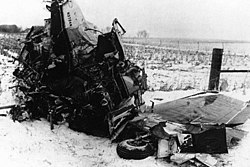
Buddy Holly, Ritchie Valens, and J.P. 'The Big Bopper' Richardson died in a plane crash near Clear Lake, Iowa. Known as 'The Day the Music Died', the tragedy shocked fans and marked an early end to rock and roll's first golden era.
Image source: The Day the Music Died
Aug 16, 1977
% complete
Elvis Presley died at his Graceland home at age 42. The death of the King of Rock and Roll marked the end of an era and prompted worldwide mourning from millions of fans.
Image source: Elvis Presley
1960
% complete
John Lennon, Paul McCartney, George Harrison, and eventually Ringo Starr formed The Beatles in Liverpool. After honing their craft in Hamburg clubs, they became the most influential band in rock history.
Image source: The Beatles
Feb 9, 1964
% complete
The Beatles' American television debut drew a record 73 million viewers, igniting Beatlemania in the United States and launching the British Invasion that transformed American popular music.
Image source: The Beatles on The Ed Sullivan Show
Dec 3, 1965
% complete
'Rubber Soul' marked The Beatles' evolution from pop stars to serious studio artists, featuring sophisticated songwriting and innovative production that elevated the album format in rock music.
Image source: Rubber Soul
Jun 1, 1967
% complete
'Sgt. Pepper's' redefined what a rock album could be, using studio experimentation and conceptual unity. Widely considered one of the most influential albums ever, it ushered in the era of album-oriented rock.
Image source: Sgt. Pepper's Lonely Hearts Club Band
Jul 25, 1965
% complete
Bob Dylan shocked folk purists by performing with an electric band at the Newport Folk Festival. The controversial moment symbolized folk music's merger with rock and expanded the genre's artistic ambitions.
Image source: Electric Dylan controversy
May 16, 1966
% complete
Brian Wilson's masterpiece 'Pet Sounds' revolutionized rock production with lush arrangements and introspective lyrics. It inspired The Beatles' 'Sgt. Pepper's' and is regarded as one of the greatest albums ever made.
Image source: Pet Sounds
Jun 18, 1967
% complete
Jimi Hendrix set his Fender Stratocaster ablaze during his Monterey Pop Festival performance, creating one of rock's most iconic images and showcasing his revolutionary approach to electric guitar.
Image source: Monterey International Pop Festival
Jan 12, 1969
% complete
Led Zeppelin's self-titled debut fused blues, hard rock, and heavy riffs, laying the foundation for hard rock and heavy metal while establishing the band as one of rock's most powerful acts.
Image source: Led Zeppelin (album)
Aug 15, 1969 - Aug 18, 1969
% complete
The Woodstock Music and Art Fair drew over 400,000 people for three days of peace, love, and legendary performances by Jimi Hendrix, Janis Joplin, The Who, and others, becoming the defining event of the counterculture era.
Image source: Woodstock
May 12, 1972
% complete
Recorded largely in a French villa, The Rolling Stones' sprawling double album blended rock, blues, gospel, and country. Initially divisive, it is now hailed as one of the band's finest achievements.
Image source: Exile on Main St.
Mar 1, 1973
% complete
Pink Floyd's conceptual masterpiece spent over 900 weeks on the Billboard 200, exploring themes of madness, time, and mortality with groundbreaking production and sonic innovation.
Image source: The Dark Side of the Moon
Oct 31, 1975
% complete
Queen's six-minute operatic epic defied radio conventions with its multi-part structure and theatrical grandeur. Accompanied by a pioneering promotional video, it became one of rock's most beloved songs.
Image source: Bohemian Rhapsody
Aug 1, 1981
% complete
MTV began broadcasting with The Buggles' 'Video Killed the Radio Star', making music videos essential to rock stardom and launching careers from Duran Duran to Guns N' Roses.
Image source: MTV
Jul 13, 1985
% complete
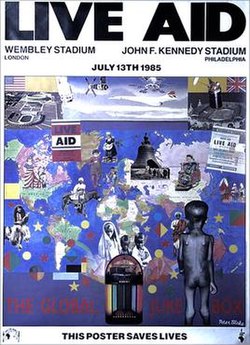
Organized by Bob Geldof, Live Aid featured Queen's legendary Wembley performance alongside sets from Led Zeppelin, U2, and Madonna, watched by nearly two billion people and showcasing rock's global humanitarian reach.
Image source: Live Aid
Apr 23, 1976
% complete
The Ramones' stripped-down, high-speed debut launched American punk rock, rejecting bloated arena rock in favor of short, raw songs that inspired generations of alternative musicians.
Image source: Ramones (album)
Nov 26, 1976
% complete
The Sex Pistols' incendiary debut single ignited the UK punk movement, channeling youthful rage and anti-establishment sentiment into a musical and cultural revolution.
Image source: Anarchy in the U.K.
Feb 10, 1978
% complete
Eddie Van Halen's virtuosic two-handed tapping technique redefined electric guitar playing. The band's explosive debut revitalized hard rock and influenced decades of metal guitarists.
Image source: Van Halen (album)
Sep 24, 1991
% complete
Nirvana's 'Nevermind', driven by the anthem 'Smells Like Teen Spirit', brought grunge and alternative rock to the mainstream, dethroning hair metal and reshaping 1990s popular culture.
Image source: Nevermind
Apr 5, 1994
% complete
Nirvana frontman Kurt Cobain died at age 27, devastating a generation of fans. His death marked the symbolic end of the grunge explosion he had led.
Image source: Suicide of Kurt Cobain
May 21, 1997
% complete
Radiohead's 'OK Computer' pushed rock into experimental territory, exploring alienation and technology anxiety with atmospheric soundscapes that influenced alternative music for decades.
Image source: OK Computer
Or browse the full history timeline directory, with more than 2,000 topics.
This History of Rock and Roll timeline was generated with the help of AI, using information found on the internet.
We work hard to keep these timelines accurate, but mistakes do get through. If you spot one, email us at [email protected] and we'll fix it for future visitors.
Generate yours with AI or build it from scratch, for free.
Export your timeline, add your own events, edit or remove AI-generated events, and much more
No credit card required.
Cancel anytime.
Cancel anytime.
You can create an unlimited number of timelines with up to 10 events on each one, customize how they look, export them to PDF, PNG, PowerPoint, CSV, and Excel, and share them with a link. Paid plans raise the event limit and add features like spreadsheet imports and collaborators.
Yes. You can cancel your subscription from your account page at any time, and you will not be charged again. Your subscription stays active for the rest of the period you already paid for.
Yes. We will email you a reminder before the annual renewal, and we will also email you a receipt.
Yes. You can email us within 15 days of any payment, and we will issue you a full refund.
Check out our pricing docs or send us an email anytime: [email protected].