-
Resources
-
Pricing
The Little Rock Nine were nine African American students who challenged school segregation by integrating Central High School in Little Rock, Arkansas, in 1957. More Less
Build a timeline like this one in minutes, for free. Start Yours →
May 17, 1954
The U.S. Supreme Court issued its historic decision in Brown v. Board of Education, ruling that racial segregation in public schools was unconstitutional.
May 24, 1955
Virgil Blossom, superintendent of schools, submitted a plan of gradual integration to the Little Rock school board. The board unanimously approved the plan.
Image source: Little Rock Nine
Feb 8, 1956
The NAACP opposed the gradual Blossom Plan after negotiations with the school board failed and filed a lawsuit on February 8, 1956.
1957
By 1957, the NAACP had registered nine Black students to attend the previously all-white Little Rock Central High School. They were selected for their excellent grades and attendance.
1957
The nine students were Ernest Green, Elizabeth Eckford, Jefferson Thomas, Terrence Roberts, Carlotta Walls LaNier, Minnijean Brown, Gloria Ray Karlmark, Thelma Mothershed, and Melba Pattillo Beals.
Sep 1957
The finalized plan scheduled integration of one high school, Little Rock Central, beginning in September 1957.
1958
In Cooper v. Aaron, the Little Rock School District, under Faubus's leadership, sought a two-and-a-half-year delay that would have admitted Black students to public high schools only in January 1961.
Image source: Cooper v. Aaron
Aug 1958
Federal courts ruled against the proposed delay in August 1958, prompting Faubus to call an extraordinary session of the Arkansas legislature.
1960
The second phase of the plan was scheduled for 1960 and would open a few junior high schools to a few Black children.
1963
The final stage called for limited desegregation of the city's grade schools, possibly as late as 1963.
Sep 1957 - May 1958
Although admitted under protection, the students endured a year of physical and verbal abuse from many white students.
Sep 1957
By the end of September, the nine students were admitted to Little Rock Central High under the protection of the 101st Airborne Division, later joined by the Arkansas National Guard.
Sep 4, 1957
Integration began at Little Rock Central High School on September 4, 1957, amid opposition backed by the Arkansas National Guard.
Sep 4, 1957
Governor Orval Faubus deployed the Arkansas National Guard to support segregationists and said the troops were being used to preserve the peace as integration began.
Sep 24, 1957
President Dwight D. Eisenhower invoked the Insurrection Act of 1807, enabling federal troops to perform domestic law enforcement during the crisis.
Dec 1957
Minnijean Brown was taunted by members of a group of white male students in the school cafeteria during lunch.
Image source: Minnijean Brown-Trickey
1958
As the 1957–1958 school year drew to a close, Faubus petitioned the Federal District Court to postpone desegregation of Little Rock's public high schools.
Aug 26, 1958
Faubus called the Arkansas State Legislature into an extraordinary session after the federal courts rejected the requested delay in desegregation.
Sep 1958
Faubus signed acts enabling him and the Little Rock School District to close all public schools, claiming that Little Rock needed to assert its rights and freedom against the federal decision.
May 1959
After forty-four teachers and administrative staff were fired, three segregationist school board members were replaced with three moderate members.
Aug 12, 1959
To avoid further complications, Little Rock's public high schools were scheduled to reopen earlier than usual on August 12, 1959.
1958
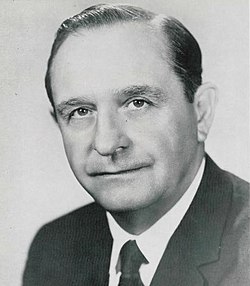
Faubus risked losing political support in the 1958 Democratic gubernatorial primary if he appeared to support integration. His party dominated Southern politics and opposed desegregation.
Image source: Orval Faubus
1958
Cuban poet Nicolás Guillén published “Little Rock,” a bilingual English-and-Spanish composition denouncing racial segregation in the United States.
Image source: Nicolás Guillén
1958
Harry Ashmore, editor of the Arkansas Gazette, won a Pulitzer Prize for his editorials about the Little Rock crisis.
Image source: Harry Ashmore
Nov 1958
Life magazine profiled high school students affected by the Little Rock school closures.
1981
The made-for-television docudrama Crisis at Central High depicted the events of the Little Rock crisis.
1993
The Disney Channel broadcast The Ernest Green Story, a made-for-television film depicting the crisis.
Image source: The Ernest Green Story
1994
Melba Pattillo Beals published Warriors Don't Cry, a memoir about her experiences as one of the Little Rock Nine.
Image source: Melba Pattillo Beals
1996
Seven of the Little Rock Nine appeared on The Oprah Winfrey Show.
Image source: The Oprah Winfrey Show
1997
Central High Museum, Inc. held a dedication ceremony observing the 40th anniversary of the desegregation.
Image source: Little Rock Central High School
Nov 1998
Legislation passed designating Little Rock Central High School National Historic Site as a unit of the National Park Service. Central High Museum, Inc. donated its property to the Park Service.
Feb 1999
Members of the Little Rock Nine created the Little Rock Nine Foundation, which established a scholarship program that had funded 60 university students by 2013.
Nov 1999
President Bill Clinton honored the Little Rock Nine by presenting each member with a Congressional Gold Medal.
Image source: Congressional Gold Medal
2001
The Daisy Bates House, home of Arkansas NAACP president Daisy Bates and a focal point for the students, was designated a National Historic Landmark for its role in the episode.
Image source: Daisy Bates House
2004
Art director Ethel Kessler selected George Hunt's Little Rock Nine/America Cares painting for a 37-cent U.S. postage stamp.
Image source: United States Postal Service
Feb 2005
The Little Rock Nine stamp appeared among ten stamps depicting Civil Rights Movement milestones in the Black History Month commemorative panel To Form a More Perfect Union. The artwork was labeled “1957 The Little Rock Nine.”
Image source: List of artworks on stamps of the United States
2007
The United States Mint made available a silver dollar honoring the strength, determination, and courage of the African American students. Its obverse shows students accompanied by a soldier and nine stars, while its reverse shows Central High School.
Image source: Little Rock Central High School Desegregation silver dollar
Dec 9, 2008
The Little Rock Nine were invited to attend the inauguration of President-elect Barack Obama, the first African American elected president of the United States.
Image source: First inauguration of Barack Obama
Feb 9, 2010
Marquette University presented the Little Rock Nine with the Père Marquette Discovery Award, the university's highest honor.
Image source: Marquette University
2013
The Little Rock Nine Foundation decided to fund exclusively students attending the Clinton School of Public Service at the University of Arkansas.
Nov 19, 2022
Elizabeth Eckford, Ernest Green, Gloria Ray Karlmark, Carlotta Walls LaNier, and Thelma Mothershed-Wair etched their initials onto metal plates welded onto the keel of the attack submarine USS Arkansas during a ceremony at Newport News Shipbuilding.
Image source: USS Arkansas (SSN-800)
2026
Little Rock Central High School continues to operate as part of the Little Rock School District and is a National Historic Site housing a Civil Rights Museum administered in partnership with the National Park Service.
Build a timeline like this one in minutes, for free. Start Yours →
Or browse the full history timeline directory, with more than 2,500 topics.
This Little Rock Nine timeline was generated with the help of AI, using information found on the internet.
We work hard to keep these timelines accurate, but mistakes do get through. If you spot one, email us at [email protected] and we'll fix it for future visitors.
Generate yours with AI or build it from scratch, for free.
Export your timeline, add your own events, edit or remove AI-generated events, and much more
No credit card required.
15-day money-back guarantee.
You can create an unlimited number of timelines with up to 10 events on each one, customize how they look, export them to PDF, PNG, PowerPoint, CSV, and Excel, and share them with a link. Timelines made with Timeline Maker AI keep every event the generator created, and you can add up to 5 events of your own. Paid plans remove the event limit, add spreadsheet imports and hide Preceden's branding, and the higher-priced plan also adds collaborators, a custom logo and a custom domain.
Yes. You can cancel your subscription from your account page at any time, and you will not be charged again. Your subscription stays active for the rest of the period you already paid for.
Yes. We email you a reminder 15 days before your annual renewal, and we email you a receipt after every payment.
Yes. You can email us within 15 days of any payment, and we will issue you a full refund.
Check out our pricing docs or send us an email anytime: [email protected].