-
Resources
-
Pricing
The History of Rulers examines the leaders who governed societies from ancient kingdoms to the modern world, including monarchs, emperors, presidents, and authoritarian figures. It explores their political systems, achievements, conflicts, reforms, and lasting influence on civilization. More Less
Build a timeline like this one in minutes, for free. Start Yours →
600 - 699
The Bhadra dynasty, a Bengali Hindu royal house of Brahmin origin, flourished during the first half of the seventh century, although little is known about its history.
Image source: Bhadra dynasty
750 - 1161
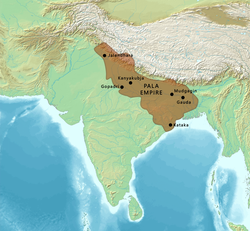
The Pala period brought stability and prosperity to Bengal after centuries of civil war. It became one of Bengali history's golden eras, producing major artistic and architectural works and fostering the development of proto-Bengali, including the Charyapada.
Image source: Pala Empire
1070 - 1230
The Sena dynasty ruled southwestern Bengal from 1070 and maintained control over East Bengal until 1230.
Image source: Sena dynasty
1100 - 1199
The Palas ruled Bengal until the twelfth century, when they were succeeded in different areas by the Buddhist and Hindu Chandra, Sena, and Deva dynasties.
1154
Vijaya Sena completed the conquest of the entirety of Bengal by 1154 CE, establishing the Sena dynasty as a dominant regional power.
1204 - 1227
The Khalji dynasty of Bengal initially represented the Ghurid Empire before becoming independent, though it was at times subordinate to the Delhi Sultanate.
Image source: Khalji dynasty (Bengal)
1200 - 1299
In the early thirteenth century, Muhammad bin Bakhtiyar Khalji conquered western and parts of northern Bengal and established the first Muslim kingdom in Bengal.
Image source: Muhammad Bakhtiyar Khalji
1287 - 1324
The House of Balban emerged after the Mamluk governor Nasiruddin Bughra Khan declared independence, ruling Bengal from approximately 1287 to 1324.
Image source: Balban
1342
Shamsuddin Ilyas Shah founded the Bengal Sultanate in 1342 after uniting Satgaon, Lakhnauti, and Sonargaon. The sultanate became a major trading nation.
Image source: Bengal Sultanate
1434
Qutbuddin Azam Shah and Ghiyasuddin Nusrat Shah ruled eastern Bengal briefly and struck coins from Muazzamabad, modern Sonargaon, in AH 837, approximately 1434 CE.
1556 - 1563
During the retreat of the Sur Empire, Tripura's King Vijay Manikya occupied lands in eastern Bengal east of Khulna and Rajshahi from 1556 until his death in 1563.
Image source: Vijaya Manikya II
1576 - 1613
As the Bengal Sultanate collapsed in western Bengal and the Mughals advanced in 1576, the Baro-Bhuiyan Raja-Sultan confederacy emerged and continued until 1613.
1615
The Kingdom of Assam achieved a major victory against Mughal forces in 1615 during the prolonged Ahom–Mughal struggle.
Image source: Ahom–Mughal conflicts
1682
The Kingdom of Assam won another major victory against the Mughals in 1682, reinforcing Assamese control against Mughal expansion.
Image source: Battle of Itakhuli
1760
The Mughals eventually retreated from the Kingdom of Tripura after multiple plagues, mutinies among the Sarail Nawabs, and the execution of Sultan Shamser Gazi in 1760.
Image source: Shamsher Gazi
2009
A coin bearing the name of the ruler Nasiruddin Ibrahim Shah was discovered in Bangladesh in 2009. It was struck in 818 AH, corresponding approximately to 1416 CE.
2014
An undated coin naming another ruler, Siraj-al Din Sikandar Shah, was found in southwestern Bengal in 2014.
1644
In 1644, Gabriel Boughton procured privileges for the East India Company allowing it to build an unfortified factory at Hughli.
Image source: East India Company
1650
The East India Company's factories at Balasor and Hughli were united in 1650.
Dec 14, 1650
James Bridgman was appointed chief of the East India Company's factories on 14 December 1650.
1653
After James Bridgman suddenly left in 1653, Powle Waldegrave assumed his charge.
Feb 27, 1657
On 27 February 1657, the Company resolved its holdings into four agencies: Fort St. George, Bantam, Persia, and Hughli.
1658
In 1658, Johnathan Trevisa was appointed second to Gawton and was intended to succeed him after Gawton's death.
Feb 6, 1661
On 6 February 1661, the Company reduced the Hughli agency under Fort St. George and made agent Trevisa Chief of Factories in the Bay of Bengal.
Nov 24, 1681
On 24 November 1681, William Hedges was appointed Agent and Governor for the affairs of the East India Company in the Bay of Bengal.
Dec 21, 1684
On 21 December 1684, William Gyfford, President and Governor of Fort St. George, received additional responsibility for Bengal because of increasing mismanagement.
Jan 12, 1698 - 1703
Sir Edward Littleton served as President or Chief in the Bay of Bengal. His commission dated 12 January 1698 also authorized him to act as minister or consul for the English nation; the Court of Directors deposed him in 1703.
Dec 20, 1699
On 20 December 1699, the Court of Directors appointed Agent Charles Eyre President and Governor of Fort William in Bengal.
Feb 26, 1702
For united trade in Bengal, a council was appointed. Nathaniel Halsey and Robert Hedges were to preside in alternating weeks under the United Company's dispatch of 26 February 1702.
Jul 23, 1702
The two East India Companies completed their union on 23 July 1702.
Feb 12, 1704
A dispatch of 12 February 1704 ordered that no one should be appointed President to succeed Beard if Beard died.
1706
After John Beard departed for Madras, Ralph Sheldon assumed the position of Chief of Council. His appointment was confirmed in a dispatch dated 7 February 1706.
Dec 30, 1709
On 30 December 1709, Anthony Weldon was appointed President in the Bay and Governor and Commander-in-Chief for Fort William in Bengal.
1765
Under the Treaty of Allahabad, the British East India Company received the right to collect revenue, known as the Diwani right, in Bengal and associated territories.
Image source: Treaty of Allahabad
1769
Beginning in 1769, the East India Company directly collected revenue from Bengal, strengthening its administrative and financial control.
Image source: Bengal Presidency
May 8, 1771
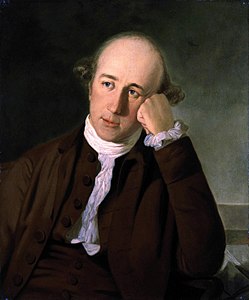
By a letter dated 8 May 1771, the Court of Directors appointed Warren Hastings Governor of Bengal.
Image source: Warren Hastings
1773
The Regulating Act of 1773 replaced the office of Governor of the Presidency of Fort William in Bengal with that of Governor-General of the Presidency of Fort William in Bengal.
Image source: Regulating Act 1773
1793
In 1793, the British East India Company abolished Nizamat, the local rule exercised by Mughal-appointed Nawabs, and annexed Bengal.
1833 - 1854
The Government of India Act 1833 restored the office of Governor of the Presidency of Fort William in Bengal. From then until 1854, the Governor-General of India also held the separate office of Governor of Bengal.
1854 - 1912
Under the Charter Act of 1853, the Governor-General of India was relieved of concurrent duties as Governor of Bengal and empowered to appoint a lieutenant-governor from 1854.
1878
The lieutenant governorship was separated from the Bengal Presidency in 1878 and merged with the Oudh Province; the office of Lieutenant-Governor of the North-Western Provinces of the Presidency of Fort William in Bengal was abolished.
Image source: North-Western Provinces
Dec 12, 1911
At the Delhi Durbar on 12 December 1911, Emperor George V announced the transfer of India's governmental seat from Calcutta to Delhi and the reunification of five predominantly Bengali-speaking divisions into a Bengal Presidency under a governor.
Image source: Delhi Durbar
Apr 1, 1912
Thomas Gibson-Carmichael was appointed Governor of Bengal on 1 April 1912.
Image source: Thomas Gibson-Carmichael, 1st Baron Carmichael
Dec 16, 1971
East Pakistan seceded from West Pakistan on 16 December 1971 after the Bangladesh Liberation War and became the independent nation of Bangladesh.
Image source: Bangladesh Liberation War
1975 - 1991
From 1975 to 1991, Bangladesh operated under a presidential system of government in which the President served as executive head of state.
Image source: President of Bangladesh
Build a timeline like this one in minutes, for free. Start Yours →
Or browse the full history timeline directory, with more than 2,500 topics.
This History of Rulers timeline was generated with the help of AI, using information found on the internet.
We work hard to keep these timelines accurate, but mistakes do get through. If you spot one, email us at [email protected] and we'll fix it for future visitors.
Generate yours with AI or build it from scratch, for free.
Export your timeline, add your own events, edit or remove AI-generated events, and much more
No credit card required.
15-day money-back guarantee.
You can create an unlimited number of timelines with up to 10 events on each one, customize how they look, export them to PDF, PNG, PowerPoint, CSV, and Excel, and share them with a link. Timelines made with Timeline Maker AI keep every event the generator created, and you can add up to 5 events of your own. Paid plans remove the event limit, add spreadsheet imports and hide Preceden's branding, and the higher-priced plan also adds collaborators, a custom logo and a custom domain.
Yes. You can cancel your subscription from your account page at any time, and you will not be charged again. Your subscription stays active for the rest of the period you already paid for.
Yes. We email you a reminder 15 days before your annual renewal, and we email you a receipt after every payment.
Yes. You can email us within 15 days of any payment, and we will issue you a full refund.
Check out our pricing docs or send us an email anytime: [email protected].