-
Use Cases
-
Resources
-
Pricing
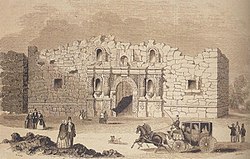
San Antonio, Texas, is one of the oldest cities in the United States, founded in 1718 with the establishment of Mission San Antonio de Valero (the Alamo). The city played a pivotal role in the Texas Revolution, most famously at the Battle of the Alamo in 1836. Over the centuries, San Antonio grew from a Spanish colonial outpost into a major cultural and economic hub, shaped by Spanish, Mexican, German, and American influences. Today it is renowned for landmarks such as the River Walk and its five historic missions, which are UNESCO World Heritage sites. More Less
1536
% complete
In 1536, Álvar Núñez Cabeza de Vaca, a shipwrecked Spanish explorer who had been enslaved by Native Americans for a period, visited the interior of what would later be called Texas, providing some of the earliest European accounts of the region that would one day include San Antonio.
Image source: Álvar Núñez Cabeza de Vaca
1675
% complete
In 1675, an expedition formed by Fray Antonio de Olivares, Fray Francisco Hidalgo, Fray Juan Larios and others was sent to explore and recognize the country beyond the borders of the Rio Grande, testing the possibilities of new settlements in the area.
Image source: Antonio de Olivares
Jun 13, 1691
% complete
On June 13, 1691, a group of Spanish explorers and missionaries came upon the river and a Native American settlement located in the area of present-day La Villita. The day was the feast of St. Anthony of Padua, giving the river and future city its name.
Image source: San Antonio River
1709
% complete
In 1709, the expedition headed by Pedro de Aguirre, together with Fray Antonio de Olivares and Fray Isidro de Espinosa, explored the territory where the present city of San Antonio is located and extended to the Colorado River.
1716
% complete
In 1716, Fray Antonio de Olivares wrote to the Viceroy of New Spain telling of his hopes and plans for a future mission, urging him to send families of settlers to found a town at San Antonio.
1716
% complete
The perseverance of Fray Antonio was answered when the Viceroyalty gave formal approval for the mission in late 1716, assigning responsibility for its establishment to Martín de Alarcón, governor of Coahuila y Tejas.
Image source: Alamo Mission
May 1, 1718
% complete
On May 1, 1718, Martín de Alarcón, in his capacity as General of the Provinces of the Kingdom of the New Philippines, gave possession to Fray Antonio de Olivares of the Misión de San Antonio de Valero, later known as "The Alamo".
May 5, 1718
% complete
The Villa de Bejar, origin of the city of San Antonio, was founded on May 5, 1718, by then Governor Martín de Alarcón at the headwaters of the San Pedro Creek.
Jul 8, 1718
% complete
On July 8, 1718, the first baptism was held at the new Mission San Antonio de Valero, as reflected in the baptismal register of the mission.
1719
% complete
In 1719, Father Margil obtained permission from the Marqués de San Miguel de Aguayo to found a second mission at San Antonio.
Image source: Mission San José (Texas)
Feb 14, 1719
% complete
On February 14, 1719, the Marquess of San Miguel de Aguayo made a report to the king of Spain proposing that 400 families be transported from the Canary Islands, Galicia, or Habana to populate the province of Texas.
Image source: José de Azlor y Virto de Vera
Feb 23, 1720
% complete
Despite obstacles, the Zacatecan Franciscans founded Mission San José y San Miguel de Aguayo next to the San Antonio River on February 23, 1720. It would become known as the Queen of the Missions.
Jun 1730
% complete
In June 1730, 25 families came to Cuba, and 10 families were sent to Veracruz, as part of the effort to settle the province of Texas with civilian colonists from the Canary Islands.
1731
% complete
The Canary Islanders joined the military community that had existed since 1718, forming the first government of the city and taking as headquarters the Presidio of San Antonio de Béjar.
Image source: San Antonio
Mar 9, 1731
% complete
Under the leadership of Juan Leal Goraz, the Canary Islander group marched overland to the Presidio San Antonio de Bexar, arriving on March 9, 1731.
Jan 11, 1811
% complete
While the Mexican War of Independence broke out in 1810, the conflict did not reach San Antonio until January 11, 1811, when retired militia captain Juan Bautista de las Casas seized control of Presidio San Antonio de Béxar, arrested Governor Manuel María de Salcedo, and proclaimed himself provisional governor.
Apr 1, 1813
% complete
On April 1, 1813, a filibuster expedition consisting of over 800 Mexican revolutionaries and American volunteers captured the city from Salcedo and declared their independence from Spain during the re-escalated Texan theater of the war.
1821
% complete
After Mexico won independence from Spain in 1821, Anglo-American settlers entered the region from the United States via Empresarios such as Stephen F. Austin, invited after the depopulation and economic havoc wrought by Arredondo's punitive campaign.
Image source: History of San Antonio
1833
% complete
When Antonio López de Santa Anna, elected President of Mexico in 1833, rescinded the Mexican Constitution of 1824, violence ensued in many provinces of Mexico, including Texas.
Image source: Antonio López de Santa Anna
1834 - 1835
% complete
In Texas, Anglo settlers joined many Hispanic Texans who called themselves Tejanos in demanding a return to the Constitution of 1824, setting the stage for revolution against Santa Anna's centralist government.
Image source: Texians
Dec 1835
% complete
Under the leadership of Ben Milam, in the Battle of Bexar in December 1835, Texian forces captured San Antonio from forces commanded by General Martín Perfecto de Cos, Santa Anna's brother-in-law.
Image source: Siege of Béxar
1836
% complete
In 1836, Anglo-Americans gained control of Texas in the fighting that gained independence for the Republic of Texas, transforming the political fate of San Antonio and the region.
Image source: Republic of Texas
Feb 23, 1836 - Mar 6, 1836
% complete
The Battle of the Alamo took place from February 23 to March 6, 1836, when Santa Anna led a Mexican army back into Texas and marched on San Antonio. The defenders included Anglo and Hispanic Texans who fought side by side under the flag of Mexico with the numerals "1824" superimposed.
Image source: Battle of the Alamo
1845
% complete
In 1845 the United States annexed Texas with its concurrence and included it as a state in the Union, integrating San Antonio into the expanding American nation.
Image source: Texas annexation
1842
% complete
In 1842, San Antonio's Hispanic mayor was forced out of office at gunpoint by Anglo-American politicians, reflecting the shifting power dynamics in the city following the Texas Revolution.
1848
% complete
United States troops along the Mexican border helped incite the Mexican War between the United States and Mexico, which concluded with the Treaty of Guadalupe Hidalgo in 1848, restoring peace and economic connections to San Antonio.
Image source: Treaty of Guadalupe Hidalgo
1849
% complete
Further population reduction occurred in a cholera epidemic outbreak which killed hundreds of residents in 1849, dealing a severe blow to the young American city.
1850
% complete
In 1850, San Antonio became the largest city in Texas with 8,235 people, taking the lead from Galveston.
1856
% complete
When Frederick Law Olmsted visited San Antonio in 1856, he described the city as having a "jumble of races, costumes, languages, and buildings," giving it a quality of "odd and antiquated foreignness" only New Orleans could rival — mystique that still draws tourists today.
Image source: Frederick Law Olmsted
1860
% complete
Peace and economic connections to the United States restored prosperity to the city, and by 1860, at the start of the Civil War, San Antonio had grown to a city of 15,000 people.
1876
% complete
In 1876, a promoter fenced off Alamo Plaza with the new invention of barbed wire and had cowboys drive a herd of cattle into the wire, staging a famous public demonstration of the product.
Image source: Alamo Plaza Historic District
1877
% complete
Bolstered by the construction of its first railroad in 1877, San Antonio entered a new era of commercial growth that would help it reemerge as the state's largest city.
1900
% complete
At the beginning of the 20th century, the streets of Downtown, the old Spanish and Mexican city, were widened to accommodate street cars and modern traffic.
Image source: Downtown San Antonio
1900
% complete
Bolstered by its first railroad and a horrible hurricane that struck Galveston, San Antonio reemerged as the state's largest city in 1900. It remained in the top spot until 1930, when Dallas and Houston overtook the Alamo City.
1901
% complete
After regaining power in the state legislature, white Democrats passed a poll tax in 1901, disenfranchising Black and Hispanic voters who had supported the Republican and Populist parties since the Civil War.
Image source: Disfranchisement after the Reconstruction era
Jul 1955
% complete
In July 1955, the city's school superintendent announced plans to begin integration of all schools starting that fall. By 1955, all special schools were desegregated on a free-choice basis with no violence.
Image source: List of education facilities in San Antonio
1960
% complete
San Antonio's national reputation was enhanced in 1960 when it became the first southern city to integrate its lunch counters, peacefully desegregating downtown businesses.
Image source: Timeline of the 1954-1968 civil rights movement
1965
% complete
In 1965 the San Antonio City Council passed an ordinance integrating all public accommodations, cementing the city's early progress on civil rights among southern cities.
1968
% complete
The acequia, an early irrigation channel dating to the Spanish colonial era, was restored in 1968 and that year was designated a Recorded Texas Historic Landmark.
Image source: San Pedro Springs Park
1981
% complete
Henry Cisneros became the next Hispanic mayor of San Antonio in 1981, over a century after the last Hispanic mayor was forced out of office, marking a milestone in the city's political history.
Image source: Henry Cisneros
2005
% complete
Like many southern cities, San Antonio has had steady population growth since the late twentieth century. Its population nearly doubled in 35 years, from just over 650,000 in the 1970 census to an estimated 1.2 million in 2005 through growth, immigration, and land annexation.
2011
% complete
Since 2011, Alamo Trust Inc., a 501(c)3 nonprofit organization, has been the official partner of the Texas General Land Office in managing the Alamo complex, which has become an integral part of the modern center city.
Or browse the full history timeline directory, with more than 2,000 topics.
This History of San Antonio timeline was generated with the help of AI, using information found on the internet.
We work hard to keep these timelines accurate, but mistakes do get through. If you spot one, email us at [email protected] and we'll fix it for future visitors.
Generate yours with AI or build it from scratch, for free.
Export your timeline, add your own events, edit or remove AI-generated events, and much more
No credit card required.
Cancel anytime.
Cancel anytime.
You can create an unlimited number of timelines with up to 10 events on each one, customize how they look, export them to PDF, PNG, PowerPoint, CSV, and Excel, and share them with a link. Paid plans raise the event limit and add features like spreadsheet imports and collaborators.
Yes. You can cancel your subscription from your account page at any time, and you will not be charged again. Your subscription stays active for the rest of the period you already paid for.
Yes. We will email you a reminder before the annual renewal, and we will also email you a receipt.
Yes. You can email us within 15 days of any payment, and we will issue you a full refund.
Check out our pricing docs or send us an email anytime: [email protected].