-
Use Cases
-
Resources
-
Pricing
The history of ships spans thousands of years, tracing humanity's evolution from simple rafts and dugout canoes to sophisticated sailing vessels, steam-powered ironclads, and today's massive cargo ships and cruise liners. Ships have enabled exploration, trade, warfare, and migration, shaping civilizations and connecting continents across the globe. More Less
1200 BC
% complete
The Phoenicians became the Mediterranean's premier maritime traders, building sturdy merchant vessels and pioneering navigation by the stars. Their ships carried goods like cedar, glass, and purple dye across vast distances, spreading trade networks throughout the ancient world.
Image source: Phoenicia
480 BC
% complete
The Greek fleet, led by Themistocles, defeated the much larger Persian navy in the straits near Athens using agile triremes. This decisive naval victory preserved Greek independence and demonstrated the strategic power of well-designed warships.
Image source: Battle of Salamis
37 AD
% complete
Emperor Caligula commissioned two enormous pleasure barges on Lake Nemi, featuring marble floors, bronze fittings, and advanced plumbing. The ships showcased Roman engineering prowess and remained among the largest vessels built until modern times.
Image source: Nemi ships
793 AD
% complete
Viking longships, with their shallow drafts, flexible clinker-built hulls, and square sails, allowed Norse explorers to raid, trade, and settle from North America to Constantinople. Their design revolutionized shipbuilding and enabled the Viking Age.
Image source: Longship
1000
% complete
Song dynasty Chinese shipbuilders pioneered watertight bulkheads, magnetic compasses for navigation, and stern-mounted rudders. These innovations made Chinese junks among the most seaworthy vessels in the world, centuries ahead of European designs.
Image source: Chinese treasure ship
1405 - 1433
% complete
Admiral Zheng He led massive fleets of treasure ships on seven expeditions across the Indian Ocean, reaching Southeast Asia, India, Arabia, and East Africa. His flagship vessels were reportedly among the largest wooden ships ever built, demonstrating Ming China's unmatched naval power.
Image source: Zheng He
1440
% complete
Portuguese shipbuilders created the caravel, a small, maneuverable vessel with lateen sails that could sail close to the wind. This design made Age of Discovery voyages possible, enabling exploration along African coasts and eventually across the Atlantic.
Image source: Caravel
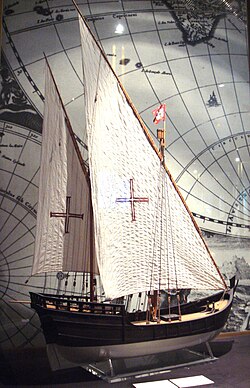
Aug 3, 1492 - Oct 12, 1492
% complete
Sailing aboard the caravels Niña and Pinta and the larger carrack Santa María, Christopher Columbus reached the Americas after a five-week crossing. His voyage inaugurated sustained contact between Europe and the New World, transforming global history.
Image source: Voyages of Christopher Columbus
Sep 20, 1519 - Sep 6, 1522
% complete
Ferdinand Magellan's Spanish expedition set out with five ships; only the Victoria returned, completing the first circumnavigation of the Earth under Juan Sebastián Elcano. The voyage proved the planet's oceans were interconnected and opened new global trade routes.
Image source: Magellan expedition
Jul 19, 1545
% complete
Henry VIII's flagship Mary Rose capsized and sank while engaging a French fleet in the Solent, killing most of her crew. Her remarkably preserved wreck, raised in 1982, provided an unparalleled window into Tudor naval life and shipbuilding.
Image source: Mary Rose
Jul 21, 1588 - Aug 8, 1588
% complete
England's smaller, more maneuverable ships, aided by fireships and storms, scattered the Spanish Armada sent to invade England. The defeat marked the beginning of English naval supremacy and shifted the balance of power at sea in Europe.
Image source: Spanish Armada
1595
% complete
The Dutch introduced the fluyt, a cheap, capacious cargo ship that could be operated by small crews. Its efficiency helped the Dutch Republic dominate 17th-century European shipping and laid groundwork for modern merchant marine design.
Image source: Fluyt
May 7, 1765
% complete
The Royal Navy launched HMS Victory, a first-rate ship of the line mounting 104 guns. She became Admiral Nelson's flagship at Trafalgar and remains the world's oldest commissioned warship still afloat today.
Image source: HMS Victory
1768 - 1771
% complete
Captain James Cook sailed HM Bark Endeavour to Tahiti to observe the transit of Venus, then charted New Zealand and Australia's east coast. His voyages combined scientific exploration with precise navigation, advancing both cartography and seamanship.
Image source: First voyage of James Cook
Oct 21, 1805
% complete
Admiral Horatio Nelson's Royal Navy fleet decisively destroyed the combined Franco-Spanish fleet off Cape Trafalgar using innovative tactics. Nelson died in the battle, but British naval dominance was secured for over a century.
Image source: Battle of Trafalgar
Aug 17, 1807
% complete
Robert Fulton's Clermont, the first commercially successful steamboat, began regular service between New York City and Albany. Steam propulsion transformed river transport and signaled the end of sail's monopoly on waterborne travel.
Image source: North River Steamboat
May 22, 1819 - Jun 20, 1819
% complete
The hybrid sailing steamer SS Savannah crossed the Atlantic from Savannah, Georgia, to Liverpool, using steam power for part of the voyage. Though not commercially successful, she proved oceanic steam travel was possible.
Image source: SS Savannah
Apr 8, 1838
% complete
Isambard Kingdom Brunel's SS Great Western arrived in New York, launching the first regular transatlantic steamship service. Designed specifically for the route, she set the pattern for future ocean liners.
Image source: SS Great Western
Jul 19, 1843
% complete
Brunel's SS Great Britain combined an iron hull, screw propeller, and steam power, making her the prototype of the modern ship. Her innovations rendered wooden sailing ships increasingly obsolete for long-distance trade.
Image source: SS Great Britain
1850 - 1860
% complete
American and British clipper ships like Flying Cloud achieved record-breaking speeds carrying tea, wool, and gold rush passengers. Their sleek hulls represented the pinnacle of sailing ship design even as steam began to dominate.
Image source: Clipper
Mar 9, 1862
% complete
At Hampton Roads, the Union's USS Monitor fought the Confederate ironclad CSS Virginia to a draw in the first battle between armored steam-powered warships. The engagement made every wooden battle fleet obsolete overnight.
Image source: Battle of Hampton Roads
Feb 17, 1864
% complete
The Confederate hand-cranked submarine H. L. Hunley sank the Union sloop USS Housatonic off Charleston, becoming the first submarine to sink a warship. The vessel itself was lost, but the attack heralded the age of underwater warfare.
Image source: H. L. Hunley
Nov 17, 1869
% complete
The Suez Canal connected the Mediterranean and Red Seas, cutting the Europe-to-Asia voyage by thousands of miles. It accelerated the shift to steamships, which could use the canal while many sailing ships could not.
Image source: Suez Canal
Apr 14, 1912 - Apr 15, 1912
% complete
On her maiden voyage, the 'unsinkable' RMS Titanic struck an iceberg and sank, killing over 1,500 people. The disaster prompted sweeping reforms in maritime safety, including the International Convention for the Safety of Life at Sea.
Image source: Titanic
Aug 15, 1914
% complete
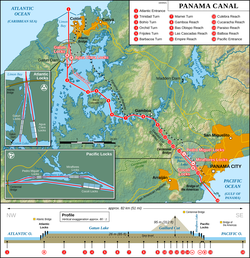
The Panama Canal linked the Atlantic and Pacific Oceans through Central America, dramatically shortening shipping routes. It became one of the world's most important commercial waterways and reshaped global trade patterns.
Image source: Panama Canal
May 31, 1916 - Jun 1, 1916
% complete
The largest naval battle of World War I saw the British Grand Fleet clash with Germany's High Seas Fleet off Denmark. Though tactically inconclusive, it confirmed British control of the North Sea and shaped dreadnought-era naval doctrine.
Image source: Battle of Jutland
Dec 7, 1941
% complete
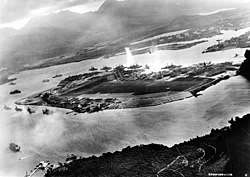
Japanese carrier aircraft devastated the US Pacific Fleet at Pearl Harbor, sinking or damaging numerous battleships. The attack proved the supremacy of aircraft carriers over battleships and drew the United States into World War II.
Image source: Attack on Pearl Harbor
Jun 4, 1942 - Jun 7, 1942
% complete
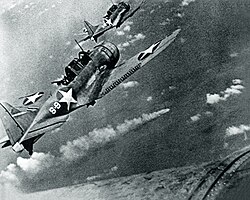
US carrier forces sank four Japanese aircraft carriers at Midway, turning the tide of the Pacific War. The battle cemented the aircraft carrier as the dominant capital ship of the modern era.
Image source: Battle of Midway
Apr 26, 1956
% complete
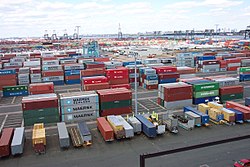
Malcom McLean's Ideal X sailed from Newark with the first load of standardized shipping containers. Containerization slashed loading costs and times, enabling the explosive growth of global trade and the modern container ship industry.
Image source: Containerization
Jul 21, 1959
% complete
The NS Savannah, named after the pioneering steamship, became the first nuclear-powered merchant vessel. Though commercially unviable, she demonstrated nuclear propulsion's potential for civilian shipping.
Image source: NS Savannah
Mar 24, 1989
% complete
The tanker Exxon Valdez ran aground in Prince William Sound, Alaska, spilling roughly 11 million gallons of crude oil. The disaster triggered major reforms in tanker design, including requirements for double hulls, and strengthened environmental regulation of shipping.
Image source: Exxon Valdez oil spill
Or browse the full history timeline directory, with more than 2,000 topics.
This History of Ships timeline was generated with the help of AI, using information found on the internet.
We work hard to keep these timelines accurate, but mistakes do get through. If you spot one, email us at [email protected] and we'll fix it for future visitors.
Generate yours with AI or build it from scratch, for free.
Export your timeline, add your own events, edit or remove AI-generated events, and much more
No credit card required.
Cancel anytime.
Cancel anytime.
You can create an unlimited number of timelines with up to 10 events on each one, customize how they look, export them to PDF, PNG, PowerPoint, CSV, and Excel, and share them with a link. Paid plans raise the event limit and add features like spreadsheet imports and collaborators.
Yes. You can cancel your subscription from your account page at any time, and you will not be charged again. Your subscription stays active for the rest of the period you already paid for.
Yes. We will email you a reminder before the annual renewal, and we will also email you a receipt.
Yes. You can email us within 15 days of any payment, and we will issue you a full refund.
Check out our pricing docs or send us an email anytime: [email protected].