-
Use Cases
-
Resources
-
Pricing
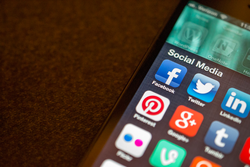
The history of social media traces the evolution of online platforms that enable users to create, share, and interact with content and each other. Beginning with early sites like Six Degrees in 1997, the field expanded rapidly with Friendster, MySpace, LinkedIn, and Facebook, later diversifying into microblogging (Twitter), visual sharing (Instagram, Pinterest), video (YouTube, TikTok), and professional networking (LinkedIn), fundamentally transforming communication, marketing, and culture worldwide. More Less
1960
% complete
The PLATO system was launched in 1960 at the University of Illinois and was subsequently commercially marketed by Control Data Corporation. It was one of the earliest computer systems to support online communities and communication features that foreshadowed modern social media.
Image source: PLATO (computer system)
1969
% complete
ARPANET came online in 1969 and by the late 1970s had enabled exchange of non-government/business ideas and communication, as evidenced by the network etiquette (or 'netiquette') described in a 1982 handbook on computing at MIT's Artificial Intelligence Laboratory.
Image source: ARPANET
1973
% complete
A precursor of the electronic bulletin board system (BBS), known as Community Memory, appeared by 1973, allowing users to post and read messages on public terminals in locations such as Berkeley, California.
Image source: Community Memory
Feb 16, 1978
% complete
Mainstream BBSs arrived with the Computer Bulletin Board System in Chicago, which launched on February 16, 1978, allowing users to dial in over phone lines to exchange messages and files.
Image source: Bulletin board system
1980
% complete
Usenet, conceived by Tom Truscott and Jim Ellis in 1979 at the University of North Carolina at Chapel Hill and Duke University, was the first open social media app, established in 1980.
Image source: Usenet
1991
% complete
In 1991, Tim Berners-Lee integrated HTML hypertext software with the Internet, creating the World Wide Web, which laid the foundation for the web-based social media platforms that followed.
Image source: World Wide Web
1996
% complete
The US enacted the Communications Decency Act in 1996, including Section 230, which would become a foundational legal protection for social media platforms regarding user-generated content.
2012
% complete
After its acquisition by Facebook in 2012, Instagram revealed it intended to use content in ads without seeking permission from or paying its users, sparking backlash over user rights.
Image source: Instagram
2013
% complete
In 2013 some social media was banned in Turkey after the Taksim Gezi Park protests, an example of governments restricting platforms during periods of unrest.
2013
% complete
In 2013, the United Kingdom Advertising Standards Authority began advising celebrities to make it clear whether they had been paid to recommend a product or service by using the hashtag #spon or #ad when endorsing.
Image source: Advertising Standards Authority (United Kingdom)
2014
% complete
Yet TİB's 2014 blocking of X (formerly Twitter) was ruled by Turkey's constitutional court to violate free speech, a notable check on government censorship of social media.
2014
% complete
A 2014 Pew Research Center survey reported that 91% of Americans 'agree' or 'strongly agree' that people have lost control over how personal information is collected and used.
2014
% complete
In a 2014 case in Ontario against a police officer regarding alleged assault of a protester during the G20 summit, the court rejected the Crown's application to use a digital photo of the protest that was anonymously posted online, because it included no metadata verifying its provenance.
Image source: 2010 G20 Toronto summit protests
2014
% complete
In the 2014 Thai coup d'état, the public was explicitly instructed not to 'share' or 'like' dissenting views on social media or face prison.
Image source: 2014 Thai coup d'état
2019
% complete
In 2019, UK legislators criticized Facebook for not protecting certain aspects of user data, part of growing international scrutiny of the company's privacy practices.
Image source: Facebook–Cambridge Analytica data scandal
2019
% complete
In 2019 the Pentagon issued guidance identifying 'the potential risk associated with using the TikTok app', leading the military, Coast Guard, TSA, and Department of Homeland Security to ban TikTok installation and use on government devices.
Image source: TikTok
2020
% complete
In 2020, the US government attempted to ban TikTok and WeChat from the United States over national security concerns.
Image source: Efforts to ban TikTok in the United States
2020
% complete
In 2020, the European Commission presented two legislative proposals: The Digital Services Act (DSA) and the Digital Markets Act (DMA), both enacted in July 2022, with the DSA entering into force on February 17, 2024 and the DMA in March 2024.
Image source: Digital Services Act
Jul 27, 2020
% complete
On July 27, 2020, in Egypt, two women were sentenced to two years of imprisonment for posting TikTok videos, which the government claimed were 'violating family values'.
Jun 2023
% complete
Since June 2023, France has required social media platforms to verify the ages of their users and to obtain parental consent for those under the age of 15.
Image source: Age verification
2024
% complete
In 2024, legislation was enacted in Florida requiring social media companies to verify the age of account holders, prohibiting accounts for those under 14, and requiring parental approval for ages 14–16.
Image source: Social media age verification laws in the United States
2024
% complete
In 2024, the US Congress passed a law directing TikTok's parent company, ByteDance, to divest the service or see it banned from operating in the US. The Supreme Court upheld the ban as constitutional in January 2025.
Apr 9, 2024
% complete
On April 9, 2024, the Spirit Lake Tribe in North Dakota and Menominee Indian Tribe of Wisconsin sued social media companies (Meta Platforms-Facebook, Instagram; Snapchat, TikTok, YouTube, and Google) accused of 'deliberate misconduct' harming youth.
Image source: Social media
Jun 2024
% complete
In June 2024, US Surgeon General Vivek Murthy called for social media platforms to contain a warning about the impact they have on the mental health of young people.
Image source: Vivek Murthy
Nov 2024 - Dec 2025
% complete
In November 2024, the federal government passed the Online Safety Amendment (Social Media Minimum Age) Act 2024 introduced by the Albanese government, banning people under 16 from most social media platforms, effective December 2025.
Image source: Online Safety Amendment (Social Media Minimum Age) Act 2024
Jan 2026
% complete
An agreement was reached in January 2026 that allowed TikTok to continue operating in the US by creating a new American entity called TikTok US Joint Venture.
1999
% complete
In the early 2000s, social media platforms gained widespread popularity with BlackPlanet (1999) preceding Friendster and Myspace, followed by Facebook, YouTube, and Twitter.
May 2007
% complete
The social hub site Facebook launched an integrated video platform in May 2007, expanding text-based social media into multimedia sharing.
Image source: Facebook
Dec 2019
% complete
In December 2019, X CEO Jack Dorsey advocated an 'open and decentralized standard for social media', signaling interest in moving beyond centralized platforms.
Image source: Jack Dorsey
2020
% complete
As of 2020, over 5000 social media patent applications had been published in the United States, reflecting intense innovation and competition among platforms.
Image source: Patent
2022
% complete
According to Statista, it is estimated that in 2022 around 3.96 billion people were using social media globally, up from 3.6 billion in 2020.
2023
% complete
As of 2023, as many as 4.76 billion people used social media, some 59% of the global population, underscoring the medium's near-universal reach.
2003
% complete
A 2003 article reported that lonely individuals are more likely to use the Internet for emotional support than others, an early signal of the complex relationship between online platforms and wellbeing.
Image source: Digital media use and mental health
2007
% complete
In 2007 Andrew Keen wrote, 'Out of this anarchy, it suddenly became clear that what was governing the infinite monkeys now inputting away on the Internet was the law of digital Darwinism, the survival of the loudest and most opinionated.'
Image source: Andrew Keen
2009
% complete
A 2009 study suggested that individual differences may help explain who uses social media: extraversion and openness have a positive relationship with social media, while emotional stability has a negative sloping relationship with it.
2011
% complete
Social media was influential in the Arab Spring in 2011, helping activists organize protests and share information across the Middle East and North Africa.
Image source: Arab Spring
2012
% complete
A 2012 study focused on peer communication reported that communication among peers can affect purchase intentions: direct impact through encouraging conformity, and an indirect impact by increasing product engagement.
2012
% complete
According to Kaplan, Inc., in 2012 27% of admissions officers used Google to learn more about an applicant, with 26% checking Facebook; students whose pages include questionable material may be disqualified from admission.
Image source: Social media in education
2014
% complete
In 2014, #AllEyesonISIS went viral on Arabic X (formerly Twitter), demonstrating how hashtags could mobilize attention around global security issues.
Image source: Twitter
2017
% complete
In 2017, Facebook gave its new emoji reactions five times the weight in its algorithms as its like button, which data scientists at the company in 2019 confirmed had disproportionately boosted toxicity, misinformation and low-quality news.
Image source: Like button
2018
% complete
In 2018, researchers reported that fake news spread almost 70% faster than truthful news on X (formerly Twitter), highlighting the challenge of misinformation on social platforms.
Image source: Fake news
2020
% complete
A 2020 Gallup poll reported that 53% of adult social media users in the United States thought that social media was a very or moderately important way to keep in touch with people during the COVID-19 pandemic.
Jun 2020
% complete
In June 2020, a survey by Cartoon Network and the Cyberbullying Research Center of American tweens ages 9–12 found YouTube was the most popular application at 67%, with older tweens more likely to use social apps and games.
Image source: YouTube
Dec 11, 2020
% complete
On December 11, 2020, the CDC put out a 'Call to Action: Managing the Infodemic', addressing the flood of misinformation accompanying the COVID-19 pandemic on social media.
Jan 2021
% complete
In January 2021, Egyptian authorities were reported to be using Instagram influencers as part of its media ambassadors program, showing governments adopting influencer strategies.
Image source: Influencer marketing
2023
% complete
A 2023 study of Australian youth reported that 57% had seen disturbingly violent content, while nearly half had regular exposure to sexual images on social media.
Image source: Means of communication
Or browse the full history timeline directory, with more than 2,000 topics.
This History of Social Media timeline was generated with the help of AI, using information found on the internet.
We work hard to keep these timelines accurate, but mistakes do get through. If you spot one, email us at [email protected] and we'll fix it for future visitors.
Generate yours with AI or build it from scratch, for free.
Export your timeline, add your own events, edit or remove AI-generated events, and much more
No credit card required.
Cancel anytime.
Cancel anytime.
You can create an unlimited number of timelines with up to 10 events on each one, customize how they look, export them to PDF, PNG, PowerPoint, CSV, and Excel, and share them with a link. Paid plans raise the event limit and add features like spreadsheet imports and collaborators.
Yes. You can cancel your subscription from your account page at any time, and you will not be charged again. Your subscription stays active for the rest of the period you already paid for.
Yes. We will email you a reminder before the annual renewal, and we will also email you a receipt.
Yes. You can email us within 15 days of any payment, and we will issue you a full refund.
Check out our pricing docs or send us an email anytime: [email protected].