-
Use Cases
-
Resources
-
Pricing
The Central Intelligence Agency (CIA) is the primary foreign intelligence agency of the United States, established in 1947 by the National Security Act. This timeline traces its evolution from the wartime Office of Strategic Services (OSS) through Cold War covert operations, major intelligence failures and reforms such as the Church Committee and post-9/11 restructuring, to its ongoing role in global intelligence gathering and analysis. More Less
Jun 13, 1942
% complete
The Office of Strategic Services (OSS) was created during World War II to coordinate espionage and sabotage activities behind enemy lines. Led by William J. Donovan, it became the predecessor of the CIA, conducting intelligence gathering, paramilitary operations, and psychological warfare until its dissolution in 1945.
Image source: Office of Strategic Services
Jan 22, 1946
% complete
President Harry Truman established the Central Intelligence Group (CIG) under the National Intelligence Authority to coordinate intelligence reporting from various government departments. It was the first civilian intelligence organization in the United States and a direct precursor to the CIA.
Image source: Central Intelligence
Sep 18, 1947
% complete
The National Security Act of 1947 officially established the Central Intelligence Agency as part of a major reorganization of US national security institutions. The CIA was charged with coordinating the nation's intelligence activities and collecting, evaluating, and disseminating foreign intelligence to the president and policymakers.
Image source: Central Intelligence Agency
Sep 1, 1948 - Aug 1, 1952
% complete
The Office of Policy Coordination was created to conduct covert political action and paramilitary operations abroad during the early Cold War. Merged with the CIA in 1952, it marked the agency's deep entry into secret operations aimed at countering Soviet influence around the world.
Jul 4, 1950
% complete
With covert CIA funding, Radio Free Europe began broadcasting news and information into Eastern Bloc countries. The station sought to undermine communist regimes by providing uncensored information to citizens behind the Iron Curtain, becoming a key instrument of Cold War cultural diplomacy.
Image source: Radio Free Europe/Radio Liberty

Aug 19, 1953
% complete
Operation Ajax, orchestrated by the CIA and Britain's MI6, overthrew democratically elected Prime Minister Mohammad Mossadegh after he nationalized Iran's oil industry. The coup restored Shah Mohammad Reza Pahlavi to power and became one of the most consequential covert actions in CIA history.
Image source: 1953 Iranian coup d'état
Jun 18, 1954 - Jun 27, 1954
% complete
Operation PBSuccess, a CIA covert operation, overthrew Guatemala's democratically elected President Jacobo Árbenz, who had implemented land reforms and tolerated communists in his government. The coup installed Colonel Carlos Castillo Armas and exemplified the agency's Cold War containment strategy in Latin America.
Image source: 1954 Guatemalan coup d'état
Jun 20, 1956
% complete
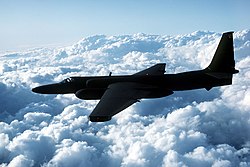
The CIA began flying Lockheed U-2 aircraft on high-altitude photographic reconnaissance missions over the Soviet Union and other hostile territories. The program provided critical intelligence on Soviet military capabilities until Francis Gary Powers' shootdown in 1960 exposed the flights.
Image source: Lockheed U-2
May 1, 1960
% complete
Soviet forces shot down a CIA U-2 reconnaissance plane piloted by Francis Gary Powers over Sverdlovsk. The incident caused an international scandal, derailed a planned superpower summit, and forced President Eisenhower to publicly acknowledge American spy flights over Soviet territory.
Image source: 1960 U-2 incident
Apr 17, 1961 - Apr 19, 1961
% complete
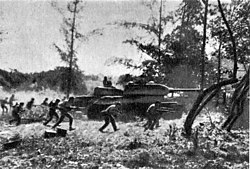
The CIA-trained Brigade 2506 launched an ill-fated invasion of Cuba intended to overthrow Fidel Castro. The operation collapsed within days, embarrassing the Kennedy administration, strengthening Castro's grip on Cuba, and pushing him closer to the Soviet Union.
Image source: Bay of Pigs Invasion
Nov 30, 1961 - 1962
% complete
President Kennedy authorized Operation Mongoose, a covert program of sabotage, propaganda, and assassination plots against Fidel Castro's government run from the CIA's JMATE station in Miami. The program failed to destabilize Cuba but revealed the extent of US covert hostility toward the island.
Oct 14, 1962 - Oct 28, 1962
% complete
A CIA U-2 flight photographed Soviet missile sites under construction in Cuba, triggering the Cuban Missile Crisis. The agency's analysis of Soviet deployments provided President Kennedy with crucial evidence during thirteen tense days that brought the world to the brink of nuclear war.
Image source: Cuban Missile Crisis
Feb 24, 1966
% complete
While Kwame Nkrumah was visiting China, Ghanaian military officers backed by the CIA overthrew his government. The coup removed one of Africa's most prominent pan-Africanist leaders, whom Washington viewed as drifting toward the Soviet bloc.
Image source: 1966 Ghanaian coup d'état
Jul 1, 1967 - 1972
% complete
Designed with significant CIA involvement, the Phoenix Program aimed to identify and neutralize the Viet Cong's political infrastructure through interrogation, infiltration, and targeted killings. The program became highly controversial due to allegations of torture and civilian casualties.
Image source: Phoenix Program
1970 - Sep 11, 1973
% complete
The CIA spent millions attempting to prevent Salvador Allende's election and later to destabilize his socialist government in Chile. Following General Augusto Pinochet's 1973 military coup, which ousted and led to Allende's death, revelations of US involvement damaged America's image across Latin America.
Image source: United States intervention in Chile
Jul 3, 1979 - 1989
% complete
Following the Soviet invasion of Afghanistan, the CIA launched one of its longest and most expensive covert operations, arming and funding the Afghan mujahideen through Pakistan's ISI. The program helped bleed the Soviet occupation but later drew criticism for unintended long-term consequences in the region.
Image source: Operation Cyclone
Jun 17, 1972 - Aug 9, 1974
% complete
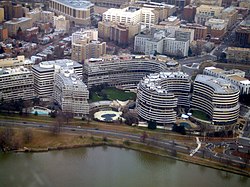
Several Watergate burglars were former CIA operatives or assets, entangling the agency in the scandal that ultimately forced President Nixon's resignation. The episode intensified scrutiny of the CIA's domestic activities and its relationship with the White House.
Image source: Watergate scandal
May 9, 1973 - Jun 25, 1975
% complete
Director James Schlesinger ordered a compilation of potentially illegal CIA activities dating back decades, including assassination plots, surveillance of Americans, and mind-control experiments. Leaked in 1975, the 'family jewels' document triggered congressional investigations and major reforms of intelligence oversight.
Image source: Family Jewels (Central Intelligence Agency)
Jan 27, 1975 - Apr 29, 1976
% complete
The Senate Select Committee chaired by Frank Church exposed widespread CIA misconduct, including assassination plots against foreign leaders, COINTELPRO abuses, and MKUltra experiments. Its findings led to permanent congressional intelligence committees and tighter legal constraints on covert operations.
Image source: Church Committee
Feb 18, 1976
% complete
President Gerald Ford issued Executive Order 11905 prohibiting political assassination by US government employees. Issued amid fallout from Church Committee revelations about CIA plots against foreign leaders, the ban remains a foundational constraint on US intelligence operations.
Image source: Executive Order 11905
Nov 3, 1986
% complete
Revelations emerged that senior Reagan administration officials, with CIA participation, secretly sold arms to Iran and diverted proceeds to fund Contra rebels in Nicaragua despite a congressional ban. The scandal led to investigations, indictments, and renewed debate over executive control of covert action.
Image source: Iran–Contra affair
Feb 21, 1994
% complete
CIA counterintelligence officer Aldrich Ames was arrested for spying for the Soviet Union and Russia since 1985. His betrayal compromised numerous CIA sources, several of whom were executed, prompting a sweeping review of the agency's counterintelligence practices.
Image source: Aldrich Ames
May 11, 1998
% complete
India conducted surprise nuclear weapons tests at Pokhran without detection by US intelligence. The failure embarrassed the CIA, raised questions about its analytical capabilities after the Cold War, and prompted reforms in technical collection and analysis of proliferation threats.
Image source: Pokhran-II
Aug 7, 1998
% complete
Simultaneous truck bombings of US embassies in Kenya and Tanzania killed hundreds and were linked to Osama bin Laden's al-Qaeda network. The attacks elevated counterterrorism to a top CIA priority and preceded US cruise missile strikes against suspected al-Qaeda facilities.
Image source: 1998 United States embassy bombings
Aug 20, 1998
% complete
In retaliation for the embassy bombings, the United States launched Tomahawk missiles at al-Qaeda training camps near Khost, Afghanistan, where intelligence suggested bin Laden would be present. He escaped unharmed, and the strike foreshadowed the CIA's growing use of armed drones.
Image source: Operation Infinite Reach
Sep 11, 2001
% complete
Al-Qaeda's attacks on New York and Washington, which occurred despite warnings in CIA reporting, fundamentally reshaped the agency. Counterterrorism became its central mission, and within weeks the CIA was operating covertly inside Afghanistan alongside US special operations forces.
Image source: September 11 attacks
Oct 7, 2001 - Dec 17, 2001
% complete
Small CIA teams entered Afghanistan ahead of and alongside US military forces, providing money, liaison, and targeting support to Northern Alliance commanders. Their work helped topple the Taliban regime within months and revived the agency's paramilitary tradition.
Image source: War in Afghanistan (2001–2021)
2002 - 2009
% complete
As part of the post-9/11 war on terror, the CIA ran a network of secret detention facilities where suspected terrorists underwent 'enhanced interrogation techniques,' including waterboarding. Widely condemned as torture, the program ended under President Obama and was detailed in the 2014 Senate Torture Report.
Image source: CIA black sites
Mar 20, 2003
% complete
The CIA's assessments that Iraq possessed stockpiles of weapons of mass destruction proved false after the 2003 invasion. Subsequent inquiries found major analytical failures, damaging the agency's credibility and prompting reforms in intelligence collection and analysis.
Image source: Iraq and weapons of mass destruction
Dec 9, 2014
% complete
The Senate Select Committee on Intelligence released a summary of its investigation into the CIA's detention and interrogation program, concluding it was brutal, ineffective, and misrepresented to Congress and the public. The report sparked international condemnation and lasting debate about accountability.
Image source: U.S. Senate report on CIA torture
2016
% complete
Beginning among US diplomats in Havana, Cuba, mysterious health incidents causing headaches, dizziness, and cognitive symptoms were reported by CIA officers and other officials worldwide. The phenomenon prompted extensive investigations into possible directed-energy attacks, though causes remain contested.
Image source: Havana syndrome
Mar 7, 2017
% complete
WikiLeaks began publishing 'Vault 7,' a trove of documents describing CIA cyberespionage tools capable of exploiting smartphones, smart TVs, and other devices. One of the largest intelligence leaks in history, it embarrassed the agency and highlighted the growing importance of cyber operations.
Image source: Vault 7
Jul 31, 2022
% complete
A CIA drone strike killed al-Qaeda leader Ayman al-Zawahiri on a balcony in Kabul, Afghanistan, delivering the most significant blow to the terrorist group since Osama bin Laden's death. The strike demonstrated continued US over-the-horizon capability after the 2021 withdrawal.
Image source: Killing of Ayman al-Zawahiri
Or browse the full history timeline directory, with more than 2,000 topics.
This History of the CIA timeline was generated with the help of AI, using information found on the internet.
We work hard to keep these timelines accurate, but mistakes do get through. If you spot one, email us at [email protected] and we'll fix it for future visitors.
Generate yours with AI or build it from scratch, for free.
Export your timeline, add your own events, edit or remove AI-generated events, and much more
No credit card required.
Cancel anytime.
Cancel anytime.
You can create an unlimited number of timelines with up to 10 events on each one, customize how they look, export them to PDF, PNG, PowerPoint, CSV, and Excel, and share them with a link. Paid plans raise the event limit and add features like spreadsheet imports and collaborators.
Yes. You can cancel your subscription from your account page at any time, and you will not be charged again. Your subscription stays active for the rest of the period you already paid for.
Yes. We will email you a reminder before the annual renewal, and we will also email you a receipt.
Yes. You can email us within 15 days of any payment, and we will issue you a full refund.
Check out our pricing docs or send us an email anytime: [email protected].