-
Use Cases
-
Resources
-
Pricing
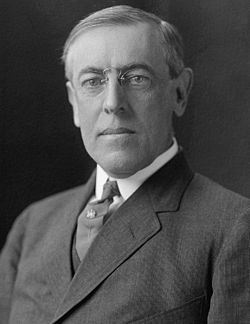
William Howard Taft was the 27th President of the United States, serving from 1909 to 1913. A Yale-educated lawyer, he previously served as Governor-General of the Philippines and Secretary of War under Theodore Roosevelt. After his presidency, he achieved his lifelong ambition by becoming the tenth Chief Justice of the U.S. Supreme Court in 1921, making him the only person to lead both the executive and judicial branches. More Less
Sep 15, 1857
% complete
William Howard Taft was born in Cincinnati, Ohio, to Alphonso Taft, a prominent attorney and judge who later served as Secretary of War and Attorney General. He was raised in a politically engaged household that shaped his future career in law and government.
Image source: William Howard Taft
1878
% complete
Taft graduated second in his class from Yale College in 1878, where he was a member of Skull and Bones. His academic success laid the groundwork for his entry into the legal profession.
Image source: Yale University

1880
% complete
Taft earned his law degree from Cincinnati Law School and was admitted to the Ohio bar, beginning a legal career that would define much of his professional life.
Image source: University of Cincinnati Donald P. Klekamp College of Law
Jun 19, 1886
% complete
Taft married Helen 'Nellie' Herron, daughter of a prominent Cincinnati lawyer. She became an influential First Lady and later encouraged his presidential ambitions.
Image source: Helen Herron Taft
1881
% complete
Early in his career, Taft served as assistant prosecutor of Hamilton County, Ohio, gaining courtroom experience and building a reputation as a capable young lawyer.
1887 - 1890
% complete
Taft was appointed to fill a vacancy on the Ohio Superior Court, marking the start of his judicial career. He was elected to a full term shortly afterward.
1890 - 1892
% complete
President Benjamin Harrison appointed Taft as U.S. Solicitor General, where he argued numerous cases before the Supreme Court and developed a strong relationship with the justices.
Image source: Solicitor General of the United States
1892 - 1900
% complete
Harrison named Taft a federal judge on the Sixth Circuit Court of Appeals, where he also taught law at the University of Cincinnati and became known as an able administrator.
Image source: United States Court of Appeals for the Sixth Circuit
1900 - 1903
% complete
President McKinley appointed Taft to head the commission governing the newly acquired Philippines after the Spanish-American War. He later became the first civil Governor-General, working to establish courts, schools, and infrastructure.
1904 - 1908
% complete
Roosevelt appointed Taft Secretary of War, where he supervised the Philippines and the Panama Canal construction and became Roosevelt's most trusted advisor and envoy.
Nov 3, 1908
% complete
With Roosevelt's endorsement, Taft defeated William Jennings Bryan decisively, winning 321 electoral votes and becoming the 27th President of the United States.
Image source: 1908 United States presidential election
1909 - 1910
% complete
A dispute over conservation policy between Interior Secretary Richard Ballinger and Forest Service chief Gifford Pinchot split the Republican Party and deepened tensions between Taft and Roosevelt's allies.
Image source: Pinchot–Ballinger controversy
1909 - 1913
% complete
Taft's foreign policy emphasized using American economic power and investment abroad, particularly in Latin America and East Asia, to extend U.S. influence peacefully while protecting American business interests.
Image source: Dollar diplomacy
Mar 4, 1909
% complete
Taft was inaugurated on a snowy day in Washington, D.C., taking the oath of office administered by Chief Justice Melville Fuller. He pledged continuity with Roosevelt's Progressive policies.
Image source: Inauguration of William Howard Taft
Aug 5, 1909
% complete
Taft signed the Payne-Aldrich Tariff, which reduced tariffs only modestly. The act angered Progressive Republicans who had hoped for deeper cuts and damaged Taft's standing with reformers.
Image source: Payne–Aldrich Tariff Act
Jun 18, 1910
% complete
The Mann-Elkins Act strengthened the Interstate Commerce Commission's authority over railroad rates and extended regulation to telephone and telegraph companies, advancing Progressive reform.
Image source: Mann–Elkins Act
1911
% complete
Under Taft, the Justice Department pursued more antitrust cases than Roosevelt had, leading to Supreme Court decisions breaking up Standard Oil and American Tobacco under the Sherman Antitrust Act.
Image source: Standard Oil Co. of New Jersey v. United States
Feb 1912
% complete
Theodore Roosevelt challenged Taft for the Republican nomination, declaring himself fit for another term. The bitter primary fight fractured the GOP ahead of the general election.
Image source: 1912 United States presidential election
Apr 9, 1912
% complete
Taft signed legislation creating the Children's Bureau within the Department of Labor, a landmark federal agency dedicated to child welfare and maternal health.
Nov 5, 1912
% complete
Divided between Taft and Roosevelt's Bull Moose ticket, Republicans lost badly to Democrat Woodrow Wilson. Taft won only 8 electoral votes, one of the worst showings by an incumbent president.
1913 - 1921
% complete
After leaving the White House, Taft became a professor of constitutional law at Yale Law School, teaching and writing while remaining active in public affairs.
1913
% complete
Taft was elected president of the American Bar Association, using the position to advocate for judicial efficiency and reforms to the federal court system.
Image source: American Bar Association
Jun 17, 1915
% complete
Taft helped found the League to Enforce Peace, advocating international arbitration and collective security, ideas that influenced the later creation of the League of Nations.
Image source: League to Enforce Peace
1918 - 1919
% complete
During World War I, President Wilson appointed Taft to the National War Labor Board, which mediated labor disputes to keep wartime production running smoothly.
1919 - 1920
% complete
Though supportive of international cooperation, Taft backed reservations to the Treaty of Versailles that would limit American obligations under the League of Nations covenant.
Jun 30, 1921
% complete
President Warren Harding nominated Taft to be Chief Justice of the United States, fulfilling his lifelong dream. The Senate confirmed him the same day with little opposition.
Jul 11, 1921
% complete
Taft became the only person in American history to serve as both President and Chief Justice, presiding over the Supreme Court until 1930.
Image source: Chief Justice of the United States
Sep 14, 1922
% complete
Taft successfully lobbied for the Judiciary Act of 1922, which created the Conference of Senior Circuit Judges (later the Judicial Conference), modernizing federal court administration.
Jun 1, 1925
% complete
During Taft's tenure, the Court decided Pierce v. Society of Sisters (1925), striking down Oregon's compulsory public schooling law and protecting private education rights — part of a broader expansion of substantive due process.
Jun 4, 1928
% complete
Taft authored the majority opinion holding that wiretapping did not violate the Fourth Amendment, a controversial decision later overturned by Katz v. United States in 1967.
Feb 3, 1930
% complete
Suffering from heart disease and increasingly frail, Taft resigned from the Supreme Court, ending a judicial career he considered his greatest achievement.
Mar 8, 1930
% complete
Taft died at his home in Washington, D.C., just weeks after resigning. He received a state funeral and was buried at Arlington National Cemetery, the first president interred there.
Image source: Death and state funeral of Ronald Reagan
Or browse the full history timeline directory, with more than 2,000 topics.
This William Howard Taft timeline was generated with the help of AI, using information found on the internet.
We work hard to keep these timelines accurate, but mistakes do get through. If you spot one, email us at [email protected] and we'll fix it for future visitors.
Generate yours with AI or build it from scratch, for free.
Export your timeline, add your own events, edit or remove AI-generated events, and much more
No credit card required.
Cancel anytime.
Cancel anytime.
You can create an unlimited number of timelines with up to 10 events on each one, customize how they look, export them to PDF, PNG, PowerPoint, CSV, and Excel, and share them with a link. Paid plans raise the event limit and add features like spreadsheet imports and collaborators.
Yes. You can cancel your subscription from your account page at any time, and you will not be charged again. Your subscription stays active for the rest of the period you already paid for.
Yes. We will email you a reminder before the annual renewal, and we will also email you a receipt.
Yes. You can email us within 15 days of any payment, and we will issue you a full refund.
Check out our pricing docs or send us an email anytime: [email protected].