-
Use Cases
-
Resources
-
Pricing
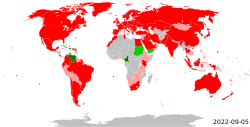
The metric system is a decimal-based system of measurement first developed in France during the late 18th century. Designed to be universal and based on natural constants, it replaced a patchwork of local units and gradually spread worldwide. Today, its modern form, the International System of Units (SI), is the official measurement system in nearly every country and underpins science, trade, and industry globally. More Less
1668
% complete
In his essay 'An Essay towards a Real Character and a Philosophical Language', John Wilkins proposed a decimal system of measurement based on natural constants, an early precursor to the metric system.
Image source: John Wilkins
1670
% complete
French clergyman Gabriel Mouton proposed a decimal system of measurement based on the length of a pendulum, one of the first concrete proposals for a universal decimal system of measures.
Mar 9, 1790
% complete
Charles Maurice de Talleyrand urged the French National Assembly to adopt a new, uniform system of weights and measures based on natural phenomena, setting the stage for the creation of the metric system.
Image source: Charles Maurice de Talleyrand-Périgord
May 8, 1790
% complete
The French National Assembly charged the Academy of Sciences with devising a new measurement system. The Academy recommended a decimal system with units derived from the Earth's meridian.
Image source: Metric system
1792 - 1799
% complete
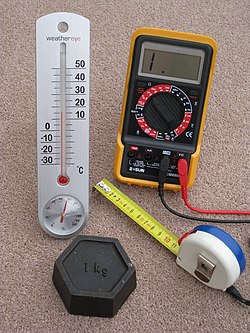
Astronomers Jean-Baptiste Delambre and Pierre Méchain conducted a seven-year geodetic survey between Dunkirk and Barcelona to measure the Earth's meridian, defining the length of the metre.
1832
% complete
Carl Friedrich Gauss promoted a coherent system based on the millimetre, gram, and second, laying groundwork for later extensions of the metric system into physics.
Image source: Gaussian units
Apr 7, 1795
% complete
The French Republic formally adopted the metric system, defining the metre as one ten-millionth of the distance from the North Pole to the Equator and introducing units like the gram and litre.
Image source: History of the metric system
Jun 22, 1799
% complete
A platinum bar representing the metre, along with a platinum kilogram cylinder, were deposited in the French National Archives, establishing physical standards for the new units.
Image source: Metre
Feb 12, 1812
% complete
Napoleon Bonaparte issued a decree allowing 'mesures usuelles', traditional units redefined in terms of metric standards, reflecting public resistance to the unfamiliar metric system.
Image source: Mesures usuelles
Jan 1, 1840
% complete
Under King Louis Philippe I, France reinstated the mandatory use of the metric system nationwide, abandoning the transitional mesures usuelles and cementing metric adoption.
1816
% complete
The Netherlands became one of the first countries outside France to adopt the metric system, following its annexation experience under Napoleon.
Image source: Metrication
1820
% complete
Belgium adopted the metric system shortly after gaining independence, following the Dutch precedent established during the Napoleonic era.
1849
% complete
Spain passed legislation adopting the metric system, becoming one of the early adopters on the European continent outside France.
1852
% complete
Portugal officially adopted the metric system, replacing its traditional Portuguese units with standard metric measurements.
1861
% complete
Following Italian unification, the newly formed Kingdom of Italy adopted the metric system nationwide, unifying diverse regional measurement traditions.
Image source: Italian units of measurement
1862
% complete
Brazil adopted the metric system by imperial law, becoming one of the first countries in the Americas to do so.
Jul 28, 1866
% complete
The United States Congress passed the Metric Act, making it lawful to use the metric system throughout the country, though it did not mandate adoption.
Image source: Metric Act of 1866
1868
% complete
The North German Confederation adopted the metric system, which was carried over into the German Empire upon its founding in 1871.
Image source: Metrication
1918
% complete
The young Soviet government decreed the adoption of the metric system, completing full implementation by 1927 and replacing traditional Russian units.
1924
% complete
Japan enacted laws mandating the use of the metric system, though traditional shakkanhō units remained in parallel use for decades afterward.
1965
% complete
The British government announced a policy of voluntary metrication, beginning a gradual transition from imperial units that continues in various sectors today.
Image source: Metrication in the United Kingdom
1970 - 1988
% complete
Australia undertook a swift and successful metrication program, converting road signs, trade, education, and weather reporting to metric units within about two decades.
Image source: Metrication in Australia
1970 - 1985
% complete
Canada launched its Metric Commission in 1971 to convert the country to the metric system, largely completing the transition across industry and commerce by the mid-1980s.
Image source: Metrication in Canada
1971
% complete
The US Department of Commerce published the three-volume 'A Metric America' report recommending a coordinated national transition to the metric system.
Image source: Metrication in the United States
Dec 23, 1975
% complete
President Gerald Ford signed the Metric Conversion Act, declaring metric the preferred system of weights and measures in the United States, though conversion remained voluntary.
1995
% complete
EU directives required metric-only or dual labelling of packaged goods across member states, reinforcing the metric system as Europe's common commercial standard.
Image source: European units of measurement directives
1853
% complete
The First International Statistical Congress in Brussels recommended the adoption of a single decimal system of weights and measures for international statistical comparisons.
Image source: First International Statistical Congress
1873
% complete
The British Association for the Advancement of Science formalized the centimetre-gram-second (CGS) system, extending metric units into electromagnetism and physics research.
1875
% complete
The International Committee for Weights and Measures was created to supervise the BIPM and provide scientific oversight between meetings of the CGPM.
Image source: International Bureau of Weights and Measures
1875
% complete
The BIPM was established at Sèvres, near Paris, to safeguard international prototype standards of the metre and kilogram and coordinate metrology worldwide.
May 20, 1875
% complete
Seventeen nations signed the Metre Convention in Paris, establishing permanent international institutions to maintain and refine the metric standards.
Image source: Metre Convention
1889
% complete
The CGPM sanctioned the International Prototype Metre and Kilogram, distributing copies to member states and formalizing global metric standards.
1901
% complete
The third CGPM defined the litre as the volume of one kilogram of water at maximum density, resolving ambiguities in the relationship between mass and volume units.
Image source: Litre
1921
% complete
The scope of the Metre Convention was extended to electrical units, and subsequent conferences defined the ampere, volt, and ohm within the metric framework.
Image source: Ampere
1948
% complete
The metre-kilogram-second (MKS) system gained official recognition when the CGPM adopted the ampere as a base unit, forming the MKSA system that preceded SI.
1960
% complete
The eleventh CGPM formally established the International System of Units (SI), a modernized, coherent form of the metric system with six base units, later expanded to seven.
Image source: International System of Units
Oct 21, 1983
% complete
The seventeenth CGPM redefined the metre as the distance light travels in vacuum in 1/299,792,458 of a second, fixing the speed of light exactly and ending dependence on physical artefacts.
Nov 16, 2018
% complete
The twenty-sixth CGPM voted to redefine the kilogram using Planck's constant, along with revised definitions of the ampere, kelvin, and mole, eliminating the last physical artefact standard.
Image source: 2019 revision of the SI
May 20, 2019
% complete
On World Metrology Day, all SI base units became defined by fundamental physical constants, marking the culmination of over two centuries of refinement of the metric system.
Or browse the full history timeline directory, with more than 2,000 topics.
This History of the Metric System timeline was generated with the help of AI, using information found on the internet.
We work hard to keep these timelines accurate, but mistakes do get through. If you spot one, email us at [email protected] and we'll fix it for future visitors.
Generate yours with AI or build it from scratch, for free.
Export your timeline, add your own events, edit or remove AI-generated events, and much more
No credit card required.
Cancel anytime.
Cancel anytime.
You can create an unlimited number of timelines with up to 10 events on each one, customize how they look, export them to PDF, PNG, PowerPoint, CSV, and Excel, and share them with a link. Paid plans raise the event limit and add features like spreadsheet imports and collaborators.
Yes. You can cancel your subscription from your account page at any time, and you will not be charged again. Your subscription stays active for the rest of the period you already paid for.
Yes. We will email you a reminder before the annual renewal, and we will also email you a receipt.
Yes. You can email us within 15 days of any payment, and we will issue you a full refund.
Check out our pricing docs or send us an email anytime: [email protected].