-
Use Cases
-
Resources
-
Pricing
1500 - 1565
Silverpoint and leadpoint were the closest predecessors to the pencil as drawing techniques before graphite became widely available.
1560
Around 1560, Italian couple Simonio and Lyndiana Bernacotti made what are likely the first blueprints for the modern wood-encased carpentry pencil.
Image source: Pencil
1565
A large deposit of graphite was discovered near Grey Knotts, approaching the hamlet of Seathwaite in Borrowdale parish, Cumbria, England. Some sources place the discovery as early as 1500.
Image source: Graphite
1575
The meaning of the term “graphite writing implement” apparently evolved during the late sixteenth century as graphite tools became established.
1600 - 1699
A German carpenter’s pencil dating from the seventeenth century is the oldest surviving pencil and is held in the Faber-Castell collection.
1821
Charles Dunbar found graphite in New Hampshire in 1821. The material later supported the pencil factory of Henry David Thoreau’s father in Concord.
1565 - 1662
England enjoyed a monopoly on pencil production after the Borrowdale graphite discovery, until Germany developed a method for reconstituting powdered graphite.
1662
The first attempt to manufacture graphite sticks from powdered graphite took place in Nuremberg, Germany, in 1662.
1662
A German method for reconstituting graphite powder was discovered in 1662, ending England’s monopoly on pencil production.
1790
A method of mixing powdered graphite with clay and forming the mixture into rods was discovered by Austrian Joseph Hardtmuth, founder of Vienna’s Koh-I-Noor company, in 1790.
1795
In 1795, Nicolas-Jacques Conté discovered a method of mixing powdered graphite with clay, forming rods, and firing them in a kiln. The method remains in use.
Image source: Nicolas-Jacques Conté
1802
Koh-i-Noor patented the production of graphite leads made from graphite and clay in 1802.
1812
William Munroe, a cabinetmaker in Concord, Massachusetts, made the first American wood pencils in 1812.
1821
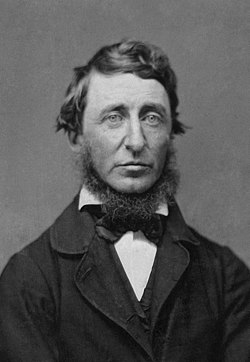
According to Henry Petroski, Henry David Thoreau discovered how to make a good pencil from inferior graphite by using clay as a binder, prompted by his father’s pencil factory.
Image source: Henry David Thoreau
1838
Henry Bessemer’s first successful invention, in 1838, was a method of compressing graphite powder into solid graphite, allowing waste from sawing to be reused.
Image source: Henry Bessemer
1870
By 1870, the Joseph Dixon Crucible Company was the world’s largest dealer and consumer of graphite. It later became the contemporary Dixon Ticonderoga pencil and art-supplies company.
1901 - 1950
In the early twentieth century, supplies of red cedar dwindled, forcing manufacturers to recycle wood from cedar fences and barns to maintain pencil production.
1729
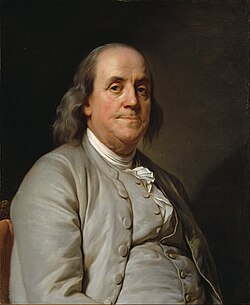
Benjamin Franklin advertised pencils for sale in The Pennsylvania Gazette in 1729, providing an early American record of their commercial availability.
Image source: Benjamin Franklin
1762
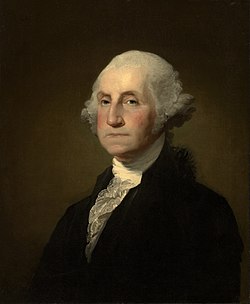
George Washington used a three-inch, or 7.5-centimetre, pencil while surveying the Ohio Country in 1762.
Image source: George Washington
1875 - 1899
Copying pencils were invented in the late nineteenth century for press copying and as a practical substitute for fountain pens.
1899
By the end of the nineteenth century, more than 240,000 pencils were used each day in the United States.
1900 - 1950
Copying pencils were widely used until the middle of the twentieth century, when ballpoint pens slowly replaced them.
Sep 3, 2007
On 3 September 2007, Ashrita Furman unveiled a giant US$20,000 pencil measuring 23 metres long and weighing 8,200 kilograms, including more than 2,000 kilograms of graphite. It took three weeks to create in August 2007 as a birthday gift for teacher Sri Chinmoy.
Image source: Ashrita Furman
1800 - 1899
Numbers were first used as pencil-grade designations by Conté and later by John Thoreau during the nineteenth century.
1814
The graphite-grade designation “H. B.” was in use at least as early as 1814.
Mar 30, 1858
Hymen Lipman received the first patent for attaching an eraser to the end of a pencil on 30 March 1858.
1862 - 1875
After purchasing Lipman’s patent, Joseph Reckendorfer sued pencil manufacturer Faber-Castell for infringement.
1862
In 1862, Hymen Lipman sold his pencil-eraser patent to Joseph Reckendorfer for $100,000.
1875
In Faber, decided in 1875, the Supreme Court of the United States ruled against Reckendorfer and declared the pencil-eraser patent invalid.
1890
According to Henry Petroski, the tradition of yellow pencil exteriors began in 1890 when the L. & C. Hardtmuth Company of Austria-Hungary introduced its Koh-I-Noor brand, named after the famous diamond.
1900 - 2026
Koh-i-Noor offers twenty grades, ranging from 10H to 8B, for its 1500 series pencils.
1900 - 1950
Until the middle of the twentieth century, paint used on pencil exteriors could contain high concentrations of lead, which could be ingested when pencils were sucked or chewed.
1955
The technology for synthetic resin-bonded graphite was first invented in 1955 by Scripto and Parker Pens.
1960
Pentel has marketed synthetic resin-bonded graphite for mechanical pencils since introducing its Hi-Polymer lead in 1960.
1967
Harold Grossman invented plastic pencils for the Empire Pencil Company in 1967.
1969 - 1972
Arthur D. Little improved Empire’s plastic-pencil technology from 1969 through the early 1970s, after which Empire commercialized the product as the EPCON Pencil.
2000 - 2026
Standard lead sizes include 2.00, 1.40, 1.00, 0.70, 0.50, 0.35, 0.25, 0.18, and 0.13 millimetres under ISO 9175-1. The 0.90-millimetre size is available but is not an ISO standard size.
Or browse the full history timeline directory, with more than 2,500 topics.
This History of Pencils timeline was generated with the help of AI, using information found on the internet.
We work hard to keep these timelines accurate, but mistakes do get through. If you spot one, email us at [email protected] and we'll fix it for future visitors.
Generate yours with AI or build it from scratch, for free.
Export your timeline, add your own events, edit or remove AI-generated events, and much more
No credit card required.
Cancel anytime.
Cancel anytime.
You can create an unlimited number of timelines with up to 10 events on each one, customize how they look, export them to PDF, PNG, PowerPoint, CSV, and Excel, and share them with a link. Paid plans raise the event limit and add features like spreadsheet imports and collaborators.
Yes. You can cancel your subscription from your account page at any time, and you will not be charged again. Your subscription stays active for the rest of the period you already paid for.
Yes. We will email you a reminder before the annual renewal, and we will also email you a receipt.
Yes. You can email us within 15 days of any payment, and we will issue you a full refund.
Check out our pricing docs or send us an email anytime: [email protected].