-
Use Cases
-
Resources
-
Pricing
The Pulitzer Prize is a set of annual awards established by Hungarian-American newspaper publisher Joseph Pulitzer, who left funds to Columbia University upon his death in 1911. First awarded in 1917, the prizes honor excellence in American journalism, literature, drama, music, and poetry, and are administered by Columbia University with recommendations from a Pulitzer Prize Board. Over the decades, the awards have expanded and evolved, becoming one of the highest honors in American letters and reporting. More Less
Aug 1903
Newspaper publisher Joseph Pulitzer donated $2 million to Columbia University to found a school of journalism, stipulating in his will that part of the funds be used to establish annual prizes honoring excellence in journalism, letters, and drama. His vision was to elevate the standards of the press and encourage public service.
Oct 29, 1911
Joseph Pulitzer died aboard his yacht in Charleston Harbor, South Carolina. His will left detailed instructions for the Pulitzer Prizes, including an advisory board to oversee awards and provisions for four journalism prizes, four book prizes, a drama prize, an education prize, and five traveling scholarships.
Image source: Joseph Pulitzer

Sep 25, 1912
The Columbia University Graduate School of Journalism opened its doors, fulfilling Pulitzer's bequest and creating the institutional foundation from which the Pulitzer Prize program would later be administered.
1917
Herbert Bayard Swope of The New York World won the first Public Service-style reporting recognition for his series 'Germany's War Plans,' helping set the standard for investigative and serialized journalism recognized by the prizes.
Image source: Herbert Bayard Swope

Jun 4, 1917
The first Pulitzer Prizes were awarded on the recommendation of the advisory board. The first prize honored Laura E. Richards and Maude Howe Elliott's biography of Julia Ward Howe. The inaugural journalism prizes were awarded for editorial writing and reporting, marking the beginning of America's most prestigious award tradition.
Image source: Pulitzer Prize

1918
Ernest Poole's novel 'His Family' received the first Pulitzer Prize for the Novel, awarded for distinguished American fiction dealing with American life, establishing the fiction category that would later become the Novel and then Fiction prize.
Image source: His Family

1919
The Public Service gold medal became firmly established as the most prestigious Pulitzer Prize, awarded to newspapers rather than individuals for exemplary service to the community or nation through distinguished journalism.
Image source: Pulitzer Prize for Public Service

1942
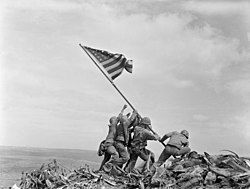
The Pulitzers added photography categories in 1942, recognizing visual journalism. Milton Brooks of The Detroit News won the first Photography prize for his image of strikers battling Ford Company men, opening the door for photojournalism's celebrated role at the awards.
1943
The Pulitzer Prize for Music was created, with William Schuman's secular cantata 'A Free Song' winning the first award, extending the prizes' reach into classical composition.
1948
The Novel prize was officially renamed the Pulitzer Prize for Fiction, allowing short story collections such as James A. Michener's 'Tales of the South Pacific' to compete, broadening the scope of eligible literary works.
This History of the Pulitzer Prize timeline was generated with the help of AI, using information found on the internet.
We work hard to keep these timelines accurate, but mistakes do get through. If you spot one, email us at [email protected] and we'll fix it for future visitors.
Generate yours with AI or build it from scratch, for free.