-
Use Cases
-
Resources
-
Pricing
1714
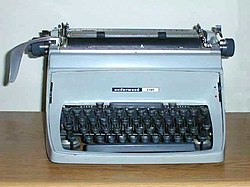
English engineer Henry Mill received a patent for a machine that could impress letters onto paper in a manner resembling writing. The patent is an important early conceptual predecessor of the typewriter, although no surviving machine or detailed working description is known.
Image source: Typewriter
1808
Italian inventor Pellegrino Turri is generally credited with building an early practical typing machine around 1808. It was reportedly created to help the blind Countess Carolina Fantoni da Fivizzano write, and Turri also contributed carbon paper to make typed impressions legible.
1829
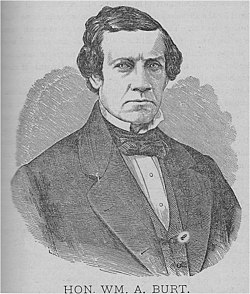
William Austin Burt patented the Typographer in the United States. Its operator selected characters with a pointer and printed them one at a time, making it an important early American typewriting device even though it was slower than handwriting and never became commercially successful.
Image source: William Austin Burt
1833
French inventor Xavier Progin patented a machine using separate keys and type levers. His design introduced ideas that later became central to typewriters, including a keyboard-operated mechanism capable of printing individual characters.
1843
Charles Thurber patented a machine printer in the United States. Although the device was complicated and not commercially adopted, its emphasis on mechanical character selection and printing helped advance the development of keyboard typewriters.
1855
Italian inventor Giuseppe Ravizza demonstrated and patented versions of the Cembalo scrivano, or writing harpsichord. The machine used a keyboard and type bars and included features that anticipated later commercial typewriters, but it did not enter mass production.
Jun 23, 1868
Christopher Latham Sholes, Carlos Glidden, and Samuel W. Soule received a United States patent for a typewriting machine. Sholes continued refining the design, laying the foundation for the machine later manufactured by E. Remington and Sons.
Image source: Sholes and Glidden typewriter
1870
Danish inventor Rasmus Malling-Hansen patented the Hansen Writing Ball. Its keys were arranged on a hemispherical surface above the paper, and the device became the first commercially produced typewriter, notably used by Friedrich Nietzsche.
Image source: Hansen Writing Ball
1873
E. Remington and Sons agreed to manufacture the Sholes and Glidden machine, beginning industrial production of the first commercially successful American typewriter. The machine adapted Remington's expertise in firearms manufacturing to a new office technology.
1884
James Bartlett Hammond introduced the Hammond typewriter, which used a type shuttle rather than conventional type bars. Its interchangeable shuttles made it possible to change typefaces and scripts, giving the machine a distinctive place in early typewriter history.
Image source: Hammond Typewriter
1896
The Underwood No. 1 helped establish the modern front-strike typewriter, allowing operators to see the paper and typed text while working. Its design became a major commercial rival to Remington and strongly influenced subsequent office machines.
Image source: Underwood Typewriter Company
1906
International typing competitions in the early twentieth century promoted speed, accuracy, and standardized touch-typing methods. These contests helped turn typewriting into a recognized clerical skill and strengthened the cultural association between typewriters and professional office work.
1874
The first Remington typewriters introduced the keyboard arrangement that became known as QWERTY. Its layout was developed during Sholes's revisions and helped reduce mechanical clashes in the machine's type-bar mechanism; it later became the dominant English-language keyboard standard.
Image source: QWERTY
1888
Frank Edward McGurrin's widely publicized success using touch typing helped demonstrate that operators could type without looking at the keys. His 1888 contest victory contributed to the growth of typing instruction and professional stenography.
1893
George C. Blickensderfer patented the compact Blickensderfer typewriter. It used a rotating typewheel, a simplified keyboard, and fewer moving parts than many competitors, making it portable and economical even though it did not displace standard type-bar machines.
Image source: Blickensderfer typewriter
1902
The Blickensderfer Electric, developed by George C. Blickensderfer, is commonly identified as the first electric typewriter. It was not commercially successful, but it showed how motors could reduce the physical effort required to operate a keyboard machine.
Image source: Typewriter
1903
The German Mignon typewriter used an index and rotating type cylinder instead of a full character keyboard. It offered a relatively inexpensive way to produce different alphabets and type styles and remained in production for decades.
1930
The Varityper, developed from the Hammond system, used interchangeable type elements and proportional spacing. It allowed offices and publishers to produce more varied and visually sophisticated documents than conventional fixed-pitch typewriters.
1933
IBM acquired the technology of the Electromatic typewriter and began marketing electric typewriters in the 1930s. Motorized operation reduced key pressure and improved consistency, establishing the basis for IBM's later dominance in professional typing equipment.
1944
IBM's Model A refined electric typewriter mechanisms for office use. Electric actuation made sustained typing less tiring and provided more uniform impressions, accelerating the transition from purely mechanical machines in businesses and institutions.
1961
IBM introduced the Selectric typewriter, replacing individual type bars with a rotating spherical type element known as the typeball. The mechanism largely eliminated type-bar jams, supported interchangeable typefaces, and became one of the most influential office machines of the twentieth century.
Image source: IBM Selectric
1964
IBM introduced the Magnetic Tape Selectric Typewriter, which stored typed text on magnetic tape and could replay or revise material. It connected typewriting with electronic data processing and is often regarded as an early word-processing system.
1969
IBM's Magnetic Card Selectric Typewriter stored documents and reusable text on removable magnetic cards. The system made corrections and repeated document production much easier, bridging conventional typewriters and dedicated word processors.
1973
Diablo Systems developed a commercially successful daisy-wheel printing technology. Its interchangeable wheel and letter-quality output made it an important electronic successor to typewriters, especially for business correspondence before laser printers became widespread.
1976
Xerox introduced the Memorywriter, an early dedicated electronic word processor. It combined a keyboard and display with electronic document storage and printing, demonstrating the direction in which advanced typewriters were evolving.
Image source: Word processor
1980
Canon's Typestar 1 was among the early portable electronic typewriters aimed at consumers and mobile professionals. Electronic controls, compact construction, and correction features made such machines more convenient than traditional mechanical portables.
1982
Brother launched the EP-20, a compact electronic word processor with a small display and thermal printer. It represented the growing convergence of typewriter, calculator, and computer technologies in affordable personal office equipment.
1981
The release of the IBM Personal Computer accelerated the adoption of computer-based word processing. Software offered editing, storage, and formatting capabilities that increasingly displaced dedicated typewriters in offices.
Image source: IBM Personal Computer
1983
Microsoft released Word, first for Xenix and later for other platforms. Its editable documents, formatting tools, and eventual integration with personal computers helped establish software-based word processing as the standard alternative to typewritten pages.
Image source: Microsoft Word
1984
Apple's Macintosh introduced a widely influential graphical user interface and supported increasingly accessible word-processing workflows. On-screen editing and document formatting further reduced the advantages of traditional typewriters.
Image source: Macintosh 128K
1991
IBM sold its typewriter and keyboard business to Lexmark in 1991. The transaction symbolized the company's shift away from dedicated typewriters and toward computers, printers, and information technology services.
Image source: IBM
2010
During the 2010s, writers, artists, collectors, and privacy advocates renewed interest in mechanical and electric typewriters. The machines became valued for their tactile experience, permanence, distinctive typography, resistance to digital distraction, and role in twentieth-century social history.
2011
Brother Industries announced the end of Japanese typewriter production after its factory in Nagoya made its final machines. The closure reflected the near-complete replacement of typewriters by computers, although specialized and enthusiast markets continued.
2011
India's Godrej and Boyce stopped manufacturing typewriters, with the final machines produced at its Mumbai facility. The announcement was widely reported as marking the end of mass production of conventional typewriters, though small-scale production and repair continued elsewhere.
2013
Reports that the Russian government purchased typewriters for sensitive documents highlighted a continuing security niche. Typewritten records are harder to modify remotely and do not carry the same digital malware and network-exfiltration risks as computer files.
Or browse the full history timeline directory, with more than 2,500 topics.
This History of Typewriters timeline was generated with the help of AI, using information found on the internet.
We work hard to keep these timelines accurate, but mistakes do get through. If you spot one, email us at [email protected] and we'll fix it for future visitors.
Generate yours with AI or build it from scratch, for free.
Export your timeline, add your own events, edit or remove AI-generated events, and much more
No credit card required.
Cancel anytime.
Cancel anytime.
You can create an unlimited number of timelines with up to 10 events on each one, customize how they look, export them to PDF, PNG, PowerPoint, CSV, and Excel, and share them with a link. Paid plans raise the event limit and add features like spreadsheet imports and collaborators.
Yes. You can cancel your subscription from your account page at any time, and you will not be charged again. Your subscription stays active for the rest of the period you already paid for.
Yes. We will email you a reminder before the annual renewal, and we will also email you a receipt.
Yes. You can email us within 15 days of any payment, and we will issue you a full refund.
Check out our pricing docs or send us an email anytime: [email protected].