-
Use Cases
-
Resources
-
Pricing
The history of universities traces the evolution of higher education institutions from their medieval origins in Europe to today's global centers of research and learning. Beginning with institutions like the University of Bologna in 1088, universities developed through the Middle Ages as centers of theology, law, medicine, and the liberal arts. Over centuries, they expanded across continents, embraced scientific inquiry during the Renaissance and Enlightenment, and transformed into modern research universities that shape society, culture, and innovation worldwide. More Less
1088
% completado
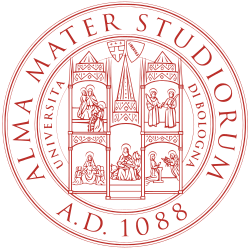
The University of Bologna was founded in 1088 and is considered the 'mother of European universities'. Historically, it is regarded as the oldest continuously operating university in the world, tracing its founding back to this year thanks to a committee of historians led by Giosuè Carducci in the 19th century.
Image source: University of Bologna
1150 - 1170
% completado
The University of Paris, founded between 1150 and 1170, became one of the first significant colleges of the medieval period. It grew into a leading center of learning in Europe, shaping the intellectual life of the continent for centuries.
Image source: University of Paris
1158
% completado
Holy Roman Emperor Frederick I Barbarossa granted the University of Bologna a charter known as the Authentica habita in 1158, providing legal protections to scholars and helping establish the university's formal standing.
Image source: Authentica habita
1218
% completado
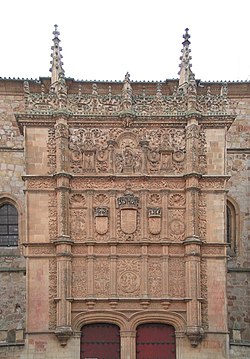
In 1218, King Alfonso IX founded the University of Salamanca, the oldest university in the Hispanic world and one of the oldest in the world in continuous operation.
Image source: University of Salamanca
1224
% completado
Frederick II, Holy Roman Emperor, founded the University of Naples in 1224 to train lawyers and administrators who could rival the influence of the University of Bologna, which served the hostile Lombard League.
Image source: University of Naples Federico II
1300 - 1500
% completado
The rediscovery of Classical-era knowledge transformed universities from teaching practical arts to developing 'knowledge for the sake of knowledge', which by the 16th century was considered integral to the civil community's practical requirements.
Image source: History of European universities
1492
% completado
In 1492, the socio-political consequences of the discovery of the New World expanded European university curricula, as human rights and international law became contemporarily relevant matters of study.
1500 - 1600
% completado
In the Americas, first the Spanish, then the British, and then the French founded universities in their conquered lands early in the 16th century, meant to professionally educate colonists and propagate monotheistic religion; likewise the British in Canada, Australia, and the Cape Colony.
1500
% completado
The Catholic Monarchs rejected Columbus' enthusiasm for the slave trade, issuing a decree in 1500 that specifically forbade the enslavement of indigenous people, reflecting emerging debates about rights that would enter academic discourse.
Image source: Catholic Monarchs of Spain
1517 - 1600
% completado
By the 16th century, the humanist ideas of the Renaissance (14th–16th century) were slowly accepted; France propagated them first to Germany, then to England, during the Protestant Reformation beginning in 1517.
Image source: Reformation
1550 - 1700
% completado
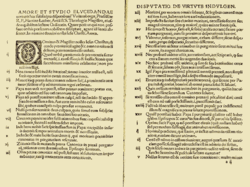
In the mid-16th century, scholarly and scientific journals made it feasible to 'spread innovations among the learned', transforming how knowledge circulated among scholars across Europe.
Image source: Academic journal
1600 - 1700
% completado
Free thinking and experimentation notably began in Britain's oldest universities in the seventeenth century: at Oxford with Robert Hooke and Robert Boyle, fathers of British scientific methodology, and at Cambridge where Isaac Newton was Lucasian Professor of Mathematics & Physics.
Image source: Scientific method
1700 - 1800
% completado
By the 18th century, universities published their own research journals, building on the earlier emergence of scholarly publications and institutionalizing the dissemination of new research.
1700 - 1800
% completado
Moving into the 18th century, professors became less focused on simply training university teachers and more focused on 'forming the minds of the elite' of a larger society.
1700 - 1800
% completado
During the 18th century, most universities were strongly connected to either a Catholic or a Protestant church, meaning professors' and students' religion determined employment and matriculation.
1700 - 1800
% completado
In the 18th century, the Age of Enlightenment encouraged education's transition from the 'preservation and transmission of accepted knowledge' to the 'discovery and advancement of new knowledge'; newer universities adopted these ideas more quickly than older ones.
Image source: Age of Enlightenment
1750 - 1800
% completado
Starting in the mid-18th century, the German Bildungsbürgertum emerged with an educational ideal based on idealistic values and classical antiquity, though it failed in gaining political power and in its aims for a nationalist movement.
Image source: Bildungsbürgertum
1794
% completado
The École Polytechnique was established in 1794 by the mathematician Gaspard Monge during the French Revolution, becoming one of the model post-Revolutionary French Grandes écoles.
Image source: École polytechnique
1804
% completado
Under Napoleon I, the École Polytechnique became a military academy in 1804, reflecting the close ties between the revolutionary French educational institutions and the state's military ambitions.
1800 - 1900
% completado
Japan, the Near East, and Africa all had universities based on European models in the 19th century, extending European academic traditions far beyond the continent.
1900
% completado
Ultimately, European universities established the intellectual and academic traditions of university education worldwide; by the end of the 19th century, the Humboldtian university model was established in Europe, the US, and Japan.
Image source: Humboldtian model of higher education
1900 - 1920
% completado
For most of the 19th century, the UK afforded a university education only to aristocrats; not until the early 20th century, featuring new universities such as the University of London, was higher education available to the mass populace.
Image source: University of London
1900 - 2000
% completado
In the 20th century, urbanization and industrialization made a university education available to the mass populace, transforming universities from elite institutions into broad engines of social mobility.
1914
% completado
Popular access to higher education slowly began after 1914, yet the principal remaining obstacle was its expense, keeping university education out of reach for much of the populace.
1806
% completado
Only when Prussia and its absolutist government had been utterly defeated by the Napoleonic armies in 1806 did the weakness of the defeated government allow for the Prussian reforms of the country's institutions, including education.
Image source: Prussian Reform Movement
1806 - 1815
% completado
In the 19th century, religion was deleted from the compulsory curriculum; in France, Napoleon's secular Université de France troubled Roman Catholics because it threatened their educational monopoly.
1809 - 1810
% completado
Wilhelm von Humboldt was appointed Geheimer Staatsrat (not minister as intended) of education in 1809 and held office for just one year, yet his reforms created the influential German university model.
Image source: Wilhelm von Humboldt
1820 - 1900
% completado
Early 19th-century American educators were fascinated by German educational trends, importing the German university model's emphasis on science and research into American institutions.
Image source: History of higher education in the United States
1835
% completado
The Michigan Constitution of 1835 fully embraced the overall Prussian system by introducing a range of primary schools, secondary schools, and the University of Michigan itself, all administered by the state and supported with tax-based funding.
Image source: Constitution of Michigan
1850
% completado
The Loi Falloux of 1850 attempted to reinstate some educational power to the Roman Catholic Church in France, but by then the Université de France had de facto substantive control of French higher education.
Image source: Falloux Laws
1852
% completado
The French university model lacked the freedom of the German model, consisting of severe discipline and control over curriculum, degrees, conformity of views, and personal habits — including a ban on beards in 1852.
Image source: Grande école
1854
% completado
The Oxford University Act 1854 removed religious requirements for students at Oxford, contributing to a decline in chapel attendance and of religion as integral to a university education.
Image source: Oxford University Act 1854
1856
% completado
The Cambridge University Act 1856 removed religious requirements for students at Cambridge, mirroring reforms at Oxford and marking the secularization of Britain's older universities.
1866
% completado
By 1866, the freer German university model had begun to influence the strict, disciplined French model, softening its rigid control over curriculum and student life.
1880 - 1900
% completado
Until the end of the 19th century, religion exerted a significant limiting influence upon academic curricula and research, by which time the German university model had become the world standard.
Or browse the full history timeline directory, with more than 2,000 topics.
This History of Universities timeline was generated with the help of AI, using information found on the internet.
We work hard to keep these timelines accurate, but mistakes do get through. If you spot one, email us at [email protected] and we'll fix it for future visitors.
Generate yours with AI or build it from scratch, for free.
Export your timeline, add your own events, edit or remove AI-generated events, and much more
No credit card required.
Cancel anytime.
Cancel anytime.
You can create an unlimited number of timelines with up to 10 events on each one, customize how they look, export them to PDF, PNG, PowerPoint, CSV, and Excel, and share them with a link. Paid plans raise the event limit and add features like spreadsheet imports and collaborators.
Yes. You can cancel your subscription from your account page at any time, and you will not be charged again. Your subscription stays active for the rest of the period you already paid for.
Yes. We will email you a reminder before the annual renewal, and we will also email you a receipt.
Yes. You can email us within 15 days of any payment, and we will issue you a full refund.
Check out our pricing docs or send us an email anytime: [email protected].