
-
Use Cases
-
Resources
-
Pricing
The Universal Declaration of Human Rights (UDHR) is a landmark document adopted by the United Nations General Assembly on December 10, 1948. Drafted in the aftermath of World War II, it proclaims the inalienable rights and fundamental freedoms to which all human beings are entitled, regardless of race, sex, nationality, ethnicity, language, religion, or any other status. It has become the foundation of international human rights law and inspired numerous national constitutions and treaties worldwide. More Less
1945
% complete
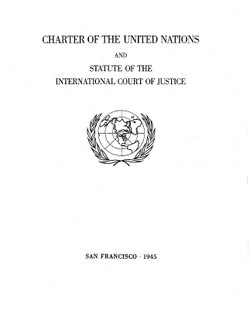
Prime Minister Jan Smuts of South Africa played an important role in drafting the United Nations Charter in 1945, and it was Smuts who inserted the word 'dignity' as a human right into the charter, laying groundwork for the Universal Declaration of Human Rights.
Image source: Charter of the United Nations
Jun 1946
% complete
In June 1946, the Economic and Social Council (ECOSOC), a principal organ of the newly founded United Nations responsible for promoting human rights, created the Commission on Human Rights (CHR), a standing body tasked with preparing what was initially conceived as an International Bill of Rights.
Image source: United Nations Commission on Human Rights
Feb 1947
% complete
In February 1947, the Commission on Human Rights established a special Universal Declaration of Human Rights Drafting Committee, chaired by Eleanor Roosevelt of the United States, to write the articles of the Declaration.
Image source: Universal Declaration of Human Rights
Jun 1947
% complete
During the Drafting Committee's first session in June 1947, debates and discussions informed the UDHR. In her memoirs, Eleanor Roosevelt described one such exchange among the drafters during these formative meetings.
Mar 1948 - Apr 1948
% complete
The United Nations Conference on Freedom of Information took place in March and April 1948. Its comments and suggestions were principally considered by the Drafting Committee at its second session the following month.
Mar 1948 - May 1948
% complete
Held in Bogota, Colombia from March to May 1948, the Ninth International Conference of American States adopted the American Declaration of the Rights and Duties of Man, the world's first general international human rights instrument, informing the UDHR drafting process.
May 1948 - May 21, 1948
% complete
Roughly a year after its creation, the Drafting Committee held its second and final session in May 1948, where it considered comments and suggestions of member states and international bodies, including the UN Conference on Freedom of Information, the Commission on the Status of Women, and the Ninth International Conference of American States.
May 21, 1948
% complete
Upon the conclusion of its second session on 21 May 1948, the Committee submitted to the Commission on Human Rights a redrafted text of the 'International Declaration of Human Rights' and the 'International Covenant of Human Rights', which together would form an International Bill of Rights.
May 21, 1948 - Jun 18, 1948
% complete
The redrafted Declaration was further examined and discussed by the Commission on Human Rights in its third session in Geneva from 21 May through 18 June 1948.
Jun 1948
% complete
In response during the Commission's deliberations, Charles Malik stated that Prime Minister Jan Smuts of South Africa had played an important role in drafting the United Nations Charter in 1945, and it was Smuts who inserted the word 'dignity' as a human right into the charter.
Image source: Charles Malik
Jun 18, 1948
% complete
With a vote of twelve in favour, none opposed, and four abstaining, the United Nations Commission on Human Rights, with Eleanor Roosevelt in the chair, approved the proposed Declaration on 18 June 1948, although it was unable to examine the contents and implementation of the proposed Covenant.
Jul 1948 - Aug 1948
% complete
The Commission forwarded the approved text of the Declaration, as well as the Covenant, to the Economic and Social Council for its review and approval during its seventh session in July and August 1948.
Image source: United Nations Economic and Social Council
Aug 26, 1948
% complete
The Council adopted Resolution 151(VII) of 26 August 1948, transmitting the draft International Declaration of Human Rights to the UN General Assembly.
Sep 30, 1948 - Dec 7, 1948
% complete
The Third Committee of the General Assembly convened from 30 September to 7 December 1948 during the third session of the United Nations General Assembly, holding 81 meetings concerning the draft Declaration, including debating and resolving 168 proposals for amendments by member states.
Dec 9, 1948 - Dec 10, 1948
% complete
Following the Third Committee's work, the document was subsequently submitted to the wider General Assembly for its consideration on 9 and 10 December 1948.
Dec 10, 1948
% complete
The Universal Declaration of Human Rights was adopted by the General Assembly as UN Resolution A/RES/217(III) on 10 December 1948 at the Palais de Chaillot in Paris, France. Drafted by a UN committee chaired by Eleanor Roosevelt, it marked a landmark moment in international human rights history.
1951
% complete
Pakistani diplomat Shaista Suhrawardy Ikramullah influenced the drafting of the Declaration, especially with respect to women's rights, and also played a role in the preparation of the 1951 Genocide Convention.
Image source: Shaista Suhrawardy Ikramullah
Dec 10, 1948
% complete
While voting in favour of the Declaration, the British delegation expressed frustration that the proposed document had moral obligations but lacked legal force; it would not be until 1976 that the International Covenant on Civil and Political Rights came into force, giving legal status to most of the Declaration.
1966
% complete
The UDHR directly inspired the development of international human rights law and was the first step in the formulation of the International Bill of Human Rights, which was completed in 1966 with the adoption of the human rights covenants.
1976
% complete
In 1976, the International Bill of Human Rights came into force, giving binding legal effect to much of what the Universal Declaration had articulated, including through the International Covenant on Civil and Political Rights.
2022
% complete
According to a 2022 study, the UDHR 'significantly accelerated the adoption of a particular set of [national] constitutional rights'. One scholar estimates that at least 90 national constitutions drafted since 1948 contain statements of fundamental rights inspired by or reproducing the Universal Declaration.
1982
% complete
In 1982, the Iranian diplomat to the United Nations, representing the country's newly installed Islamic republic, stated that the Declaration was 'a secular understanding of the Judeo-Christian tradition' that could not be implemented by Muslims without conflict with shari'a law.
Jun 30, 2000
% complete
On 30 June 2000, member states of the Organisation of Islamic Cooperation officially resolved to support the Cairo Declaration on Human Rights in Islam, an alternative document that says people have 'freedom and right to a dignified life in accordance with the Islamic Shari'ah'.
Image source: Cairo Declaration on Human Rights in Islam
2009
% complete
According to the 2009 Arab Human Development Report, written by Arab experts for the UNDP Regional Bureau for Arab States, 'Arab states seem content to ratify certain international human rights treaties, but do not go so far as to recognize the role of international mechanisms in making human rights effective.' The resistance to implementation is perhaps most salient with rights related to religion.
Image source: Human Development Report
Apr 1993
% complete
During the lead-up to the World Conference on Human Rights held in 1993, ministers from several Asian states adopted the Bangkok Declaration, which reaffirms their governments' commitment to the principles of the United Nations Charter and the Universal Declaration of Human Rights.
Jun 1993
% complete
At the 1993 United Nations World Conference on Human Rights, one of the largest international gatherings on human rights, diplomats and officials representing 100 nations reaffirmed their governments' commitment to the purposes and principles contained in the Charter of the United Nations and the Universal Declaration of Human Rights, emphasizing that the Declaration has been the source of inspiration for advances in international human rights standard setting.
Oct 5, 1995
% complete
In a speech on 5 October 1995, Pope John Paul II called the Declaration 'one of the highest expressions of the human conscience of our time', despite the Vatican never adopting it.
1997
% complete
In 1997, the council of the American Library Association endorsed Articles 18 through 20 of the UDHR concerning freedoms of thought, opinion, and expression, which were codified in the ALA Universal Right to Free Expression and the Library Bill of Rights.
Image source: Universal Declaration of Human Rights
1999
% complete
In 1999, the Guinness Book of Records described the Declaration as the world's 'Most Translated Document', with 298 translations; the record was certified again a decade later when the text reached 370 different languages and dialects.
Dec 10, 2003
% complete
In a statement on 10 December 2003 on behalf of the European Union, Marcello Spatafora said that the Declaration 'placed human rights at the centre of the framework of principles and obligations shaping relations within the international community'.
Jan 1, 2008 - Dec 31, 2008
% complete
2008 marked the 60th anniversary of the Declaration, and was accompanied by year-long activities around the theme 'Dignity and justice for all of us'.
2016
% complete
The UDHR achieved a milestone of more than 500 translations in 2016, extending its record as the most translated document in the world.
Jan 1, 2018 - Dec 31, 2018
% complete
Likewise, the 70th anniversary in 2018 was marked by the global #StandUpForHumanRights campaign, which targeted youth around the world.
2024
% complete
As of 2024, the Universal Declaration of Human Rights had been translated into 562 languages, remaining the most translated document in the world.
Or browse the full history timeline directory, with more than 2,000 topics.
This Universal Declaration of Human Rights timeline was generated with the help of AI, using information found on the internet.
We work hard to keep these timelines accurate, but mistakes do get through. If you spot one, email us at [email protected] and we'll fix it for future visitors.
Generate yours with AI or build it from scratch, for free.
Export your timeline, add your own events, edit or remove AI-generated events, and much more
No credit card required.
Cancel anytime.
Cancel anytime.
You can create an unlimited number of timelines with up to 10 events on each one, customize how they look, export them to PDF, PNG, PowerPoint, CSV, and Excel, and share them with a link. Paid plans raise the event limit and add features like spreadsheet imports and collaborators.
Yes. You can cancel your subscription from your account page at any time, and you will not be charged again. Your subscription stays active for the rest of the period you already paid for.
Yes. We will email you a reminder before the annual renewal, and we will also email you a receipt.
Yes. You can email us within 15 days of any payment, and we will issue you a full refund.
Check out our pricing docs or send us an email anytime: [email protected].