-
Use Cases
-
Resources
-
Pricing
The history of vaccines spans more than two centuries of scientific discovery, beginning with Edward Jenner's pioneering smallpox inoculation in 1796 and evolving through landmark developments such as Louis Pasteur's rabies vaccine, the eradication of smallpox in 1980, and the rapid creation of mRNA COVID-19 vaccines. This timeline highlights the scientists, breakthroughs, and public health campaigns that have saved millions of lives worldwide. More Less
1500
% complete
The first recorded use of inoculation to prevent smallpox (variolation) occurred in the 16th century in China. The Chinese also practiced the oldest documented use of variolation, dating back to the fifteenth century, and various insufflation techniques were recorded throughout the sixteenth and seventeenth centuries within China.
Image source: Variolation
1700
% complete
Two reports on the Chinese practice of inoculation were received by the Royal Society in London in 1700: one by Martin Lister, who received a report by an employee of the East India Company stationed in China, and another by Clopton Havers.
Image source: Royal Society
1721
% complete
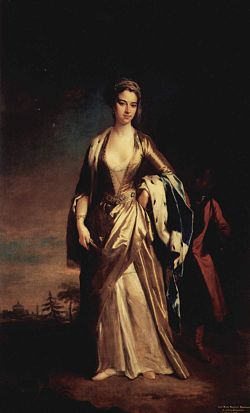
The folk practice of inoculation against smallpox was brought from Turkey to Britain in 1721 by Lady Mary Wortley Montagu. Having witnessed variolation in Turkey, she had her four-year-old daughter variolated in the presence of physicians of the Royal Court upon her return to England.
Image source: Lady Mary Wortley Montagu
1783
% complete
In 1783, several days after Prince Octavius of Great Britain was inoculated against smallpox, he died. His death underscored the dangers of variolation, which used material from actual smallpox sores and could itself cause fatal disease.
Image source: Prince Octavius of Great Britain
1796
% complete
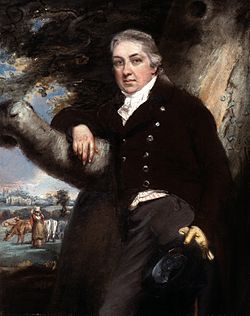
In 1796, the physician Edward Jenner took pus from the hand of a milkmaid with cowpox, scratched it into the arm of an 8-year-old boy, James Phipps, and six weeks later variolated the boy with smallpox, afterwards observing that he did not catch smallpox.
Image source: Edward Jenner
1798
% complete
In 1798 Jenner published his Inquiry into the Variolae vaccinae Known as the Cow Pox, in which he described the protective effect of cowpox against smallpox. He reported that his vaccine was safe in children and adults, and could be transferred from arm-to-arm, which reduced reliance on uncertain supplies from infected cows.
Image source: Edward Jenner
1804
% complete
In 1804, the Spanish Balmis smallpox vaccination expedition to Spain's colonies Mexico and Philippines used the arm-to-arm transport method to get around the fact that the vaccine survived for only 12 days in vitro.
Image source: Balmis Expedition
1840
% complete
Since vaccination with cowpox was much safer than smallpox inoculation, the latter, though still widely practiced in England, was banned in 1840.
1880
% complete
Following on from Jenner's work, the second generation of vaccines was introduced in the 1880s by Louis Pasteur, who developed vaccines for chicken cholera and anthrax. From the late nineteenth century, vaccines were considered a matter of national prestige.
Image source: Louis Pasteur
1881
% complete
In 1881, to honor Jenner, Louis Pasteur proposed that the terms vaccine and vaccination should be extended to cover the new protective inoculations then being developed.
Image source: Vaccine
1900 - 2000
% complete
Vaccinology flourished in the twentieth century, which saw the introduction of several successful vaccines, including those against diphtheria, measles, mumps, and rubella. Maurice Hilleman was the most prolific of the developers of vaccines in the twentieth century.
Image source: Vaccination
1928
% complete
Many vaccines need preservatives to prevent serious adverse effects such as Staphylococcus infection, which in one 1928 incident killed 12 of 21 children inoculated with a diphtheria vaccine that lacked a preservative.
Image source: Thiomersal
1931
% complete
In 1931 Alice Miles Woodruff and Ernest Goodpasture documented that the fowlpox virus could be grown in embryonated chicken eggs, opening a new era of virus propagation for vaccine production.
Image source: Alice Miles Woodruff
1935
% complete
Eggs were used for virus propagation in the development of a yellow fever vaccine in 1935, demonstrating the practical value of embryonated egg culture for producing vaccines at scale.
Image source: Yellow fever vaccine
1945
% complete
Eggs were again used for virus propagation in the development of an influenza vaccine in 1945, further cementing egg-based cultivation as a standard method for vaccine production.
Image source: Influenza vaccine
1958
% complete
In 1958, there were 763,094 cases of measles in the United States; 552 deaths resulted. This burden helped motivate the development and deployment of measles vaccines.
Image source: Measles
1959
% complete
In 1959 growth media and cell culture replaced eggs as the standard method of virus propagation for vaccines, allowing more flexible and scalable vaccine manufacturing.
Image source: Cell culture
1990
% complete
In preparation for the 1990 Persian Gulf campaign, the whole cell pertussis vaccine was used as an adjuvant for anthrax vaccine to boost immune response among military personnel.
Image source: Anthrax vaccine
2001
% complete
A 2001 study noted antibody interference to be a problem with dengue vaccines, where the DEN-3 serotype was found to predominate and suppress the response to DEN-1, -2 and -4 serotypes.
Image source: Dengue vaccine
2003
% complete
The idea of vaccine production via transgenic plants was identified as early as 2003, offering a potentially low-cost approach to producing vaccines in edible crops.
2005
% complete
In 2005, bananas were developed that produce a human vaccine against hepatitis B, demonstrating the promise of plant-based vaccine production.
Image source: Hepatitis B vaccine
2005
% complete
As of 2005, the only childhood vaccine in the US that contained thiomersal in greater than trace amounts was the influenza vaccine, which is currently recommended only for children with certain risk factors.
2006
% complete
In 2006, a vaccine was introduced against shingles, a disease caused by the chickenpox virus, which usually affects the elderly.
Image source: Zoster vaccine
Jan 2008
% complete
In early 2008, there were 64 suspected cases of measles, reflecting concerns about declining vaccination rates and the potential resurgence of previously controlled diseases.
Image source: Measles resurgence in the United States
2009 - 2011
% complete
As of 2009, the human papillomavirus vaccine was recommended in the UK, and by 2011 it was also recommended in the US, marking a major advance in cancer prevention through vaccination.
Image source: HPV vaccine
2013
% complete
The companies with the highest market share in vaccine production are Merck, Sanofi, GlaxoSmithKline, Pfizer and Novartis, with 70% of vaccine sales concentrated in the EU or US as of 2013.
2013
% complete
Since at least 2013, scientists have been trying to develop synthetic third-generation vaccines by reconstructing the outside structure of a virus; it was hoped that this would help prevent vaccine resistance.
2016
% complete
In 2016 a DNA vaccine for the Zika virus began testing at the National Institutes of Health, though manufacturing the vaccines in volume remained unsolved as of 2016.
Image source: Zika virus
2018
% complete
The RVSV-ZEBOV vaccine licensed to Merck is being used in 2018 to combat ebola in Congo, demonstrating rapid deployment of an experimental vaccine during an outbreak.
Image source: RVSV-ZEBOV vaccine
2019
% complete
The World Health Organization characterized vaccine hesitancy as one of the top ten global health threats in 2019, highlighting growing resistance to vaccination worldwide.
Image source: Vaccine hesitancy
2020
% complete
mRNA vaccines such as BNT162b2 were developed in the year 2020 with the help of Operation Warp Speed and massively deployed to combat the COVID-19 pandemic.
Image source: Pfizer–BioNTech COVID-19 vaccine
2021
% complete
When increased production of vaccines was urgently needed during the COVID-19 pandemic in 2021, the World Trade Organization and governments around the world evaluated whether to waive intellectual property rights and patents on COVID-19 vaccines, which would eliminate barriers to timely access of affordable medical products and scale up manufacturing.
Image source: COVID-19 vaccine
2021
% complete
In 2021, Katalin Karikó and Drew Weissman received Columbia University's Horwitz Prize for their pioneering research in mRNA vaccine technology, work that underpinned the COVID-19 mRNA vaccines.
Image source: Katalin Karikó
Or browse the full history timeline directory, with more than 2,000 topics.
This History of Vaccines timeline was generated with the help of AI, using information found on the internet.
We work hard to keep these timelines accurate, but mistakes do get through. If you spot one, email us at [email protected] and we'll fix it for future visitors.
Generate yours with AI or build it from scratch, for free.
Export your timeline, add your own events, edit or remove AI-generated events, and much more
No credit card required.
Cancel anytime.
Cancel anytime.
You can create an unlimited number of timelines with up to 10 events on each one, customize how they look, export them to PDF, PNG, PowerPoint, CSV, and Excel, and share them with a link. Paid plans raise the event limit and add features like spreadsheet imports and collaborators.
Yes. You can cancel your subscription from your account page at any time, and you will not be charged again. Your subscription stays active for the rest of the period you already paid for.
Yes. We will email you a reminder before the annual renewal, and we will also email you a receipt.
Yes. You can email us within 15 days of any payment, and we will issue you a full refund.
Check out our pricing docs or send us an email anytime: [email protected].