-
Use Cases
-
Resources
-
Pricing
The history of anesthesia traces humanity's efforts to relieve pain during surgery, from ancient civilizations using opium, alcohol, and herbal preparations to the revolutionary introduction of ether and chloroform in the 19th century. Pioneers like William Morton, Crawford Long, and James Simpson transformed surgery into a humane practice, while later advances in intravenous agents, muscle relaxants, and monitoring technology established anesthesiology as a sophisticated medical specialty. More Less
700 CE
% complete
The most famous anesthetic, ether, may have been synthesized as early as the 8th century, but it took many centuries for its anesthetic importance to be appreciated, even though Paracelsus later noted that chickens made to breathe it fell asleep and felt no pain.
Image source: Diethyl ether
1190 CE
% complete
The 'soporific sponge' ('sleep sponge') used by Arabic physicians was introduced to Europe by the Salerno school of medicine in the late 12th century, providing a means of inducing unconsciousness before surgery.
Image source: Anesthesia
1200 CE
% complete
In the 13th century, Ugo Borgognoni (1180–1258) promoted and used the soporific sponge in Italy, helping to spread the practice of chemically induced unconsciousness during surgical procedures.
1250 CE
% complete
The sponge was promoted and described by Ugo's son and fellow surgeon, Theodoric Borgognoni (1205–1298), who documented its use for producing sleep before operations.
Image source: Theodoric Borgognoni
1250 CE
% complete
In 13th-century Italy, Theodoric Borgognoni used mixtures along with opiates to induce unconsciousness, and treatment with the combined alkaloids proved a mainstay of anesthesia until the 19th century.
1550 CE
% complete
The 16th century physician and polymath Paracelsus noted that chickens made to breathe ether not only fell asleep but also felt no pain, an early observation of the substance's anesthetic potential that went largely unexploited.
Image source: Paracelsus
1772
% complete
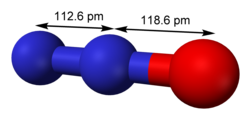
In 1772, English scientist Joseph Priestley discovered the gas nitrous oxide, laying the groundwork for its later investigation as a possible anesthetic agent.
Image source: Nitrous oxide
1799
% complete
In 1799, British chemist and inventor Humphry Davy decided to find out about nitrous oxide's properties by experimenting on himself, experiencing its euphoric and pain-dulling effects firsthand.
Image source: Humphry Davy
1800
% complete
In 1800 Davy wrote about the potential anesthetic properties of nitrous oxide in relieving pain during surgery, but nobody at that time pursued the matter any further.
1820
% complete
By the early 19th century, ether was being used by humans, but only as a recreational drug, with 'ether frolics' popular among students and the public before its medical value was recognized.
1831
% complete
Chloroform was discovered in 1831 by American physician Samuel Guthrie (1782–1848), and independently a few months later by Frenchman Eugène Soubeiran (1797–1859) and Justus von Liebig (1803–1873) in Germany.
1834
% complete
Chloroform was named and chemically characterized in 1834 by Jean-Baptiste Dumas (1800–1884), establishing its identity as a distinct chemical compound.
Image source: Jean-Baptiste Dumas
1842
% complete
In 1842, Dr Robert Mortimer Glover discovered the anesthetic qualities of chloroform through his research, though it would be several years before the drug was used clinically on humans.
Nov 14, 1804
% complete
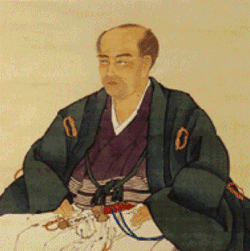
On 14 November 1804, Hanaoka Seishū, a Japanese doctor, became the first person to successfully perform surgery using general anesthesia, using a herbal formula he developed.
Image source: Hanaoka Seishū
Mar 30, 1842
% complete
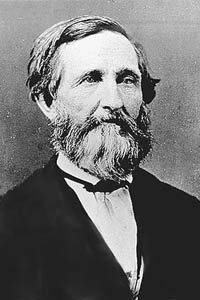
Venable agreed to surgery under ether, and on 30 March 1842 he underwent a painless operation performed by Crawford Long, the first recorded use of ether anesthesia in surgery. However, Long did not announce his discovery until 1849.
Image source: Crawford Long
1845
% complete
Horace Wells conducted the first public demonstration of the inhalational anesthetic nitrous oxide at the Massachusetts General Hospital in Boston in 1845; the demonstration was considered a failure when the patient cried out.
Image source: Horace Wells
Oct 16, 1846
% complete
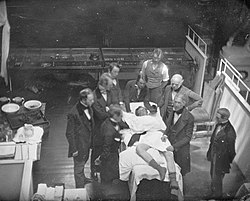
On 16 October 1846, Boston dentist William Thomas Green Morton gave a successful demonstration using diethyl ether to medical students at Massachusetts General Hospital, heralding the birth of modern anesthesia.
Image source: William T. G. Morton
Dec 19, 1846
% complete
Morton received a US patent for his substance, but news of the successful anesthetic spread quickly by late 1846. On 19 December 1846, in Dumfries Royal Infirmary, Scotland, a Dr. Scott used ether on a patient, one of the first uses outside America.
Image source: History of general anesthesia
1847
% complete
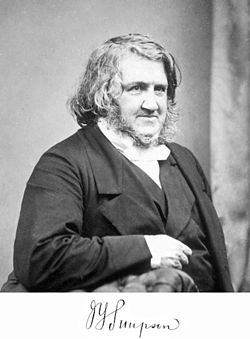
In 1847, Scottish obstetrician James Young Simpson was the first to demonstrate the anesthetic properties of chloroform on humans and helped to popularize the drug for use in medicine, particularly in obstetrics.
Image source: James Young Simpson
Jan 28, 1848
% complete
The first fatality directly attributed to chloroform administration was recorded on 28 January 1848 after the death of Hannah Greener, highlighting the dangers of the new anesthetic agent.
May 1848
% complete
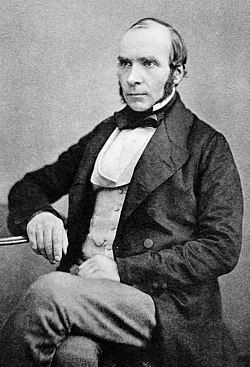
John Snow of London published articles from May 1848 onwards 'On Narcotism by the Inhalation of Vapours' in the London Medical Gazette, advancing the scientific understanding of inhalational anesthesia.
Image source: John Snow
1853
% complete
Chloroform gained royal approval in 1853 when John Snow administered it to Queen Victoria when she was in labor with Prince Leopold, greatly boosting public acceptance of obstetric anesthesia.
1854
% complete
Hanaoka's finding did not benefit the rest of the world until 1854, as the national isolation policy of the Tokugawa shogunate prevented his achievements from being publicized until after the isolation ended. Before his death in 1835, he had performed more than 150 operations for breast cancer.
1884
% complete
Cocaine was first used in eye surgery in 1884 by Karl Koller, at the suggestion of Sigmund Freud, introducing local anesthesia into clinical practice.
Image source: Karl Koller (ophthalmologist)
1898
% complete
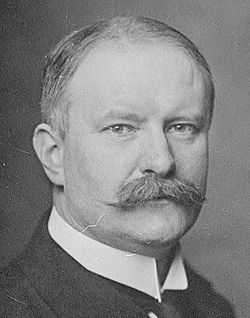
German surgeon August Bier (1861–1949) was the first to use cocaine for intrathecal anesthesia in 1898, pioneering the technique of spinal anesthesia.
Image source: August Bier
1901
% complete
Romanian surgeon Nicolae Racoviceanu-Pitești (1860–1942) was the first to use opioids for intrathecal analgesia; he presented his experience in Paris in 1901.
Image source: History of neuraxial anesthesia
Nov 1860
% complete
Alice Magaw, born in November 1860, is often referred to as 'The Mother of Anesthesia'. Her renown as the personal anesthesia provider for William and Charles Mayo solidified the role of nurse anesthetists.
Image source: Alice Magaw
1905
% complete
Alice Magaw's renown was solidified by Mayo's own words in his 1905 article in which he described his satisfaction with and reliance on nurse anesthetists: 'The question of anaesthesia is a most important one.'
1914
% complete
The first comprehensive medical textbook on the subject, Anesthesia, was authored in 1914 by anesthesiologist Dr. James Tayloe Gwathmey, helping to establish anesthesia as a formal medical specialty.
1954
% complete
The first study on mortality in anesthesia from 1954 reported a rate of death from all causes at 1:75 and a rate attributed to anesthesia alone at 1:2680, providing early benchmarks for anesthetic safety.
2000
% complete
Modern statistics show deaths totally attributed to surgical factors at 1:2860 or anesthesia alone at 1:185,056, illustrating that the single greatest factor in anesthetic mortality is the health of the patient — a dramatic improvement over 1954 figures.
Dec 14, 2016
% complete
On 14 December 2016, the FDA issued a Public Safety Communication warning that repeated or lengthy use of general anesthetic and sedation drugs in children younger than 3 years or pregnant women in their third trimester may affect children's brain development. The warning was criticized by the American College of Obstetricians and Gynecologists over the absence of direct evidence regarding use in pregnant women.
Image source: Food and Drug Administration
2018
% complete
A 2018 Cochrane review found moderate quality evidence that regional anesthesia may reduce the frequency of persistent postoperative pain (PPP) from 3 to 18 months following thoracotomy and 3 to 12 months following caesarean.
Image source: Anesthesia
Or browse the full history timeline directory, with more than 2,000 topics.
This History of Anesthesia timeline was generated with the help of AI, using information found on the internet.
We work hard to keep these timelines accurate, but mistakes do get through. If you spot one, email us at [email protected] and we'll fix it for future visitors.
Generate yours with AI or build it from scratch, for free.
Export your timeline, add your own events, edit or remove AI-generated events, and much more
No credit card required.
Cancel anytime.
Cancel anytime.
You can create an unlimited number of timelines with up to 10 events on each one, customize how they look, export them to PDF, PNG, PowerPoint, CSV, and Excel, and share them with a link. Paid plans raise the event limit and add features like spreadsheet imports and collaborators.
Yes. You can cancel your subscription from your account page at any time, and you will not be charged again. Your subscription stays active for the rest of the period you already paid for.
Yes. We will email you a reminder before the annual renewal, and we will also email you a receipt.
Yes. You can email us within 15 days of any payment, and we will issue you a full refund.
Check out our pricing docs or send us an email anytime: [email protected].