
-
Use Cases
-
Resources
-
Pricing
Jonas Salk was an American medical researcher and virologist best known for developing the first successful inactivated polio vaccine, announced safe in 1955. His vaccine led to the near-eradication of polio worldwide, and he founded the Salk Institute for Biological Studies. Salk famously chose not to patent his vaccine, prioritizing public health over personal profit. More Less
Oct 28, 1914
% complete
Jonas Edward Salk was born on October 28, 1914, in New York City to Daniel and Dora (née Press) Salk. He would grow up to become an American virologist and medical researcher who developed one of the first successful polio vaccines.
1934
% complete
Salk enrolled in the City College of New York (CCNY), where he earned a Bachelor of Science degree in chemistry in 1934. The school's tuition was comparatively low and, unlike many surrounding institutions, it did not discriminate against Jews.
1939
% complete
The day after his graduation from medical school in 1939, Salk married Donna Lindsay, a master's candidate at the New York College of Social Work. The couple later divorced in 1968.
1941
% complete
In 1941, during his postgraduate work in virology, Salk chose a two-month elective to work in Thomas Francis' laboratory at the University of Michigan, an experience that shaped his research career.
1968
% complete
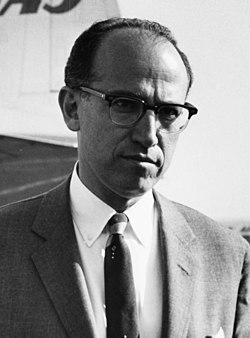
Salk and Donna Lindsay divorced in 1968, and two years later, Salk married French painter Françoise Gilot, formerly the mistress of Pablo Picasso.
Image source: Jonas Salk
1970
% complete
Two years after divorcing Donna Lindsay, Salk married French painter Françoise Gilot in 1970. Gilot had formerly been the mistress of Pablo Picasso.
Image source: Françoise Gilot
Jun 23, 1995
% complete
On June 23, 1995, Jonas Salk died from heart failure at age 80 in La Jolla, California, leaving behind a legacy as one of the most celebrated medical researchers in history.
1947
% complete
In 1947, Salk accepted a professorship at the University of Pittsburgh School of Medicine. He became ambitious for his own lab and was granted one, but the lab was smaller than he had hoped, and he found the rules imposed by the university restrictive.
1948
% complete
In 1948, Harry Weaver, the director of research at the National Foundation for Infantile Paralysis, contacted Salk, connecting him with funding and support that would fuel his polio vaccine research.
1948
% complete
At the University of Pittsburgh, Salk undertook a project beginning in 1948 to determine the number of different types of poliovirus, laying the groundwork for his vaccine development efforts.
Jul 2, 1952
% complete
After successful tests on laboratory animals, on July 2, 1952, assisted by the staff at the D.T. Watson Home, Salk administered his experimental inactivated polio vaccine to children who already had polio, marking a major milestone in vaccine development.
1953
% complete
In 1953, demonstrating his confidence in the safety of his vaccine, Salk vaccinated his own children against polio, a powerful signal as he prepared for large-scale testing.
1954
% complete
In 1954, Salk tested the vaccine on about one million children, known as the polio pioneers, in one of the largest medical field trials in history, paving the way for public release of the vaccine.
1955
% complete
Salk's inactivated polio vaccine came into use in 1955, marking the beginning of mass immunization campaigns against polio around the world.
1955
% complete
Extensive publicity and fear of polio led to much increased funding, reaching $67 million by 1955, which supported continued vaccine research and distribution efforts.
Image source: March of Dimes
Apr 12, 1955
% complete
On April 12, 1955, the results of the nationwide trial were announced and the vaccine was declared safe and effective. Salk was immediately hailed as a "miracle worker," and he chose not to patent the vaccine or seek any profit from it in order to maximize its global distribution.
1959
% complete
By 1959, the Salk vaccine had reached about 90 countries, dramatically reducing the incidence of polio worldwide through widespread immunization programs.
1961
% complete
An attenuated live oral polio vaccine developed by Albert Sabin came into commercial use in 1961, offering an alternative to Salk's inactivated vaccine and becoming widely used in global vaccination campaigns.
Image source: Polio vaccine
1955
% complete
One month after the vaccine announcement in 1955, Salk was honored by the Commonwealth of Pennsylvania, where he was given their "highest award for services" by Governor George M. Leader.
1957
% complete
In 1957, the Municipal Hospital building, where Salk conducted his polio research at the University of Pittsburgh, was renamed Jonas Salk Hall. It is home to the university's School of Pharmacy and Dentistry.
Image source: Jonas Salk
1958
% complete
In 1958, Salk was awarded the James D. Bruce Memorial Award, one of many recognitions he received following the success of his polio vaccine.
Image source: Alexander Langmuir
1996
% complete
In 1996, the March of Dimes Foundation created an annual $250,000 cash "Prize" awarded to outstanding biologists as a tribute to Salk.
2006
% complete
In 2006, the United States Postal Service issued a 63-cent Distinguished Americans series postage stamp in honor of Jonas Salk.
2007
% complete
In 2007, California Governor Arnold Schwarzenegger and First Lady Maria Shriver inducted Salk into the California Hall of Fame, recognizing his enduring contributions to science and medicine.
Image source: California Hall of Fame
Jan 2009
% complete
In early 2009, the American Public Broadcasting Service aired its new documentary film, American Experience: The Polio Crusade, chronicling the fight against polio and Salk's pivotal role.
Image source: American Experience
Apr 12, 2010
% complete
On April 12, 2010, to help celebrate the 55th anniversary of the Salk vaccine, a new 66-minute documentary, The Shot Felt 'Round the World, had its world premiere, telling the story of the vaccine's development.
Image source: Shot heard round the world
Oct 24, 2012
% complete
In 2012, October 24, in honor of Salk's birthday period, was named "World Polio Day." The observance was originated by Rotary International over a decade earlier and continues to raise awareness of polio eradication efforts.
Image source: World Polio Day
2014
% complete
In 2014, actor and director Robert Redford, who was once struck with a mild case of polio when he was a child, directed a documentary about the Salk Institute in La Jolla.
Image source: Salk Institute for Biological Studies
Oct 28, 2014
% complete
In 2014, on the 100th anniversary of Salk's birth, a Google Doodle was created to honor the physician and medical researcher whose vaccine helped conquer polio.
Image source: Google Doodle
2018
% complete
In Chapter 10 of the 2018 season of Genius, Michael McElhatton portrays Salk in a short cameo where he is shown on a date with Françoise Gilot, reflecting Salk's place in popular culture.
Image source: Genius (American TV series)
1963
% complete
In 1963, Salk founded the Salk Institute for Biological Studies in La Jolla, California, which is today a center for medical and scientific research. Supporters, particularly the National Foundation, helped him build his dream of a research complex investigating biological phenomena 'from cell to society,' housed in a purpose-built facility designed by architect Louis Kahn.
1966
% complete
In 1966, The New York Times referred to Salk as the "Father of Biophilosophy." According to journalist Howard Taubman, Salk hoped interchanges among scientists and thinkers might lead to a new and important school of thinkers he would designate as biophilosophers.
1979
% complete
The Salk Institute served as the basis for Bruno Latour and Steve Woolgar's 1979 book Laboratory Life: The Construction of Scientific Facts, an influential work in science studies.
1980
% complete
During a 1980 interview, 25 years after the vaccine's success was first made public, Salk reflected on his sudden fame, saying, "It's as if I've been a public property ever since, having to respond to external, as well as internal, impulses."
1984
% complete
In 1984, Salk told his cousin Joel Kassiday, at a meeting of the Congressional Clearinghouse on the Future on Capitol Hill, that he was optimistic that ways to prevent most human and animal diseases would eventually be developed.
1995
% complete
In 1995, Jonas Salk became one of the original signatories of the Ashley Montagu Resolution, which asked the World Court, now the International Court of Justice, to help end genital modification of children including female genital mutilation, circumcision, and penile subincision.
2004
% complete
Francis Crick, co-discoverer of the structure of the DNA molecule, was a leading professor at the Salk Institute until his death in 2004, exemplifying the institute's stature as a premier research center.
Image source: Francis Crick
2007
% complete
A project associated with Salk's work was discontinued in 2007, twelve years after his death, marking the end of a long-running research effort connected to his legacy.
Or browse the full history timeline directory, with more than 2,000 topics.
This Jonas Salk timeline was generated with the help of AI, using information found on the internet.
We work hard to keep these timelines accurate, but mistakes do get through. If you spot one, email us at [email protected] and we'll fix it for future visitors.
Generate yours with AI or build it from scratch, for free.
Export your timeline, add your own events, edit or remove AI-generated events, and much more
No credit card required.
Cancel anytime.
Cancel anytime.
You can create an unlimited number of timelines with up to 10 events on each one, customize how they look, export them to PDF, PNG, PowerPoint, CSV, and Excel, and share them with a link. Paid plans raise the event limit and add features like spreadsheet imports and collaborators.
Yes. You can cancel your subscription from your account page at any time, and you will not be charged again. Your subscription stays active for the rest of the period you already paid for.
Yes. We will email you a reminder before the annual renewal, and we will also email you a receipt.
Yes. You can email us within 15 days of any payment, and we will issue you a full refund.
Check out our pricing docs or send us an email anytime: [email protected].