-
Use Cases
-
Resources
-
Pricing
The history of antibiotics traces the scientific journey from ancient observations of mold's healing properties to the revolutionary discovery of penicillin by Alexander Fleming in 1928, followed by the golden age of antibiotic development, mass production during World War II, and ongoing efforts to combat antibiotic resistance. More Less
1874
In 1874, physician Sir William Roberts noted that cultures of the mould Penicillium glaucum used in making some types of blue cheese did not display bacterial contamination, an early observation of antibiosis.
Image source: Antibiotic
1877
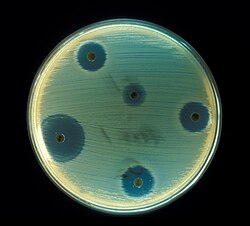
Antibiosis was first described in 1877 in bacteria when Louis Pasteur and Robert Koch observed that an airborne bacillus could inhibit the growth of Bacillus anthracis.
1895
In 1895, Vincenzo Tiberio, an Italian physician, published a paper on the antibacterial power of some extracts of mold, contributing to early scientific study of antimicrobial substances.
Image source: Vincenzo Tiberio

1897
In 1897, doctoral student Ernest Duchesne submitted a dissertation on antagonism between moulds and microbes, the first known scholarly work to consider the therapeutic capabilities of moulds resulting from their anti-microbial activity.
Image source: Ernest Duchesne

1900
Before the early 20th century, treatments for infections were based primarily on medicinal folklore, with remedies passed down through tradition rather than scientific understanding of microbial causes of disease.
1907
After screening hundreds of dyes against various organisms, Paul Ehrlich discovered a medicinally useful drug, the first synthetic antibacterial organoarsenic compound salvarsan. This heralded the era of antibacterial treatment begun with arsenic-derived synthetic antibiotics by Alfred Bertheim and Ehrlich.
Image source: Arsphenamine

1908
In 1908, Ehrlich received the Nobel Prize in Physiology or Medicine for his contributions to immunology, recognizing his pioneering work that laid foundations for chemotherapy and antibacterial drug development.
Image source: Paul Ehrlich

1910
In 1910, Ehrlich and Hata announced their discovery, which they called drug '606', at the Congress for Internal Medicine at Wiesbaden, introducing a targeted treatment for syphilis.
Dec 1910
The Hoechst company began to market the compound toward the end of 1910 under the name Salvarsan, now known as arsphenamine. The drug was used to treat syphilis in the first half of the 20th century.
1911 - 1913
Hata was nominated for the Nobel Prize in Chemistry in 1911 and for the Nobel Prize in Physiology or Medicine in 1912 and 1913, reflecting recognition of his role in developing Salvarsan.
Image source: Sahachiro Hata

This History of Antibiotics timeline was generated with the help of AI, using information found on the internet.
We work hard to keep these timelines accurate, but mistakes do get through. If you spot one, email us at [email protected] and we'll fix it for future visitors.
Generate yours with AI or build it from scratch, for free.