-
Use Cases
-
Resources
-
Pricing
The history of surgery spans thousands of years, beginning with primitive skull operations in prehistoric times and evolving through ancient Egyptian, Greek, and Roman medical practices. Major milestones include the development of anesthesia in the 19th century, antiseptic techniques pioneered by Joseph Lister, advances in organ transplantation, and today's minimally invasive robotic-assisted procedures. More Less
5000 BCE
% complete
The next oldest known amputation was carried out about 7000 years ago on a farmer in France whose left forearm had been surgically removed, demonstrating surprisingly advanced surgical skill in the Neolithic era.
Image source: Amputation

3100 BCE
% complete
Around 3100 BCE Egyptian civilization began to flourish when Narmer, the first Pharaoh of Egypt, established the capital of Memphis, laying the foundations for a society that would produce some of the earliest medical texts.
Image source: Memphis, Egypt
2700 BCE
% complete
In the first monarchic age (2700 BCE) the first treatise on surgery was written by Imhotep, the vizier of Pharaoh Djoser, priest, astronomer, physician and first notable architect.
Image source: Imhotep
2500 BCE - 2100 BCE
% complete
Other famous physicians from the Ancient Empire (from 2500 to 2100 BCE) were Sachmet, the physician of Pharaoh Sahure, and Nesmenau, whose office resembled that of a medical director.
Image source: Ancient Egyptian medicine
1600 BCE
% complete
The Edwin Smith Papyrus is a lesser known papyrus dating from the 1600 BCE and only 5 meters in length, containing detailed surgical observations and treatments for trauma cases.
1550 BCE
% complete
The Ebers Papyrus text is dated to about 1550 BCE and measures 20 meters in length, preserving extensive knowledge of Egyptian medicine and pharmacology.
Image source: Ebers Papyrus

400 BCE
% complete
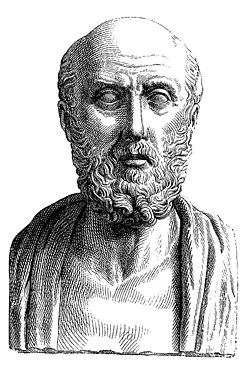
The Hippocratic Oath, written in the 5th century BC, provides the earliest protocol for professional conduct and ethical behavior a young physician needed to abide by in life and in treating and managing the health and privacy of his patients.
Image source: Hippocratic Oath
100 CE
% complete
About this year Leonidas of Alexandria began advocating the excision of breast cancer via a wide cut through normal tissues like Galen, but recommended alternate incision and cautery, which became the standard for the next 15 centuries.
150 CE
% complete
Galen's On the Natural Faculties exemplifies a very accomplished Greek surgeon and physician of the 2nd century Roman era, who carried out very complex surgical operations and added significantly to the corpus of animal and human physiology and the art of surgery.
Image source: Galen
850
% complete
Egypt-born Jewish physician Isaac Israeli ben Solomon (832–892) also left many medical works written in Arabic that were translated and adopted by European universities in the early 13th century.
Image source: Isaac Israeli ben Solomon
900
% complete
In the 9th century the Medical School of Salerno in southwest Italy was founded, making use of Arabic texts and flourishing through the 13th century as a center of medieval medical learning.
Image source: Schola Medica Salernitana
950
% complete
Abulcasis (936–1013) was an Andalusian-Arab physician and scientist who practised in the Zahra suburb of Cordoba and produced influential surgical texts that shaped European surgery for centuries.
Image source: Al-Zahrawi
1025
% complete
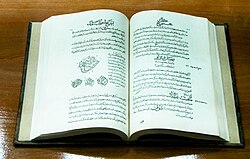
Persian physician Avicenna (980–1037) wrote The Canon of Medicine, a synthesis of Greek and Arab medicine that dominated European medicine until the mid-17th century.
Image source: The Canon of Medicine
1080
% complete
African-born Italian Benedictine monk Constantine the African (died 1099) of Monte Cassino translated many Arabic medical works into Latin, transmitting Islamic medical knowledge to Europe.
Image source: Constantine the African
1120
% complete
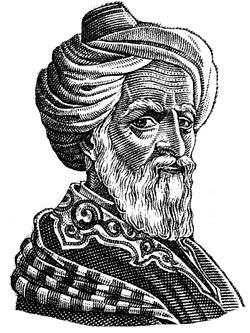
Spanish Muslim physician Avenzoar (1094–1162) performed the first tracheotomy on a goat, writing Book of Simplification on Therapeutics and Diet, which became popular in Europe.
Image source: Ibn Zuhr
1180
% complete
In the late 12th century Rogerius Salernitanus composed his Chirurgia, laying the foundation for modern Western surgical manuals. Roger seems to have been influenced more by Aëtius, Alexander of Tralles, and Paul of Aegina than by the Arabs.
1210
% complete
Hugh of Lucca (1150−1257) founded the Bologna School and rejected the theory of 'laudable pus', challenging prevailing beliefs about wound healing.
1250
% complete
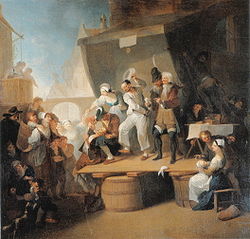
In the 13th century in Europe skilled town craftsmen called barber-surgeons performed amputations and set broken bones while suffering lower status than university educated doctors. With little or no formal training, they generally had a bad reputation until academic surgery developed in the 18th-century Age of Enlightenment.
Image source: Barber surgeon
1308
% complete
By 1308 the Worshipful Company of Barbers in London was flourishing, organizing the barber-surgeons who provided much of the surgical care of medieval England.
Image source: Worshipful Company of Barbers
1350
% complete
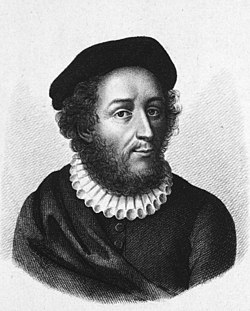
Guy de Chauliac (1298–1368) was one of the most eminent surgeons of the Middle Ages, whose writings influenced surgical practice for generations.
Image source: Guy de Chauliac
1535 - 1590
% complete
Ambroise Paré (c. 1510 – 1590) was a French army surgeon from the 1530s until his death in 1590, revolutionizing the treatment of wounds and battlefield injuries.
Image source: Ambroise Paré
1540
% complete
Andreas Vesalius (1514–1564), professor of anatomy at the University of Padua, was a pivotal figure in the Renaissance transition from classical medicine based on Galen to an empirical approach of 'hands-on' dissection.
Image source: Andreas Vesalius
1580
% complete
In the same century, Eleno de Céspedes became perhaps the first female, transgender, or intersex surgeon in Spain, and perhaps in Europe.
Image source: Eleno de Céspedes
1590
% complete
German surgeon Wilhelm Fabry (1540–1634), 'the Father of German Surgery', was the first to recommend amputation above the gangrenous area, and to describe a windlass tourniquet.
Image source: Wilhelm Fabry
1600
% complete
Wilhelm Fabry's Swiss wife and assistant Marie Colinet (1560–1640) improved the techniques for Caesarean Section, introducing the use of heat for dilating and stimulating the uterus during labor. In 1624 she became the first to use a magnet to remove metal from a patient's eye, although her husband received the credit.
1715 - 1790
% complete
The discipline of surgery was put on a sound, scientific footing during the Age of Enlightenment in Europe (1715–90), transforming it into an academic specialty rather than an accessory field.
Image source: History of surgery
1760
% complete
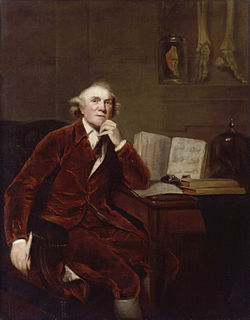
An important figure in this regard was the Scottish surgical scientist John Hunter (1728–1793), generally regarded as the father of modern scientific surgery.
Image source: John Hunter (surgeon)
1775
% complete
Percival Pott (1714–1788) first described tuberculosis of the spine and first demonstrated that a cancer may be caused by an environmental carcinogen after noticing a connection between chimney sweeps' exposure to soot and their high incidence of scrotal cancer.
Image source: Percivall Pott
1775
% complete
Hunter's student Benjamin Bell (1749–1806) became the first scientific surgeon in Scotland, advocating the routine use of opium in post-operative recovery, and counseling surgeons to 'save skin' to speed healing; his great-grandson Joseph Bell inspired Sherlock Holmes.
Image source: Benjamin Bell
1817
% complete
Astley Paston Cooper (1768–1841) first performed a successful ligation of the abdominal aorta, a landmark achievement in vascular surgery.
Image source: Astley Cooper
1830
% complete
James Syme (1799–1870) pioneered the Symes Amputation for the ankle joint and successfully carried out the first hip disarticulation.
Image source: James Syme
1842
% complete
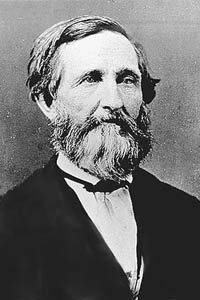
Beginning in the 1840s, European surgery changed dramatically with effective anesthetics such as ether, first used by American surgeon Crawford Long, and chloroform, discovered by James Young Simpson and pioneered in England by John Snow, who administered it to Queen Victoria during childbirth in 1853.
Image source: Crawford Long
1847
% complete
The first progress in combating infection in Europe was made in 1847 by Hungarian doctor Ignaz Semmelweis, who noticed that medical students fresh from the dissecting room were causing excess maternal death compared to midwives.
Image source: Ignaz Semmelweis
1850
% complete
Marion Sims (1813–83) received credit for helping found gynecology, but later was criticized for failing to use anesthesia on enslaved Black test subjects.
Image source: J. Marion Sims
1851
% complete
Dutch surgeon Antonius Mathijsen invented the Plaster of Paris cast in 1851, transforming the treatment of fractures.
Image source: Antonius Mathijsen
Aug 9, 1867
% complete
On 9 August 1867, Joseph Lister read a paper before the British Medical Association in Dublin on the Antiseptic Principle of the Practice of Surgery, which was reprinted in the British Medical Journal.
Image source: Joseph Lister
1879
% complete
After becoming the first to diagnose the location based on neurological findings alone, Scottish surgeon William Macewen (1848–1924) performed the first successful non-primary brain tumor removal, pioneering brain surgery.
Image source: William Macewen
1884
% complete
After English physician Alexander Hughes Bennett diagnosed the location based on neurological findings alone, English surgeon Rickman Godlee (1849–1925) completed the first primary (exposed) brain tumor removal.
Image source: Rickman Godlee
1890
% complete
In the late 19th century William Stewart Halstead (1852–1922) laid out basic surgical principles for asepsis known as Halsted's principles.
Image source: William Stewart Halsted
1895
% complete
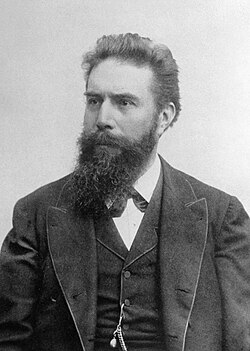
The use of X-rays as an important medical diagnostic tool began with their discovery in 1895 by German physicist Wilhelm Röntgen.
Image source: Wilhelm Röntgen
1900 - 1989
% complete
In the past century, a number of technologies have had a significant impact on surgical practice, including electrosurgery in the early 20th century, practical endoscopy beginning in the 1960s, and laser surgery, computer-assisted surgery and robotic surgery, developed in the 1980s.
1925
% complete
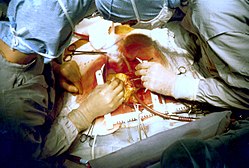
The first successful open heart surgery operations were carried out in 1925, opening a new frontier in cardiac surgery.
Image source: Cardiac surgery
1967
% complete
1967: The first successful heart transplant was performed by Christiaan Barnard, marking a milestone in transplant surgery.
Image source: Christiaan Barnard
Or browse the full history timeline directory, with more than 2,000 topics.
This History of Surgery timeline was generated with the help of AI, using information found on the internet.
We work hard to keep these timelines accurate, but mistakes do get through. If you spot one, email us at [email protected] and we'll fix it for future visitors.
Generate yours with AI or build it from scratch, for free.
Export your timeline, add your own events, edit or remove AI-generated events, and much more
No credit card required.
Cancel anytime.
Cancel anytime.
You can create an unlimited number of timelines with up to 10 events on each one, customize how they look, export them to PDF, PNG, PowerPoint, CSV, and Excel, and share them with a link. Paid plans raise the event limit and add features like spreadsheet imports and collaborators.
Yes. You can cancel your subscription from your account page at any time, and you will not be charged again. Your subscription stays active for the rest of the period you already paid for.
Yes. We will email you a reminder before the annual renewal, and we will also email you a receipt.
Yes. You can email us within 15 days of any payment, and we will issue you a full refund.
Check out our pricing docs or send us an email anytime: [email protected].