-
Use Cases
-
Resources
-
Pricing
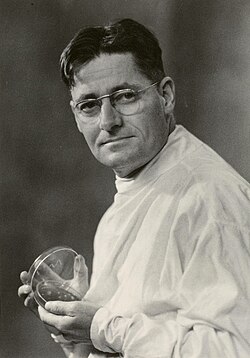
Alexander Fleming (1881–1955) was a Scottish physician and microbiologist best known for discovering penicillin, the world's first broadly effective antibiotic. His 1928 discovery of the antibacterial mold Penicillium notatum transformed the treatment of bacterial infections and earned him a share of the 1945 Nobel Prize in Physiology or Medicine. More Less
Aug 6, 1881
% complete
Alexander Fleming was born on 6 August 1881 at Lochfield farm near Darvel, in Ayrshire, Scotland. He was the third of four children of farmer Hugh Fleming and Grace Stirling Morton, the daughter of a neighbouring farmer.
Image source: Alexander Fleming
1900 - 1914
% complete
Fleming was a private in the London Scottish Regiment of the Volunteer Force from 1900 to 1914, and had been a member of the rifle club at his medical school.
Image source: London Scottish (regiment)
1901
% complete
In 1901, Alexander Fleming enrolled at St Mary's Hospital Medical School in Paddington, which is now part of Imperial College London.
Image source: St Mary's Hospital, London
1906
% complete
In 1906, Fleming qualified with an MBBS degree from St Mary's Hospital Medical School with distinction.
1908
% complete
In 1908, Fleming gained a BSc degree with gold medal in bacteriology, and became a lecturer at St Mary's until 1914.
1914 - 1918
% complete
Commissioned lieutenant in 1914 and promoted captain in 1917, Fleming served throughout World War I in the Royal Army Medical Corps and was Mentioned in Dispatches.
Image source: Royal Army Medical Corps
1918
% complete
In 1918, Fleming returned to St Mary's Hospital, where he would later be elected Professor of Bacteriology of the University of London in 1928.
1928
% complete
In 1928, Fleming was elected Professor of Bacteriology of the University of London at St Mary's Hospital.
Image source: University of London
Dec 24, 1915
% complete
On 24 December 1915, Fleming married a trained nurse, Sarah Marion McElroy of Killala, County Mayo, Ireland.
1924
% complete
Fleming's only child, Robert Fleming (1924–2015), was born; he later became a general medical practitioner.
1949
% complete
After his first wife Sarah's death in 1949, Fleming later married Amalia Koutsouri-Vourekas, a Greek colleague at St Mary's, on 9 April 1953; she died in 1986.
Apr 9, 1953
% complete
Fleming married Amalia Koutsouri-Vourekas, a Greek colleague at St Mary's, on 9 April 1953.
Mar 11, 1955
% complete
On 11 March 1955, Fleming died at his home in London of a heart attack. From 1921 until his death, he had owned a country home named 'The Dhoon' in Barton Mills, Suffolk.
1917
% complete
In a 1917 article published in The Lancet, Fleming described an ingenious experiment, enabled by his own glassblowing skills, explaining why antiseptics were killing more soldiers than infection itself during the war.
Image source: The Lancet
Oct 1, 1921 - Dec 31, 1921
% complete
In late 1921, while Fleming was maintaining agar plates for bacteria, he found that one of the plates was contaminated with bacteria from the air, leading to his lysozyme research.
Image source: Lysozyme
1922
% complete
Fleming discovered the enzyme lysozyme from his own nasal discharge in 1922, along with a bacterium he named Micrococcus lysodeikticus, later renamed Micrococcus luteus.
May 1, 1922
% complete
Reporting in the 1 May 1922 issue of the Proceedings of the Royal Society B under the title 'On a remarkable bacteriolytic element found in tissues and secretions', Fleming described a substance capable of rapidly dissolving certain bacteria.
1927
% complete
By 1927, Fleming had been investigating the properties of staphylococci, laying groundwork for his famous discovery the following year.
Image source: Staphylococcus aureus
1928
% complete
In 1928, Fleming studied the variation of Staphylococcus aureus grown under natural conditions, after the work of Joseph Warwick Bigger, who discovered that the bacterium could grow into a variety of types.
Oct 18, 1932
% complete
At the Royal Society of Medicine meeting on 18 October 1932, Fleming said he chose lysozyme as his subject because its importance in connection with natural immunity did not seem to be generally appreciated.
Image source: Royal Society of Medicine
1972
% complete
The species Micrococcus lysodeikticus, discovered by Fleming alongside lysozyme, was reassigned as Micrococcus luteus in 1972.
Image source: Micrococcus luteus
1928
% complete
Fleming gave some of his original penicillin samples to his colleague-surgeon Arthur Dickson Wright for clinical testing in 1928.
Image source: Clarissa Dickson Wright
Sep 3, 1928
% complete
On 3 September 1928, Fleming returned to his laboratory having spent a holiday with his family at Suffolk, where he noticed a mould contaminating a staphylococci culture plate.
Image source: History of penicillin
Sep 28, 1928
% complete
Fleming later recalled waking just after dawn on September 28, 1928, saying he certainly didn't plan to revolutionize all medicine by discovering the world's first antibiotic, or bacteria killer.
1929
% complete
Fleming published his discovery in 1929 in the British Journal of Experimental Pathology, but little attention was paid to the article.
Image source: Discovery of penicillin
Jan 9, 1929
% complete
A treatment using penicillin started on 9 January 1929 but without any effect.
Feb 13, 1929
% complete
Fleming presented his discovery on 13 February 1929 before the Medical Research Club.
Image source: Medical Research Council (United Kingdom)
Mar 7, 1929
% complete
After some months of calling it 'mould juice' or 'the inhibitor', Fleming gave the name penicillin on 7 March 1929 for the antibacterial substance present in the mould.
Image source: Penicillin
Nov 25, 1930
% complete
Fleming cured eye infections (conjunctivitis) of one adult and three infants (neonatal conjunctivitis) on 25 November 1930.
Image source: Neonatal conjunctivitis
1932
% complete
Fleming also successfully treated severe conjunctivitis in 1932, though some colleagues claimed he had abandoned penicillin around this time.
Image source: Conjunctivitis
1939
% complete
As late as 1939, Fleming's notebook shows attempts to make better penicillin production using different media, continuing efforts begun years earlier.
1940
% complete
After the Oxford team developed a method of purifying penicillin to an effective first stable form in 1940, several clinical trials ensued, inspiring methods for mass production by 1945.
Image source: Howard Florey
1940
% complete
Shortly after the Oxford team published its first results in 1940, Fleming telephoned Howard Florey, Chain's head of department, to say that he would be visiting within the next few days.
1941
% complete
In 1941, Fleming published a method for assessment of penicillin effectiveness.
Aug 1942
% complete
In August 1942, Harry Lambert, an associate of Fleming's brother Robert, was admitted to St Mary's Hospital due to a life-threatening streptococcal meningitis infection, which Fleming treated successfully with penicillin.
Image source: Group B streptococcal infection
Sep 28, 1942
% complete
The War Cabinet was convinced of penicillin's usefulness, upon which Sir Cecil Weir, Director General of Equipment, called for a meeting on the mode of action on 28 September 1942.
Image source: War cabinet
1943
% complete
Fleming published the clinical case of Harry Lambert's successful treatment in The Lancet in 1943.
Apr 5, 1943
% complete
The Penicillin Committee was created on 5 April 1943 to coordinate wartime production of the drug.
1944
% complete
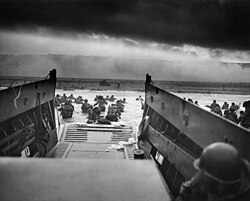
By D-Day in 1944, enough penicillin had been produced to treat all the wounded of the Allied troops.
Image source: Normandy landings
1944
% complete
Upon Moyer patenting the method of penicillin production in the United States in 1944, Fleming was furious, commenting that he had given penicillin free for the benefit of humanity and asking why it should become a profit-making monopoly of manufacturers in another country.
Image source: Andrew J. Moyer
Jun 26, 1945
% complete
On 26 June 1945, Fleming made cautionary statements warning that 'the microbes are educated to resist penicillin and a host of penicillin-fast organisms is bred out', anticipating antibiotic resistance.
Image source: Antimicrobial resistance
1966
% complete
The source of the fungal contaminant that led to penicillin's discovery was established in 1966 as coming from La Touche's room, directly below Fleming's laboratory.
Image source: Penicillium rubens
1944
% complete
Fleming was knighted for his scientific achievements in 1944.
1945
% complete
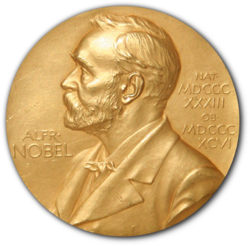
Fleming shared the 1945 Nobel Prize in Physiology or Medicine with Howard Florey and Ernst Chain 'for the discovery of penicillin and its curative effect in various infectious diseases'.
Image source: Nobel Prize in Physiology or Medicine
Dec 11, 1945
% complete
In his Nobel lecture on 11 December 1945, Fleming briefly mentioned lysozyme, saying 'Penicillin was not the first antibiotic I happened to discover.'
1988
% complete
Fleming's alma mater, St Mary's Hospital Medical School, merged with Imperial College London in 1988.
Image source: Imperial College London
1998
% complete
The Sir Alexander Fleming Building on the South Kensington campus opened in 1998, where his son Robert and great-granddaughter Claire were presented to the Queen; it is now a main preclinical teaching site of Imperial College School of Medicine.
Image source: Alexander Fleming
1999
% complete
In 1999, Fleming was named in Time magazine's list of the 100 Most Important People of the 20th century.
Image source: Time 100
2002
% complete
In 2002, Fleming was included in the BBC's television poll of the 100 Greatest Britons.
Image source: 100 Greatest Britons
2009
% complete
In 2009, Fleming was voted third 'greatest Scot' in an opinion poll conducted by STV, behind only Robert Burns and William Wallace.
Image source: STV (TV channel)
Or browse the full history timeline directory, with more than 2,000 topics.
This Alexander Fleming timeline was generated with the help of AI, using information found on the internet.
We work hard to keep these timelines accurate, but mistakes do get through. If you spot one, email us at [email protected] and we'll fix it for future visitors.
Generate yours with AI or build it from scratch, for free.
Export your timeline, add your own events, edit or remove AI-generated events, and much more
No credit card required.
Cancel anytime.
Cancel anytime.
You can create an unlimited number of timelines with up to 10 events on each one, customize how they look, export them to PDF, PNG, PowerPoint, CSV, and Excel, and share them with a link. Paid plans raise the event limit and add features like spreadsheet imports and collaborators.
Yes. You can cancel your subscription from your account page at any time, and you will not be charged again. Your subscription stays active for the rest of the period you already paid for.
Yes. We will email you a reminder before the annual renewal, and we will also email you a receipt.
Yes. You can email us within 15 days of any payment, and we will issue you a full refund.
Check out our pricing docs or send us an email anytime: [email protected].