-
Use Cases
-
Resources
-
Pricing
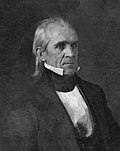
James K. Polk (1795-1849) was the 11th President of the United States, serving from 1845 to 1849. A Democrat from Tennessee, he is best known for his aggressive expansionist policies, including the annexation of Texas, the Oregon Treaty with Britain, and victory in the Mexican-American War, which added vast territories including California and the Southwest to the United States. More Less
Nov 2, 1795
% complete
James Knox Polk was born on November 2, 1795, in a log cabin in Pineville, North Carolina, to Samuel Polk, a farmer and surveyor, and Jane Knox Polk. He was the eldest of ten children in a family of Scotch-Irish descent.
Image source: James K. Polk
1806
% complete
Seeking better opportunities on the frontier, Samuel Polk moved his family westward to the Duck River region near Columbia, Tennessee. The move placed young James at the edge of the expanding American frontier.
1812
% complete
At age 17, Polk underwent surgery to remove urinary gallstones before the era of modern anesthesia. The operation was reportedly successful but may have left him sterile, as he never had children with his wife Sarah.
1818
% complete
After transferring from a Tennessee academy, Polk entered the University of North Carolina at Chapel Hill and graduated with honors in 1818. He excelled academically and was recognized for his debating abilities.
Image source: University of North Carolina at Chapel Hill
1819 - 1820
% complete
Polk moved to Nashville to study law under prominent attorney Felix Grundy, who later became U.S. Attorney General. This apprenticeship introduced Polk to Tennessee politics and Andrew Jackson's circle.
Image source: Felix Grundy
Jun 1820
% complete
Polk was admitted to the Tennessee bar in June 1820 and established a law practice in Columbia, Tennessee. His first case defended his father against a public fighting charge.
Image source: Bar (law)
Jan 1, 1824
% complete
On January 1, 1824, Polk married Sarah Childress of Murfreesboro, Tennessee. She became an influential political partner and one of the most active first ladies in American history.
Image source: Sarah Childress Polk
Jun 15, 1849
% complete
Just three months after leaving office, Polk died of cholera at his Nashville home, Polk Place, at age 53. He is buried alongside his wife Sarah at the Tennessee State Capitol grounds.
Image source: James K. Polk
1821
% complete
Polk was elected clerk of the Tennessee House of Representatives' upper chamber, gaining administrative experience and political connections that launched his career in public office.
Image source: Tennessee Senate
1823 - 1825
% complete
Polk won election to the Tennessee legislature in 1823, serving two terms. He championed the popular election of presidential electors, aligning himself with democratic reforms of the era.
Aug 1825 - 1833
% complete
Polk won a seat in Congress in 1825 representing Tennessee's sixth district. In Washington, he became a devoted supporter of Andrew Jackson and a fierce advocate for Jacksonian democracy.
Image source: United States House of Representatives
1833 - 1834
% complete
As chairman of the Ways and Means Committee, Polk led efforts to eliminate the Second Bank of the United States, becoming one of President Jackson's most trusted congressional allies during the Bank War.
Image source: United States House Committee on Ways and Means
Dec 1835 - Mar 4, 1839
% complete
Polk was elected Speaker of the House of Representatives in December 1835, the only person ever to serve as both Speaker and President of the United States. He presided over turbulent debates including the gag rule on antislavery petitions.
Image source: Speaker of the United States House of Representatives
Jan 15, 1839 - Oct 1841
% complete
Leaving Congress, Polk ran for governor of Tennessee and won in 1839. His tenure was marked by economic difficulties following the Panic of 1837, and he lost bids for reelection in 1841 and 1843.
Image source: Governor of Tennessee
May 1844
% complete
At the deadlocked 1844 Democratic National Convention in Baltimore, Polk emerged as the first 'dark horse' nominee after Martin Van Buren could not secure enough votes. Expansionists rallied behind him as a committed annexationist.
Image source: 1844 United States presidential election
Nov 5, 1844
% complete
Polk narrowly defeated Whig Henry Clay, campaigning on annexing Texas and acquiring Oregon. His victory was seen as a mandate for territorial expansion and fulfilled Manifest Destiny ambitions.
Mar 4, 1845 - Mar 4, 1849
% complete
At age 49, Polk became the youngest president up to that time. In his inaugural address he laid out four goals: lower tariffs, an independent treasury, settling the Oregon boundary, and acquiring California.
Image source: Inauguration of James K. Polk
Dec 29, 1845
% complete
Following Polk's election, outgoing President Tyler signed legislation making Texas the 28th state just days before Polk took office, completing the annexation process that had driven the 1844 campaign.
Image source: Texas annexation
Jul 30, 1846
% complete
Named for Treasury Secretary Robert J. Walker, this tariff significantly lowered rates set by the protective Tariff of 1842, promoting free trade principles and increasing overall customs revenue.
Image source: Walker tariff
Aug 6, 1846
% complete
The Independent Treasury Act reestablished Jackson-era policy, separating federal funds from private banks. Government money would be held in Treasury vaults rather than deposited in commercial institutions.
Image source: Independent Treasury
Aug 8, 1846
% complete
Representative David Wilmot proposed banning slavery in any territory gained from Mexico. Though repeatedly defeated, it intensified sectional tensions between North and South over slavery's expansion.
Image source: Wilmot Proviso
Mar 3, 1849
% complete
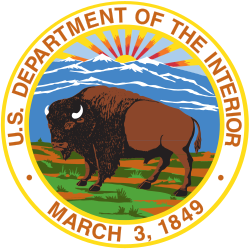
Signed into law on Polk's last full day in office, the Interior Department managed growing federal responsibilities including public lands, Indian affairs, and patents, reflecting the nation's expansion.
Image source: United States Department of the Interior
Mar 4, 1849
% complete
Having pledged to serve only one term, Polk left office after accomplishing all four of his major goals. Whig general Zachary Taylor succeeded him as president.
Image source: Presidency of James K. Polk
Apr 25, 1846 - Feb 2, 1848
% complete
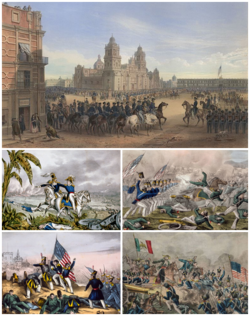
After Mexican forces attacked American troops in the disputed border area between the Nueces River and Rio Grande, Polk asked Congress for a declaration of war, which passed in May 1846.
Image source: Mexican–American War
Jun 14, 1846 - Jul 9, 1846
% complete
American settlers in Sonoma declared independence from Mexico with the famous Bear Flag. Within weeks, Commodore John D. Sloat claimed California for the United States, advancing Polk's expansionist aims.
Image source: California Republic
Jun 15, 1846
% complete
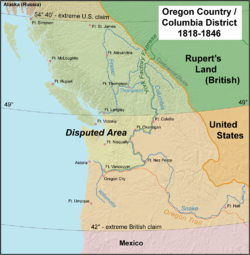
Negotiated with Great Britain, the Oregon Treaty divided the disputed Oregon Country along the 49th parallel, giving the United States present-day Washington, Oregon, Idaho, and parts of surrounding states.
Image source: Oregon Treaty
Feb 22, 1847 - Feb 23, 1847
% complete
General Zachary Taylor's outnumbered force repelled Santa Anna's Mexican army in northern Mexico. The victory made Taylor a national hero, setting the stage for his own presidency in 1848.
Image source: Battle of Buena Vista
Sep 13, 1847 - Sep 14, 1847
% complete
General Winfield Scott led a brilliant amphibious campaign from Veracruz to the Mexican capital, capturing Mexico City and effectively deciding the war in America's favor.
Image source: Battle for Mexico City
Jan 24, 1848
% complete
Gold discovered at Sutter's Mill triggered the California Gold Rush, dramatically accelerating American settlement of the newly acquired territory and validating Polk's push to obtain California.
Image source: California Gold Rush
Feb 2, 1848
% complete
The treaty ceded vast territories including California, New Mexico, Arizona, Nevada, Utah, and parts of Colorado and Wyoming to the United States for $15 million, fulfilling Polk's continental vision.
Image source: Treaty of Guadalupe Hidalgo
Or browse the full history timeline directory, with more than 2,000 topics.
This James K. Polk timeline was generated with the help of AI, using information found on the internet.
We work hard to keep these timelines accurate, but mistakes do get through. If you spot one, email us at [email protected] and we'll fix it for future visitors.
Generate yours with AI or build it from scratch, for free.
Export your timeline, add your own events, edit or remove AI-generated events, and much more
No credit card required.
Cancel anytime.
Cancel anytime.
You can create an unlimited number of timelines with up to 10 events on each one, customize how they look, export them to PDF, PNG, PowerPoint, CSV, and Excel, and share them with a link. Paid plans raise the event limit and add features like spreadsheet imports and collaborators.
Yes. You can cancel your subscription from your account page at any time, and you will not be charged again. Your subscription stays active for the rest of the period you already paid for.
Yes. We will email you a reminder before the annual renewal, and we will also email you a receipt.
Yes. You can email us within 15 days of any payment, and we will issue you a full refund.
Check out our pricing docs or send us an email anytime: [email protected].