-
Resources
-
Pricing
Jamestown Colony was England’s first permanent settlement in North America, founded in Virginia in 1607. More Less
Build a timeline like this one in minutes, for free. Start Yours →
1606
King James I named the members of the council that would govern the settlement in sealed orders carried with the colonists.
Image source: Jamestown, Virginia
Jun 9, 1610
Thomas West, Baron De La Warr, arrived on the James River just as the settlers were abandoning Jamestown and ordered the colony's continuation.
Image source: Thomas West, 3rd Baron De La Warr
1611
The Virginia Company sent Thomas Dale to serve as deputy governor or high marshal under Lord De La Warr.
Image source: Thomas Dale
1611 - 1619
During Thomas Dale's administrations, Virginia's first code of laws was effectively tested, though it was nominally in force from 1611 to 1619.
Jun 30, 1619 - Jul 21, 1619
Slovak and Polish artisans conducted the first recorded labor strike in American history, seeking voting rights, which they received on July 21.
Image source: Jamestown Polish craftsmen
Jul 30, 1619 - Aug 4, 1619
The first elected representative legislature in the New World met in the choir of Jamestown Church.
Image source: Virginia General Assembly
Aug 1619
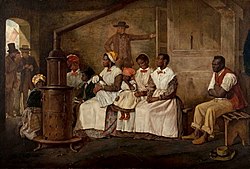
A Dutch man-of-war brought “20 and odd Negroes” to Point Comfort, several miles south of Jamestown.
Image source: History of slavery in Virginia
1621
Fifty-seven unmarried women sailed to Virginia under the Virginia Company's sponsorship, with transportation and small bundles of goods provided.
Image source: Virginia Company
1624
The Virginia Company lost its charter, and Virginia became a crown colony.
1634
The English Crown created eight shires in Virginia, with a combined population of approximately 5,000.
Image source: James City County, Virginia
1642 - 1643
The name of James City Shire was changed to James City County.
1675 - 1676
Conflict following raids and disputes involving Doeg Indians helped produce Bacon's Rebellion, an armed uprising against Governor William Berkeley.
Image source: Bacon's Rebellion
Sep 19, 1676
Nathaniel Bacon's forces captured Jamestown and burned it to the ground during their rebellion against Governor Berkeley.
Oct 26, 1676
Nathaniel Bacon died of dysentery, and his body was believed to have been burned.
Feb 1677
Because Jamestown was unusable after the fire, Governor Berkeley convened the General Assembly at Green Spring Plantation, with another session later held at Middle Plantation.
Dec 1606
The London Company sent an expedition to establish an English settlement in the Virginia Colony.
Apr 6, 1607
Godspeed, Susan Constant, and Discovery arrived at the Spanish colony of Puerto Rico to obtain provisions before continuing toward Virginia.
Apr 26, 1607
Chaplain Robert Hunt gave the first Christian prayer at Cape Henry and later conducted open-air services at Jamestown until a church was built.
Image source: Robert Hunt (chaplain)
May 14, 1607
Jamestown, also known as Jamestowne, was founded as the first settlement of the Virginia Colony and eventually became its capital.
Jan 1608
John Smith returned to Jamestown in time for the arrival of the first supply.
Image source: John Smith (explorer)
1608
Before becoming president of the colony, John Smith explored the Chesapeake Bay and several surrounding rivers.
1608
William Volday, also known as Wilhelm Waldi, arrived among the settlers and worked as a Swiss German mineral prospector.
Jan 1608
An almost complete destruction of the fort by fire marked the colony's first winter and intensified its severe shortages.
Jan 2, 1608
The first supply expedition arrived at Jamestown, bringing provisions and additional support to the struggling settlement.
Oct 1, 1608
Seventy additional settlers arrived aboard Mary and Margaret with the second supply after a journey of approximately three months.
1609 - May 1610
Drought, poor harvests, strained relations with Indigenous peoples, and the absence of supply ships created the Starving Time.
Image source: Starving Time
Jun 1609
A fleet of at least eight ships, led by Sea Venture, left Plymouth carrying settlers and supplies for Virginia.
Image source: Jamestown supply missions
May 23, 1610
Survivors of the Sea Venture shipwreck finally arrived at Jamestown after being stranded in Bermuda.
Image source: Sea Venture
Dec 1607
While leading a food-gathering expedition up the Chickahominy River, John Smith's men were attacked and he was captured by Opechancanough.
1608
During the colony's first winter, Pocahontas brought food and clothing to the colonists.
Image source: Pocahontas
1610 - 1614
The first of the Anglo-Powhatan Wars began in 1610 and ended with a peace settlement in 1614.
Image source: Anglo-Powhatan Wars
1613
Under the tutelage of Reverend Alexander Whitaker, Pocahontas converted to Christianity and took the name Rebecca.
Apr 1613
Pocahontas and her husband Kocoum were living at Passapatanzy among the Patawomecks when Pocahontas was captured.
1622 - 1632
A second war between the English colonists and the Powhatan Confederacy lasted from 1622 to 1632.
Mar 22, 1622
Chief Opechancanough led coordinated surprise attacks along the James River, killing approximately a third of the colonists and destroying Henricus's prospects as a capital.
1624
Seventeen years after the incident, Smith first reported that Pocahontas pleaded for his life when Chief Powhatan decided to execute him.
1634
A palisade was completed across the Virginia Peninsula between Queen's Creek and Archer's Hope Creek, later called College Creek.
Image source: Middle Plantation, Virginia
Apr 18, 1644
Opechancanough launched another coordinated attack, killing almost 500 colonists, though it was less devastating proportionally than the attacks of 1622.
1646
Royal Governor William Berkeley's forces captured Opechancanough, who was thought to be between 90 and 100 years old.
Image source: Opechancanough
1646
The first treaties between Virginia Indians and the English were signed.
1611
Thomas Dale began constructing Henricus farther up the James River as a progressive settlement and possible replacement capital for Jamestown.
Image source: Henricus
1612
John Rolfe successfully cultivated and exported tobacco, creating the crop that would make the Virginia Colony economically viable.
Image source: John Rolfe
1612
The Third Charter of the Virginia Company was extended across the Atlantic to include Bermuda.
Image source: Virginia Company
1613
Thomas Dale founded Bermuda Hundred on the James River; it became Virginia's first incorporated town the following year.
Image source: Bermuda Hundred campaign
1618 - 1622
Virginia's population grew from a few hundred people to nearly 1,400, while wheat cultivation also began in the colony.
1620
Additional German settlers recruited in Hamburg arrived and established and operated one of the region's first sawmills.
1662
Jamestown's status as Virginia's mandatory port of entry ended.
Oct 20, 1698
The statehouse at Jamestown burned for the fourth time, prompting the legislature to meet at Middle Plantation.
1699
The capital of the Virginia Colony was officially relocated from Jamestown to Middle Plantation, which became Williamsburg.
Image source: Williamsburg, Virginia
Build a timeline like this one in minutes, for free. Start Yours →
Or browse the full history timeline directory, with more than 3,000 topics.
This Jamestown Colony timeline was generated with the help of AI, using information found on the internet.
We work hard to keep these timelines accurate, but mistakes do get through. If you spot one, email us at [email protected] and we'll fix it for future visitors.
Generate yours with AI or build it from scratch, for free.
Export your timeline, add your own events, edit or remove AI-generated events, and much more
No credit card required.
15-day money-back guarantee.
You can create an unlimited number of timelines with up to 10 events on each one, customize how they look, export them to PDF, PNG, PowerPoint, CSV, and Excel, and share them with a link. Timelines made with Timeline Maker AI keep every event the generator created, and you can add up to 5 events of your own. Paid plans remove the event limit, add spreadsheet imports and hide Preceden's branding, and the higher-priced plan also adds collaborators, a custom logo and a custom domain.
Yes. You can cancel your subscription from your account page at any time, and you will not be charged again. Your subscription stays active for the rest of the period you already paid for.
Yes. We email you a reminder 15 days before your annual renewal, and we email you a receipt after every payment.
Yes. You can email us within 15 days of any payment, and we will issue you a full refund.
Check out our pricing docs or send us an email anytime: [email protected].