-
Use Cases
-
Resources
-
Pricing
Kaiser Wilhelm II (1859–1941) was the last German Emperor and King of Prussia, ruling from 1888 until his abdication in 1918. His aggressive foreign policy and militarism contributed to the outbreak of World War I, and his reign ended with Germany's defeat and the collapse of the monarchy. More Less
Jan 27, 1859
% complete
Wilhelm was born in Berlin to Crown Prince Frederick William of Prussia and Princess Victoria of the United Kingdom. A difficult breech birth left him with a withered left arm, a physical condition that profoundly affected his personality and self-image throughout his life.
Image source: Wilhelm II
Jan 1, 1866 - Jan 1, 1877
% complete
Wilhelm was raised under the strict Calvinist tutelage of Georg Ernst Hinzpeter, who subjected him to a rigorous and often harsh educational regimen. This upbringing instilled in Wilhelm a strong sense of duty but also contributed to his volatile temperament and craving for approval.
Image source: Georg Ernst Hinzpeter
Jan 1, 1877 - Jan 1, 1879
% complete
Wilhelm studied law and politics at the University of Bonn, where he joined the elite Corps Borussia student fraternity. His university years exposed him to aristocratic social circles and reinforced his belief in the traditions of the Prussian nobility.
Image source: University of Bonn
Feb 27, 1881
% complete
Wilhelm married Augusta Victoria, known as 'Dona,' with whom he would have seven children. Their marriage was largely harmonious, and Augusta Victoria provided emotional stability for the emperor throughout his turbulent reign.
Image source: Augusta Victoria of Schleswig-Holstein
Jun 15, 1888
% complete
After only 99 days on the throne, Kaiser Frederick III died of throat cancer, and his 29-year-old son Wilhelm ascended as German Emperor and King of Prussia. The year 1888 became known as the Year of the Three Emperors due to the rapid succession of rulers.
Image source: Frederick III, German Emperor
Mar 20, 1890
% complete
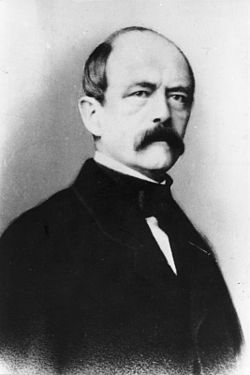
Wilhelm II dismissed his powerful chancellor Bismarck after growing tensions over foreign and domestic policy, famously declaring that the pilot should leave the ship. The dismissal marked the beginning of Wilhelm's personal rule and ended an era of masterful Realpolitik diplomacy.
Image source: Otto von Bismarck
Jun 12, 1897
% complete
Wilhelm appointed Alfred von Tirpitz as State Secretary of the Navy, launching a massive program of battleship construction. The Naval Laws of 1898 and 1900 challenged British naval supremacy and became a central pillar of German Weltpolitik.
Image source: Alfred von Tirpitz
Oct 20, 1897
% complete
Bernhard von Bulow rose to lead German foreign policy and later became chancellor in 1900. He skillfully flattered the kaiser while pursuing Weltpolitik, the ambitious world policy aimed at making Germany a global imperial power.
Image source: Bernhard von Bülow
Apr 10, 1898
% complete
The Reichstag passed the first Naval Law, authorizing a fleet of nineteen battleships over seven years. Tirpitz's fleet-building program became a defining feature of Wilhelm's reign and a major source of tension with Britain.
Image source: German Naval Laws
Oct 28, 1908
% complete
The Daily Telegraph published an interview in which Wilhelm made erratic and offensive remarks about Britain, Russia, and Japan. The scandal provoked outrage in Germany, damaged the kaiser's prestige, and prompted calls for constitutional constraints on his power.
Image source: Daily Telegraph Affair
Jun 18, 1890
% complete
Under new leadership, Germany allowed the secret Reinsurance Treaty with Russia to lapse. Russia subsequently sought closer ties with France, laying the groundwork for the Franco-Russian Alliance that would later encircle Germany in World War I.
Image source: Reinsurance Treaty
Aug 17, 1892
% complete
France and Russia signed a military alliance, ending France's diplomatic isolation and creating a two-front threat against Germany. This development was a direct consequence of Wilhelm's diplomatic missteps following Bismarck's dismissal.
Image source: Franco-Russian Alliance
Jan 3, 1896
% complete
Wilhelm congratulated Boer leader Paul Kruger on repelling the British Jameson Raid in South Africa, straining Anglo-German relations. The telegram inflamed British public opinion and deepened mutual suspicion between the two empires.
Image source: Kruger telegram
Nov 14, 1897
% complete
Following the murder of two German missionaries, Germany seized Jiaozhou Bay in China and established the port of Qingdao. This marked Germany's entry into overseas imperialism and intensified great-power rivalry in East Asia.
Image source: Kiautschou Bay Leased Territory
Oct 11, 1899 - May 31, 1902
% complete
German sympathy for the Boers during their war with Britain exacerbated tensions between the two nations. Pro-Boer sentiment in Germany and incidents like the Kruger telegram contributed to Britain's gradual reorientation toward France and Russia.
Image source: Second Boer War
Jul 27, 1900
% complete
During the Boxer Rebellion, Wilhelm delivered his infamous 'Hun speech' urging German troops to behave like Huns and show no mercy in China. German forces participated in the international expedition that crushed the rebellion, further damaging Germany's international image.
Image source: Hun speech
Apr 8, 1904
% complete
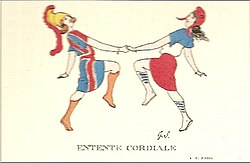
Britain and France settled colonial disputes with the Entente Cordiale, partially driven by alarm at German naval expansion. Wilhelm perceived this as encirclement, reinforcing his belief that Germany was being diplomatically isolated.
Image source: Entente Cordiale
Mar 31, 1905 - Apr 7, 1906
% complete
Wilhelm made a provocative visit to Tangier, declaring support for Moroccan independence to challenge French influence. The resulting Algeciras Conference of 1906 humiliated Germany diplomatically, strengthening rather than weakening the Franco-British Entente.
Image source: First Moroccan Crisis
Oct 6, 1908 - Apr 9, 1909
% complete
Austria-Hungary annexed Bosnia-Herzegovina, provoking Russian anger. Germany backed its ally Austria-Hungary firmly, forcing Russia to back down but deepening Russian resentment and cementing Serbia's hostility toward the Dual Monarchy.
Image source: Bosnian Crisis
Jul 1, 1911 - Nov 4, 1911
% complete
Germany dispatched the gunboat Panther to Agadir, Morocco, to challenge French dominance. The crisis brought Europe close to war before a compromise was reached, but it heightened militarism and hardened British-French cooperation against Germany.
Image source: Agadir Crisis
Feb 5, 1912 - Feb 16, 1912
% complete
British Secretary of State for War Richard Haldane visited Berlin seeking détente and naval limitations. The talks failed due to German demands for neutrality guarantees regarding France, leaving both powers more suspicious than ever.
Image source: Richard Haldane, 1st Viscount Haldane
Jun 28, 1914
% complete
Gavrilo Princip assassinated Archduke Franz Ferdinand in Sarajevo, triggering the July Crisis. Wilhelm initially hoped to localize the conflict but ultimately issued the famous 'blank cheque' of unconditional support to Austria-Hungary against Serbia.
Image source: Assassination of Archduke Franz Ferdinand
Jul 28, 1914
% complete
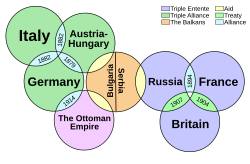
After weeks of escalating ultimatums and mobilizations, war broke out between Austria-Hungary and Serbia, drawing in Russia, Germany, France, and Britain. Wilhelm famously spoke of a 'race to war' and lamented the death of the old order as Europe descended into conflict.
Image source: Causes of World War I
Aug 26, 1914 - Aug 30, 1914
% complete
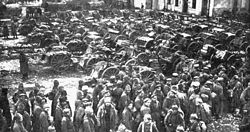
German forces under Hindenburg and Ludendorff annihilated the Russian Second Army in East Prussia. The victory made Hindenburg a national hero and began the rise of the duumvirate that would eventually overshadow the kaiser himself.
Image source: Battle of Tannenberg
Sep 6, 1914 - Sep 12, 1914
% complete
Allied forces stopped the German advance near Paris, shattering hopes of a quick victory through the Schlieffen Plan. Wilhelm's dream of a short, glorious war gave way to the grim reality of prolonged trench warfare on two fronts.
Image source: First Battle of the Marne
Aug 29, 1916 - Oct 3, 1918
% complete
From late 1916, Hindenburg and Ludendorff effectively ruled Germany as a 'silent dictatorship,' marginalizing Wilhelm and the civilian government. The kaiser remained a figurehead while the generals made crucial strategic decisions, including the fateful resumption of unrestricted submarine warfare.
Image source: Martin Kitchen
Feb 1, 1917
% complete
Germany announced unrestricted U-boat warfare, a decision endorsed by the military leadership despite Wilhelm's reservations. The policy sank American ships and helped bring the United States into the war in April 1917, dooming Germany's chances of victory.
Image source: Unrestricted submarine warfare
Apr 6, 1917
% complete
Angered by unrestricted submarine warfare and the Zimmermann Telegram, the United States declared war on Germany. American manpower and industrial might tipped the balance decisively against the Central Powers.
Image source: United States declaration of war on Germany (1917)
Mar 3, 1918
% complete
Germany imposed a harsh peace on Bolshevik Russia, annexing vast eastern territories and freeing troops for a final western offensive. The treaty represented the height of German expansionism under Wilhelm's reign but proved short-lived.
Image source: Treaty of Brest-Litovsk
Mar 21, 1918 - Jul 18, 1918
% complete
Germany's last major offensive on the Western Front failed to achieve a decisive breakthrough. The subsequent Allied Hundred Days Offensive pushed German forces steadily backward, eroding morale at home and at the front.
Image source: German spring offensive
Nov 3, 1918
% complete
Sailors at Kiel mutinied, sparking a revolution that spread across Germany. Councils of workers and soldiers demanded the abdication of the kaiser and an end to the monarchy, collapsing imperial authority within days.
Image source: German Revolution of 1918–1919
Nov 9, 1918
% complete
Facing revolution and pressure from his own government, Wilhelm abdicated and fled to neutral Netherlands. The same day, the Weimar Republic was proclaimed in Berlin, ending nearly five centuries of Hohenzollern rule in Prussia and Brandenburg.
Image source: Abdication of Wilhelm II
Nov 11, 1918
% complete
Germany signed the armistice at Compiègne, ending hostilities on the Western Front. For Wilhelm, now in exile at Amerongen, it marked the definitive collapse of the imperial project he had championed for three decades.
Image source: Armistice of 11 November 1918
Jun 28, 1919
% complete
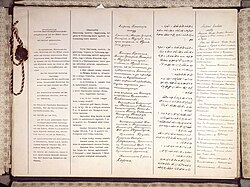
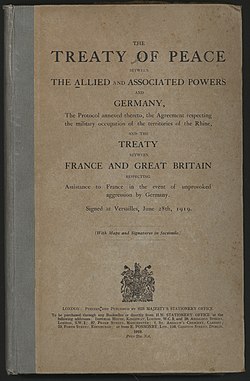
The Treaty of Versailles assigned war guilt to Germany, stripped its colonies, limited its army, and demanded reparations. The treaty also called for prosecution of the former emperor, though the Netherlands refused to hand him over for trial.
Image source: Treaty of Versailles
May 15, 1920
% complete
Wilhelm purchased Huis Doorn, a modest manor house in the Netherlands where he lived for the rest of his life. There he chopped wood, wrote memoirs, received visitors, and clung to fantasies of a monarchist restoration.
Image source: Doorn
Apr 11, 1921
% complete
Augusta Victoria died at Huis Doorn, devastating the exiled kaiser. She was buried at the Antique Temple in Potsdam, and her loss deepened Wilhelm's isolation during his final decades in exile.
Jan 1, 1922
% complete
Wilhelm published the first volume of his memoirs, offering self-justifying accounts of his reign and absolving himself of responsibility for the war. Further volumes followed, revealing his bitterness toward those he blamed for his downfall.
Image source: My Early Life
Nov 9, 1922
% complete
A year after Augusta Victoria's death, the widowed kaiser married Princess Hermine Reuss of Greiz, a young widow with five children. The marriage surprised his family but provided companionship during his long exile.
Image source: Hermine Reuss of Greiz
Jan 30, 1933
% complete
Hitler's appointment as chancellor initially thrilled the aging ex-kaiser, who harbored hopes that the monarchy might be restored. He even sent congratulatory telegrams, though the Nazis never seriously considered bringing him back.
Image source: Adolf Hitler's rise to power
Jun 4, 1941
% complete
Wilhelm died of a pulmonary embolism at Huis Doorn at age 82, just weeks before Germany invaded the Soviet Union. He requested no swastikas at his funeral and asked to be buried only if the monarchy were restored; instead, he lies at the Mausoleum at Doorn.
Or browse the full history timeline directory, with more than 2,000 topics.
This Kaiser Wilhelm II timeline was generated with the help of AI, using information found on the internet.
We work hard to keep these timelines accurate, but mistakes do get through. If you spot one, email us at [email protected] and we'll fix it for future visitors.
Generate yours with AI or build it from scratch, for free.
Export your timeline, add your own events, edit or remove AI-generated events, and much more
No credit card required.
Cancel anytime.
Cancel anytime.
You can create an unlimited number of timelines with up to 10 events on each one, customize how they look, export them to PDF, PNG, PowerPoint, CSV, and Excel, and share them with a link. Paid plans raise the event limit and add features like spreadsheet imports and collaborators.
Yes. You can cancel your subscription from your account page at any time, and you will not be charged again. Your subscription stays active for the rest of the period you already paid for.
Yes. We will email you a reminder before the annual renewal, and we will also email you a receipt.
Yes. You can email us within 15 days of any payment, and we will issue you a full refund.
Check out our pricing docs or send us an email anytime: [email protected].