-
Use Cases
-
Resources
-
Pricing
Lou Gehrig (1903-1941) was an American baseball legend who played first base for the New York Yankees from 1923 to 1939. Known as 'The Iron Horse' for playing in 2,130 consecutive games, he was a seven-time All-Star, two-time MVP, and six-time World Series champion. His career was cut short by amyotrophic lateral sclerosis (ALS), now known as Lou Gehrig's disease, and his famous 1939 farewell speech remains one of the most iconic moments in sports history. More Less
1900
% complete
Gehrig's mother Christina was born in 1881 in Wilster, Schleswig-Holstein, Germany, and emigrated to the United States in 1899. His father Heinrich was born in 1867 in Adelsheim, Baden, and also came to the U.S. They married in 1900.
Image source: Lou Gehrig
Jun 19, 1903
% complete
Henry Louis Gehrig was born June 19, 1903, at 1994 Second Avenue in the East Harlem neighborhood of New York City. He weighed almost 14 pounds (6.4 kg) at birth and was the second of four children of German immigrants Anna Christina Foch and Heinrich Wilhelm Gehrig.
1910 - 1920
% complete
In 1910, Gehrig lived with his parents at 2266 Amsterdam Avenue in Washington Heights. Ten years later, in 1920, the family resided at 2079 8th Avenue in Manhattan.
Jun 26, 1920
% complete
Gehrig first garnered national attention for his baseball ability while playing in a game at Cubs Park (now Wrigley Field) in Chicago on June 26, 1920.
1921
% complete
Gehrig attended PS 132 in Washington Heights, then went to Commerce High School, graduating in 1921 before going on to Columbia University.
1922
% complete
In 1922, Gehrig returned to collegiate sports as a fullback for the Columbia Lions football team while studying at Columbia University.
Apr 18, 1923
% complete
On April 18, 1923, the same day the original Yankee Stadium opened, Columbia pitcher Gehrig struck out 17 Williams Ephs batters to set a team record, though Columbia lost the game.
Sep 15, 1933
% complete
Gehrig lived with his parents until 1933, when he was 30 years old. He met Eleanor Twitchell, daughter of Chicago Parks Commissioner Frank Twitchell, in 1932, and they married on September 15, 1933.
Image source: Eleanor Gehrig
1923 - 1924
% complete
Gehrig returned to the minor league Hartford Senators to play parts of two seasons, 1923 and 1924, batting .344 and hitting 61 home runs in 193 games.
Apr 29, 1923
% complete
A native of New York City and a student at Columbia University, Gehrig signed with the Yankees on April 29, 1923, beginning his professional baseball career.
Jun 15, 1923
% complete
Gehrig joined the New York Yankees midway through the 1923 season and made his major-league debut as a pinch hitter at age 19 on June 15, 1923.
1925
% complete
In 1925, Gehrig batted .295, with 20 home runs and 68 runs batted in over 126 games, establishing himself as an everyday player.
Jun 2, 1925
% complete
On June 2, 1925, the slumping Wally Pipp took himself out of the day's lineup with a headache and was replaced by Gehrig. Pipp never got his job back, and Gehrig went on to appear in every Yankees game until April 30, 1939.
1926
% complete
The 23-year-old Yankee's breakout season came in 1926, when he batted .313 with 47 doubles, an AL-leading 20 triples, 16 home runs, and 112 RBIs, and appeared in the World Series against the St. Louis Cardinals.
1927
% complete
Gehrig hit .373 with 218 hits, 47 home runs, a then-record 175 RBIs, a .474 on-base percentage and a .765 slugging percentage. His production helped the 110-44 Yankees win the pennant by 19 games and sweep the Pittsburgh Pirates in the World Series.
Image source: 1927 New York Yankees season
1929
% complete
In 1929, the Yankees debuted wearing numbers on their uniforms, with Gehrig assigned number 4, which would later become the first retired number in MLB history.
Image source: Retired number
1931
% complete
During his consecutive-games streak, sportswriters in 1931 nicknamed Gehrig "the Iron Horse". That year he drove in a record-setting 185 RBIs, which remains the American League record.
Jun 3, 1932
% complete
In 1932, Gehrig became the first player in the 20th century to hit four home runs in a game, accomplishing the feat on June 3 against the Philadelphia Athletics at Shibe Park. It was only the third four-home-run game in MLB history to that point.
Aug 17, 1933
% complete
On August 17, 1933, Gehrig played in his 1,308th consecutive game against the St. Louis Browns, surpassing Everett Scott's record and continuing his remarkable streak of durability.
1934
% complete
Gehrig won the AL Triple Crown in 1934, leading the league with 49 home runs, 166 RBIs and a .363 batting average. It was the only time he out-homered Ruth during their ten years as teammates.
Image source: Triple Crown (baseball)
Apr 30, 1934
% complete
On April 30, 1934, Gehrig hit his 300th home run against the Washington Senators, becoming the second player to reach that milestone after Babe Ruth.
1936
% complete
In 1936, at his wife's urging, Gehrig auditioned for the role of Tarzan in the independent film Tarzan's Revenge. Producer Sol Lesser passed on him, and the role went to Olympic decathlon gold medalist Glenn Morris.
Image source: Tarzan's Revenge
Jan 1938
% complete
Gehrig starred in the 1938 20th Century Fox film Rawhide, playing himself in his only feature-film appearance. Researchers later determined he showed no visible ALS symptoms when it was shot in January 1938.
Image source: Rawhide (1938 film)
Dec 7, 1939
% complete
At age 36, Gehrig was elected to the Baseball Hall of Fame on December 7, 1939, in a special election related to his illness, becoming the youngest player so honored at the time.
Image source: National Baseball Hall of Fame and Museum
Jul 6, 1941
% complete
The Yankees dedicated a monument to Gehrig in center field at Yankee Stadium on July 6, 1941, lauding him as "A man, a gentleman and a great ballplayer whose amazing record of 2,130 consecutive games should stand for all time."
Image source: Monument Park (Yankee Stadium)
1942
% complete
Gehrig's life was the subject of the 1942 film The Pride of the Yankees, starring Gary Cooper as Gehrig and Teresa Wright as his wife Eleanor. In 2008, the AFI honored it as the third-best sports movie.
Image source: The Pride of the Yankees
1969
% complete
In 1969, the Baseball Writers' Association of America voted Gehrig the greatest first baseman of all time.
Image source: Baseball Writers' Association of America
1999
% complete
Sixty years after his farewell to baseball, Gehrig received the most votes of any baseball player on the Major League Baseball All-Century Team chosen by fans in 1999. That same year, Sporting News ranked him sixth among Baseball's 100 Greatest Players.
Image source: Major League Baseball All-Century Team
Sep 7, 1938 - Sep 27, 1938
% complete
As symptoms of an undiagnosed ailment began affecting him midway through the 1938 season, Gehrig stole his last two bases on September 7, 1938, and had his last extra-base hit, a home run, on September 27, 1938.
Apr 30, 1939
% complete
Gehrig played his last game for the Yankees on April 30, 1939, ending his streak of appearing in every Yankees game since June 2, 1925, as his coordination deteriorated from what would be diagnosed as ALS.
May 2, 1939
% complete
Gehrig's consecutive game streak ended on May 2, 1939, when he voluntarily took himself out of the lineup, stunning both players and fans. The record of 2,130 consecutive games stood until Cal Ripken Jr. surpassed it on September 6, 1995.
Jun 13, 1939 - Jun 19, 1939
% complete
Gehrig flew alone to Rochester and arrived at the Mayo Clinic on June 13, 1939. Staff released his diagnosis of amyotrophic lateral sclerosis (ALS), then incurable, to the public on June 19, 1939, his 36th birthday.
Image source: ALS
Jul 4, 1939
% complete
Two weeks after retiring, Gehrig delivered his famous speech declaring himself the "luckiest man on the face of the earth" at Yankee Stadium during Lou Gehrig Appreciation Day before 61,808 fans. The New York Times called it perhaps the most colorful pageant ever enacted on a baseball field.
Image source: Lou Gehrig
Jan 2, 1940
% complete
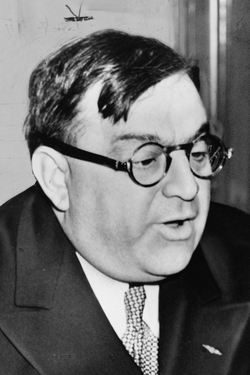
In October 1939, Gehrig accepted Mayor Fiorello La Guardia's appointment to a ten-year term as New York City parole commissioner. After moving from New Rochelle to Riverdale to satisfy a residency requirement, he was sworn into office on January 2, 1940.
Image source: Fiorello La Guardia
Jun 2, 1941
% complete
On June 2, 1941, 17 days before his 38th birthday, Gehrig died at his home at 5204 Delafield Avenue in the Riverdale neighborhood of the Bronx. He was interred in Kensico Cemetery, where Eleanor later joined him after her death on March 6, 1984.
Or browse the full history timeline directory, with more than 2,000 topics.
This Lou Gehrig timeline was generated with the help of AI, using information found on the internet.
We work hard to keep these timelines accurate, but mistakes do get through. If you spot one, email us at [email protected] and we'll fix it for future visitors.
Generate yours with AI or build it from scratch, for free.
Export your timeline, add your own events, edit or remove AI-generated events, and much more
No credit card required.
Cancel anytime.
Cancel anytime.
You can create an unlimited number of timelines with up to 10 events on each one, customize how they look, export them to PDF, PNG, PowerPoint, CSV, and Excel, and share them with a link. Paid plans raise the event limit and add features like spreadsheet imports and collaborators.
Yes. You can cancel your subscription from your account page at any time, and you will not be charged again. Your subscription stays active for the rest of the period you already paid for.
Yes. We will email you a reminder before the annual renewal, and we will also email you a receipt.
Yes. You can email us within 15 days of any payment, and we will issue you a full refund.
Check out our pricing docs or send us an email anytime: [email protected].