-
Use Cases
-
Resources
-
Pricing
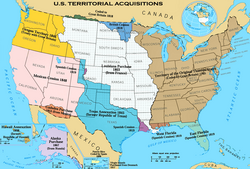
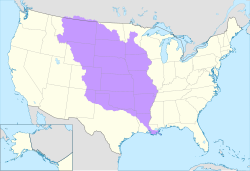
The Louisiana Purchase was the 1803 acquisition by the United States of approximately 828,000 square miles of land from France for $15 million. Negotiated during President Thomas Jefferson's administration, it doubled the size of the young nation and opened vast territories west of the Mississippi River for exploration and settlement. More Less
1682 - 1762
% complete
The Kingdom of France controlled the Louisiana territory from 1682, establishing a vast colonial claim in North America centered on the Mississippi River basin. Throughout the second half of the 18th century, the French colony of Louisiana became a pawn for European political intrigue.
1762
% complete
France ceded the Louisiana territory to Spain in 1762 in the secret Treaty of Fontainebleau. The treaty did not define the territory's boundaries, which later became a source of dispute.
Oct 27, 1795
% complete
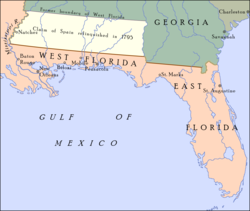
Pinckney's Treaty, signed with Spain on October 27, 1795, gave American merchants 'right of deposit' in New Orleans, granting them use of the port to store goods for export.
Image source: Pinckney's Treaty
1798
% complete
In 1798, Spain revoked the treaty allowing American use of New Orleans, greatly upsetting the Americans who depended on access to the Mississippi River for trade.
Image source: Louisiana Purchase
1800
% complete
In 1800, Spain ceded the Louisiana territory back to France as part of Napoleon's secret Third Treaty of San Ildefonso. In exchange, Napoleon Bonaparte, First Consul of the French Republic, gave Spain territories in Tuscany as part of his broader effort to re-establish a French colonial empire in North America.
Image source: Third Treaty of San Ildefonso
1801
% complete
While the treaty between Spain and France went largely unnoticed in 1800, fear of an eventual French invasion spread across America when, in 1801, Napoleon sent a military force to nearby Saint-Domingue. That same year, Jefferson supported France's plan to take back Saint-Domingue (present-day Haiti), then under control of Toussaint Louverture after a slave rebellion.
Image source: Saint-Domingue expedition
1801
% complete
In 1801, Spanish Governor Don Juan Manuel de Salcedo took over from the Marquess of Casa Calvo and restored the American right to deposit goods in New Orleans.
1801
% complete
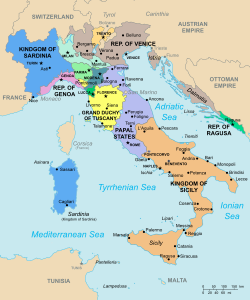
The subsequent 1801 Treaty of Aranjuez established that Spain's cession of Louisiana was a 'restoration' of the territory to France, not a retrocession.
Image source: Treaty of Aranjuez (1801)
Dec 1801
% complete
In December 1801, France sent General Charles Leclerc, Napoleon's brother-in-law, on an expedition to Saint-Domingue to reassert French control over the colony, which had become essentially autonomous under Louverture.
1802
% complete
Spain procrastinated until late 1802 in executing the treaty to transfer Louisiana to France, which allowed American hostility to build over fears of French control of New Orleans.
Nov 1803
% complete
In November 1803, France withdrew its 7,000 surviving troops from Saint-Domingue — more than two-thirds of its troops died there — and gave up its ambitions in the Western Hemisphere.
Nov 30, 1803
% complete
Just three weeks before the formal cession to the United States, on November 30, 1803, Spanish officials formally conveyed the colonial lands and their administration to France at New Orleans.
1769
% complete
Spain prohibited slavery of Native Americans in 1769, though some slaves of mixed African–Native American descent were still being held in St. Louis decades later. This provision from Spanish rule was incorporated into slavery laws passed by the Louisiana territories.
1804
% complete
In 1804, Haiti declared its independence; but fearing a slave revolt at home, Jefferson and Congress refused to recognize the new republic, the second in the Western Hemisphere, and imposed a trade embargo against it. This, together with the French demand for an indemnity of 150 million francs in 1825, severely hampered Haiti's economy.
Image source: Haitian Declaration of Independence
1820
% complete
Both present-day Arkansas and Missouri already had slaveholders, and the territories passed slavery laws similar to those in southern states but incorporating provisions from preceding French and Spanish rule. Slavery law in the Louisiana Territory contributed to the American Civil War a half century later; the Missouri Compromise of 1820 was a temporary solution.
Image source: Missouri Compromise
1836
% complete
Despite Spain's 1769 prohibition of slavery of Native Americans, some slaves of mixed African–Native American descent were still being held in St. Louis into the 19th century. Slavery of Native Americans was finally ended in 1836 by decision of the U.S. Supreme Court.
1946
% complete
Court cases and tribal suits in the 1930s for historical damages flowing from the Louisiana Purchase led to the Indian Claims Commission Act (ICCA) in 1946. Interior Department lawyer Felix Cohen said 'practically all of the real estate acquired by the United States since 1776 was purchased... from its original Indian owners.'
1801
% complete
In hopes of securing control of the mouth of the Mississippi, President Jefferson sent Robert Livingston to Paris in 1801 with authorization to purchase New Orleans.
Image source: Robert R. Livingston
1803
% complete
In 1803, Pierre Samuel du Pont de Nemours, a French nobleman, began to help negotiate with France at the request of Jefferson.
Image source: Pierre Samuel du Pont de Nemours
1803
% complete
Intent on avoiding possible war with France, Jefferson sent James Monroe to Paris in 1803 to negotiate a settlement, with instructions to go to London to negotiate an alliance if the talks in Paris failed.
Image source: James Monroe
Mar 11, 1803
% complete
On March 11, 1803, Napoleon began planning an invasion of Great Britain. By early 1803, he had decided to abandon his plans to rebuild France's New World empire, making a sale of Louisiana more likely.
Image source: Napoleon's planned invasion of the United Kingdom
Apr 10, 1803
% complete
Although foreign minister Talleyrand opposed the plan, on April 10, 1803, Napoleon told Treasury Minister François Barbé-Marbois that he was considering selling the entire Louisiana Territory to the United States.
Apr 11, 1803
% complete
On April 11, 1803, just days before Monroe's arrival, Barbé-Marbois offered Livingston all of Louisiana for $15 million, averaging less than three cents per acre at the time — about $380 million in 2024 dollars, or 72 cents per acre.
Image source: François Barbé-Marbois
Apr 30, 1803
% complete
Fearing Napoleon might withdraw the offer at any time, the Americans agreed and signed the Louisiana Purchase Treaty on April 30, 1803 (10 Floréal XI in the French Republican calendar) at the Hôtel Tubeuf in Paris, acquiring the vast territory for $15 million.
Jul 4, 1803
% complete
After Monroe and Livingston returned from France with news of the purchase, an official announcement was made on July 4, 1803, though the documents did not arrive in Washington, D.C. From this day, the United States took their place among the powers of the first rank.
Jan 1, 1803 - Mar 31, 1803
% complete
Earlier in 1803, Francis Baring and Company of London had become the U.S. government's financial agent. With continuing war between France and Britain seeming unavoidable, Francis Baring's son Alexander and Pierre Labouchère from Hopes arrived in Paris in April 1803 to assist with the negotiations.
Image source: Barings Bank
Jul 1803
% complete
Although the first group of U.S. bonds were not issued until January 16, 1804, the banks had already provided a 10 million franc advance to France in July 1803. The exchange rate was set at 5.33333 francs per U.S. dollar.
Oct 1803 - Jan 16, 1804
% complete
In October 1803, the U.S. issued government bonds carrying 6% interest, redeemable between 1819 and 1822. The first group of bonds were issued on January 16, 1804. In December 1803, the British directed Barings to halt future payments to France due to the renewed war.
Apr 1804
% complete
In April 1804, the banks transferred an additional 40.35 million francs to fully discharge their obligations to France, completing the final payments for the purchase.
1823
% complete
The last of the bonds used to finance the Louisiana Purchase were paid off by the United States Treasury in 1823, twenty years after the acquisition.
Oct 21, 1803
% complete
After addressing objections about Spain's promise not to alienate Louisiana — which the French government called baseless since it was not in the treaty of San Ildefonso itself — the Senate on October 21, 1803 authorized Jefferson to take possession of the territory and establish a temporary military government.
Dec 20, 1803
% complete
France turned over New Orleans, the historic colonial capital, on December 20, 1803, at the Cabildo, with a flag-raising ceremony in the Plaza de Armas, now Jackson Square.
Mar 9, 1804 - Mar 10, 1804
% complete
On March 9 and 10, 1804, another ceremony, commemorated as Three Flags Day, was conducted in St. Louis, marking the transfer of Upper Louisiana from Spain through France to the United States.
Image source: Three Flags Day
Mar 10, 1804 - Sep 30, 1804
% complete
From March 10 to September 30, 1804, Upper Louisiana was supervised as a military district under its first civil commandant, Amos Stoddard, appointed by the War Department.
Image source: Amos Stoddard
Oct 1, 1804
% complete
Effective October 1, 1804, the purchased territory was organized into the Territory of Orleans (most of which would become the state of Louisiana) and the District of Louisiana, temporarily under control of the governor and judicial system of the Indiana Territory.
Image source: Territory of Orleans
1804
% complete
The Lewis and Clark Expedition (1804) traveled up the Missouri River to explore the newly acquired lands. It was followed by the Dunbar and Hunter Expedition (1804–1805) exploring the Ouachita River watershed, the Red River Expedition (1806), and the Pike Expedition (1806), which explored the Arkansas River watershed.
Image source: Lewis and Clark Expedition
1808
% complete
In 1808, two military forts with trading factories were built: Fort Osage along the Missouri River in western present-day Missouri and Fort Madison along the Upper Mississippi River in eastern present-day Iowa.
Image source: Fort Osage
1809 - 1826
% complete
With tensions increasing with Great Britain, in 1809 Fort Bellefontaine was converted to a U.S. military fort and was used for that purpose until 1826.
Image source: Fort Belle Fontaine
Feb 1815
% complete
During the War of 1812, aided by their Indian allies, the British defeated U.S. forces in parts of the region, but U.S. ownership of the whole Louisiana Purchase region was confirmed in the Treaty of Ghent, ratified in February 1815.
Image source: Treaty of Ghent
1816 - 1819
% complete
The U.S. built or expanded forts along the Mississippi and Missouri rivers, including adding to Fort Bellefontaine, and constructing Fort Armstrong (1816) and Fort Edwards (1816) in Illinois, Fort Crawford (1816) in Wisconsin, Fort Snelling (1819) in Minnesota, and Fort Atkinson (1819) in Nebraska.
Image source: Fort Snelling
1818
% complete
The territory north of the 49th parallel (including the Milk River and Poplar River watersheds) was ceded to the UK in exchange for parts of the Red River Basin south of the 49th parallel in the Anglo-American Convention of 1818.
Image source: Treaty of 1818
1819 - 1821
% complete
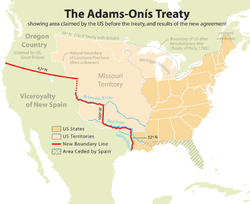
The western borders of the purchase were settled by the Adams–Onís Treaty with Spain, signed in 1819 and ratified in 1821, with the United States gaining most of what it had claimed in the west. The dispute stemmed from boundaries never defined in the treaties of 1762, 1801, or 1803.
Image source: Adams–Onís Treaty
Or browse the full history timeline directory, with more than 2,000 topics.
This Louisiana Purchase timeline was generated with the help of AI, using information found on the internet.
We work hard to keep these timelines accurate, but mistakes do get through. If you spot one, email us at [email protected] and we'll fix it for future visitors.
Generate yours with AI or build it from scratch, for free.
Export your timeline, add your own events, edit or remove AI-generated events, and much more
No credit card required.
Cancel anytime.
Cancel anytime.
You can create an unlimited number of timelines with up to 10 events on each one, customize how they look, export them to PDF, PNG, PowerPoint, CSV, and Excel, and share them with a link. Paid plans raise the event limit and add features like spreadsheet imports and collaborators.
Yes. You can cancel your subscription from your account page at any time, and you will not be charged again. Your subscription stays active for the rest of the period you already paid for.
Yes. We will email you a reminder before the annual renewal, and we will also email you a receipt.
Yes. You can email us within 15 days of any payment, and we will issue you a full refund.
Check out our pricing docs or send us an email anytime: [email protected].