-
Use Cases
-
Resources
-
Pricing
Marco Polo (1254–1324) was a Venetian merchant, explorer, and writer whose travels through Asia between 1271 and 1295 brought firsthand accounts of China, the Silk Road, and the court of Kublai Khan to European audiences. His book 'The Travels of Marco Polo' (also known as 'Il Milione') became one of the most influential travel narratives in history, inspiring later explorers such as Christopher Columbus and shaping European knowledge of the East for centuries. More Less
1254
% complete
Marco Polo was born around 1254 in Venice, though the exact date and place of birth are archivally unknown. His father was the travelling merchant Niccolò Polo, who had left his wife pregnant before departing on his journeys.
1269
% complete
In 1269, Niccolò and Maffeo returned to their families in Venice, meeting young Marco for the first time. Niccolò found that his wife, whom he had left pregnant, had died and left a fifteen-year-old son named Marco.
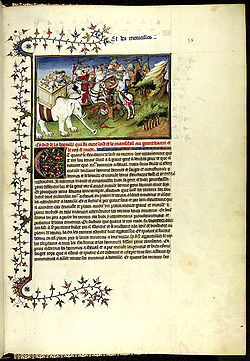
Image source: Marco Polo
1260
% complete
In 1260, Niccolò and Maffeo, while residing in Constantinople, then the capital of the Latin Empire, foresaw a political change. They liquidated their assets into jewels and moved away, beginning their journey eastward.
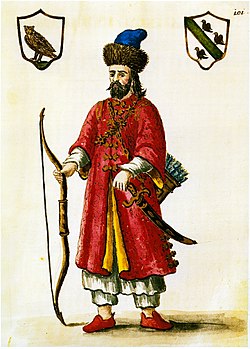
Image source: Niccolò and Maffeo Polo
1266
% complete
In 1266, Niccolò and Maffeo Polo reached the seat of Kublai Khan at Dadu, present-day Beijing, China, where they were received favorably by the Mongol ruler.
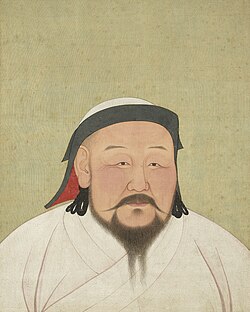
Image source: Kublai Khan
1268
% complete
The long sede vacante between the death of Pope Clement IV in 1268 and the election of his successor delayed the Polos in fulfilling Kublai Khan's request for missionaries.
Image source: Pope Clement IV
1271
% complete
In 1271, during the rule of Doge Lorenzo Tiepolo, Marco Polo (at seventeen years of age), his father, and his uncle set off for Asia on the series of adventures that Marco later documented in his book.
1271
% complete
During his crossing of Pamir (ancient Mount Imeon) in 1271, Marco Polo described a wild sheep subspecies of Ovis ammon that would later be named after him: the Marco Polo sheep.
Image source: Marco Polo sheep
1271 - 1275
% complete
The exact date of the Polos' arrival at Kublai Khan's court is unknown, but scholars estimate it to be between 1271 and 1275, after a long journey along the Silk Road.
1274
% complete
According to a claim, Boluo was arrested in 1274 by an imperial dignitary named Saman for walking on the same side of the road as a female courtesan, contravening city order. The History of Yuan records he was released at the emperor's request.
1274
% complete
Archaeologists have pointed out that Polo may have mixed up details from the two attempted invasions of Japan by Kublai Khan in 1274 and 1281 when recounting these events in his book.
1275
% complete
According to the History of Yuan, Boluo was released at the request of the emperor himself and was then transferred to the region of Ningxia, in the northeast of present-day China, in the spring of 1275.
1281
% complete
Kublai Khan launched a second attempted invasion of Japan in 1281. Later scholars suggested that Marco Polo conflated details of the two invasions of 1274 and 1281 in his narrative.
Image source: Mongol invasions of Japan
1282 - 1283
% complete
According to sources, Xiangwei was transferred to Yangzhou in 1282–1283. Marco Polo reports that he himself was moved to Hangzhou the following year, in 1284.
1291
% complete
Around 1291, Kublai Khan granted permission, entrusting the Polos with his last duty: to accompany the Mongol princess Kököchin, who was to become the consort of Arghun Khan, to Persia.
1292
% complete
In 1292, Kublai's great-nephew, then ruler of Persia, sent representatives to China in search of a potential wife, and they asked the Polos to accompany them. The wedding party left that same year from Zaitun in southern China on a fleet of 14 junks.
1293
% complete
Astronomers agree there were no comets sighted in Europe at the end of the 13th century, but records exist about a comet sighted in China and Indonesia in 1293, relevant to debates about Polo's account.
1293
% complete
Having offered to accompany the Mongol princess Kököchin to Persia around 1291, the Polos arrived there around 1293. Polo's account of this voyage has been confirmed by the Yongle Encyclopedia and by Rashid-al-Din Hamadani's Jami' al-tawarikh.
Image source: Kököchin
1295
% complete
According to Giovanni Battista Ramusio, fellow citizens nicknamed him Milione when he came back to Venice because he kept saying that Kublai Khan's wealth was counted in millions. Since his father was also called Milione, philologist Luigi Foscolo Benedetto believed it was shortened from Emilione, distinguishing the family branch.
1650
% complete
Doubts about Marco Polo's narrative of his travels in China arose over his failure to mention the Great Wall, first raised in the middle of the 17th century. By the middle of the 18th century it was even suggested he never reached China. Defenders note the familiar wall is a Ming structure built some two centuries after his travels.
1995
% complete
Frances Wood claimed in her 1995 book Did Marco Polo Go to China? that at best Polo never went farther east than Persia, and that nothing in The Book of Marvels about China could not have been obtained from Persian books. Critics such as Hans Ulrich Vogel countered that Polo's descriptions of currencies, salt production, and revenues support his presence in China.
Image source: Did Marco Polo Go to China?
2010
% complete
In 2010, the Marco Polo Memorial Hall was erected in Yangzhou, China, commemorating the explorer's reported service there, and it was renovated in 2023.
2012
% complete
In 2012, Tübingen Sinologist Hans Ulrich Vogel released a detailed analysis of Polo's description of currencies, salt production, and revenues, arguing the evidence supports his presence in China. Economic historian Mark Elvin concluded Vogel demonstrated 'the ultimately overwhelming probability of the broad authenticity' of Polo's account.
Image source: Marco Polo
2014 - 2016
% complete
Marco Polo (2014–2016) is a Netflix television drama series about Marco Polo's early years in the court of Kublai Khan, created by John Fusco. Polo has also appeared in many works, including Calvino's Invisible Cities (1972), Doctor Who (1964), the miniseries Marco Polo (1982), and Uncharted 2: Among Thieves (2009).
Image source: Marco Polo (2014 TV series)
1295
% complete
They returned to Venice in 1295, after 24 years, with many riches and treasures. Marco Polo returned home with his fortune converted into gemstones.
1296
% complete
Polo was probably caught by Genoese in a skirmish in 1296 off the Anatolian coast between Adana and the Gulf of Alexandretta, rather than during the Battle of Curzola of September 1298 as later tradition recorded.
Sep 1298
% complete
A later tradition from the 16th century recorded by Ramusio claims Polo was captured during the Battle of Curzola (September 1298) off the Dalmatian coast, though modern scholars believe he was caught in a skirmish off the Anatolian coast in 1296 instead.
Image source: Battle of Curzola
Aug 1299
% complete
Polo was finally released from captivity in August 1299 and returned home to Venice, where his father and uncle had in the meantime purchased a large palazzo in the contrada San Giovanni Crisostomo (Corte del Milion). He became a wealthy merchant, married, and had three children.
1300
% complete
Sometime before 1300, Marco Polo's father Niccolò died, leaving his son owner of family estates.
1300
% complete
In 1300, Marco Polo married Donata Badoèr, the daughter of Vitale Badoèr, a merchant. It was also found that Polo first had a daughter named Agnese (born 1319) from a partnership or marriage which ended before 1300, and he went on to have three children.
Image source: Donata Badoer
1305
% complete
In 1305, Marco Polo is mentioned in a Venetian document among local sea captains regarding the payment of taxes, providing evidence of his continued life as a merchant in the city.
1309 - 1310
% complete
Polo is clearly mentioned again after 1305 in Maffeo's testament from 1309 to 1310. In 1321, he bought part of the family property of his wife Donata, and in 1319 he became owner of some estates of his deceased father.
1323
% complete
In 1323, Polo was confined to bed due to illness. Despite physicians' efforts to treat him, he was on his deathbed by 8 January 1324.
Jan 8, 1324
% complete
Due to Venetian law stating that the day ends at sunset, the exact date of Marco Polo's death cannot be determined, but according to some scholars it was between the sunsets of 8 and 9 January 1324. His testament, dated 9 January 1324, is held by the Biblioteca Marciana, which gives June 1324 as an alternate date. He was buried in the church of San Lorenzo in Venice.
1298 - 1299
% complete
British scholar Ronald Latham pointed out that The Travels of Marco Polo was a collaboration written in 1298–1299 between Polo and Rustichello of Pisa, a professional writer of romances, who composed Devisement du Monde in Franco-Venetian.
1302
% complete
One early manuscript, Iter Marci Pauli Veneti, was a translation into Latin made by the Dominican brother Francesco Pipino in 1302, just a few years after Marco's return to Venice.
Image source: The Travels of Marco Polo
1350
% complete
Another Old French Polo manuscript, dating to around 1350, is held by the National Library of Sweden. Other important early sources include Ramusio's Italian translation first printed in 1559 and a 15th-century Latin manuscript kept at Toledo, Spain.
Image source: The Travels of Marco Polo
2016
% complete
Sharon Kinoshita's 2016 translation takes as its source the Franco-Italian 'F' manuscript and invites readers to focus on the text as the product of a larger European and Eurasian literary and commercial culture. Earlier translations include John Frampton's 1579 English version and the popular Penguin edition of 1958.
Or browse the full history timeline directory, with more than 2,000 topics.
This Marco Polo timeline was generated with the help of AI, using information found on the internet.
We work hard to keep these timelines accurate, but mistakes do get through. If you spot one, email us at [email protected] and we'll fix it for future visitors.
Generate yours with AI or build it from scratch, for free.
Export your timeline, add your own events, edit or remove AI-generated events, and much more
No credit card required.
Cancel anytime.
Cancel anytime.
You can create an unlimited number of timelines with up to 10 events on each one, customize how they look, export them to PDF, PNG, PowerPoint, CSV, and Excel, and share them with a link. Paid plans raise the event limit and add features like spreadsheet imports and collaborators.
Yes. You can cancel your subscription from your account page at any time, and you will not be charged again. Your subscription stays active for the rest of the period you already paid for.
Yes. We will email you a reminder before the annual renewal, and we will also email you a receipt.
Yes. You can email us within 15 days of any payment, and we will issue you a full refund.
Check out our pricing docs or send us an email anytime: [email protected].