-
Use Cases
-
Resources
-
Pricing
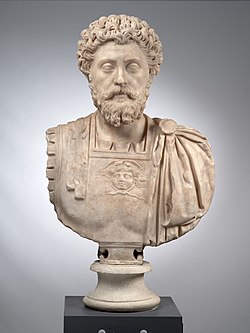
Marcus Aurelius (121–180 AD) was Roman emperor from 161 to 180 and one of the most renowned Stoic philosophers. Known as the last of the 'Five Good Emperors,' he ruled during a challenging period marked by wars against Germanic tribes and the Parthians, as well as the Antonine Plague. His personal writings, Meditations, remain a cornerstone of Stoic philosophy and continue to influence readers today. More Less
100 - 199
% complete
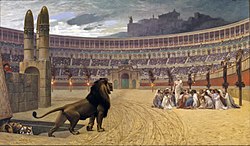
In the second century, the emperors treated Christianity as a local problem to be dealt with by their subordinates. This decentralized approach meant that the fate of Christian communities depended heavily on the attitudes of local governors and officials.
Image source: Persecution of Christians in the Roman Empire
140
% complete
In assessments of Marcus's intellectual formation, he was seen as heir to the 'Stoic Opposition' tradition and the true successor of Seneca, as opposed to Fronto, the rhetorician who was deemed the false one.
Image source: Marcus Aurelius
170 - 180
% complete
Marcus Aurelius wrote his personal reflections, known as his 'writings to himself,' during the final decade of his life. These notes, never intended for publication, would become one of the most celebrated works of Stoic philosophy.
Image source: Meditations
81 - 96
% complete
During the reign of Domitian (81–96), a tradition of 'Stoic Opposition' to the 'bad emperors' of the 1st century took shape. Marcus Aurelius was later seen as heir to this tradition, the true successor of Seneca as opposed to Fronto, whom some considered the false one.
Image source: Stoic Opposition
161
% complete
The succession of a biological son to his father as emperor was extraordinarily rare in Roman history; aside from Titus following Vespasian, the case involving Marcus's line stands as only the second such instance.
161
% complete
Biological sons of the emperor, if there were any, were considered heirs; however, it was only the second time that a 'non-adoptive' son had succeeded his father, the only other having been a century earlier when Vespasian was succeeded by his son Titus.
79
% complete
A century before Marcus Aurelius took the throne, Vespasian was succeeded by his biological son Titus — the only prior instance of a 'non-adoptive' son succeeding his father as Roman emperor, a precedent echoed when Marcus was succeeded.
Image source: Titus
180
% complete
Marcus Aurelius is remembered as the 'philosopher-emperor,' a ruler whose private reflections reveal a mind devoted to virtue and duty even amid the burdens of governing the Roman Empire.
1558
% complete
Centuries after his death, Marcus Aurelius's writings have been praised by fellow writers, philosophers, monarchs, and politicians, cementing the Meditations' status as an enduring classic of practical ethics and leadership.
1589
% complete
In 1589, Pope Sixtus V had a statue replaced with one of Saint Paul, part of the broader reworking of Rome's monuments during the Counter-Reformation era that affected the legacy of ancient imperial imagery.
Image source: Equestrian statue of Marcus Aurelius
1600
% complete
Monarchs and politicians across the centuries have drawn inspiration from the Meditations, admiring its counsel on duty, self-discipline, and ruling justly — themes resonant with leaders bearing real responsibilities.
1600
% complete
Writers across the centuries have celebrated the Meditations not only for its wisdom but also for its literary qualities — its directness, intimacy, and memorable aphoristic style.
1600
% complete
Fellow philosophers have praised the Meditations for centuries, admiring its honest self-examination and its insistence that reason and virtue are sufficient for a good life.
2000
% complete
In the modern era, the Meditations has enjoyed remarkable commercial success, selling steadily to new generations of readers interested in Stoicism, self-improvement, and classical philosophy.
2010
% complete
A broader revival of interest in Stoic philosophy in the 21st century fueled surging demand for Marcus Aurelius's writings, as readers sought timeless guidance on resilience and equanimity.
Image source: Stoicism
2012
% complete
In 2012, the Meditations sold 16,000 copies, reflecting its growing popularity among contemporary readers discovering Stoic philosophy through modern translations and editions.
2019
% complete
By 2019, annual sales of the Meditations had reached 100,000 copies — more than six times the 2012 figure — demonstrating the explosive growth of interest in Marcus Aurelius and Stoicism in the late 2010s.
2020
% complete
Today, Marcus Aurelius's writings continue to be praised by writers, philosophers, monarchs, and politicians alike, with strong ongoing sales testifying to the timeless appeal of his Stoic guidance.
300 - 999
% complete
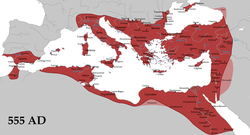
Marcus's writings survived in the scholarly traditions of the Eastern Church, preserved by Byzantine scribes and scholars long after the fall of the Western Roman Empire, ensuring the text's transmission into the medieval world.
400 - 1499
% complete
The survival of the Meditations owes much to the scholarly traditions of the Eastern Church, which copied and studied the text throughout the Byzantine period until it reached Western Europe.
Image source: Byzantine Empire
900 - 999
% complete
The Byzantine Suda encyclopedia contains perhaps the earliest named references to Marcus's writings, possibly inserted by Arethas himself, further documenting the text's presence in medieval Greek scholarship.
Image source: Suda
900 - 999
% complete
The first known reference to the book by name — 'Marcus's writings to himself' — comes from Arethas of Caesarea in the 10th century, confirming that the work circulated under its familiar title in Byzantium.
Image source: Arethas of Caesarea
900 - 999
% complete
The first surviving quotes of Marcus's writings come from Arethas of Caesarea in the 10th century, marking the earliest known evidence of the text being read and copied after antiquity.
1300 - 1399
% complete
The oldest surviving complete manuscript copy of the Meditations dates to the 14th century and is held in the Vatican library, making it the earliest witness to the full text of Marcus's reflections.
Image source: Vatican Library
1300 - 1399
% complete
The 14th-century Vatican manuscript remains the oldest complete copy of the Meditations, safeguarding the integrity of the text for scholars and serving as a key witness for modern editions.
Image source: Vatican Library
1558
% complete
The Meditations was first published in 1558 in Zurich by Wilhelm Xylander, based on a manuscript that was reportedly lost shortly afterwards, giving the printed edition unique importance for the text's survival.
Image source: Wilhelm Xylander
1558
% complete
The manuscript used by Wilhelm Xylander for his 1558 Zurich edition was reportedly lost shortly afterwards, meaning all subsequent copies of the Meditations descend from the printed text rather than that original manuscript.
1558
% complete
Xylander's 1558 publication made the Meditations available to Western European readers for the first time in print, launching the work's centuries-long career as a beloved classic beyond the Greek-speaking world.
Or browse the full history timeline directory, with more than 2,000 topics.
This Marcus Aurelius timeline was generated with the help of AI, using information found on the internet.
We work hard to keep these timelines accurate, but mistakes do get through. If you spot one, email us at [email protected] and we'll fix it for future visitors.
Generate yours with AI or build it from scratch, for free.
Export your timeline, add your own events, edit or remove AI-generated events, and much more
No credit card required.
Cancel anytime.
Cancel anytime.
You can create an unlimited number of timelines with up to 10 events on each one, customize how they look, export them to PDF, PNG, PowerPoint, CSV, and Excel, and share them with a link. Paid plans raise the event limit and add features like spreadsheet imports and collaborators.
Yes. You can cancel your subscription from your account page at any time, and you will not be charged again. Your subscription stays active for the rest of the period you already paid for.
Yes. We will email you a reminder before the annual renewal, and we will also email you a receipt.
Yes. You can email us within 15 days of any payment, and we will issue you a full refund.
Check out our pricing docs or send us an email anytime: [email protected].