-
Use Cases
-
Resources
-
Pricing
The Gallic Wars were a series of military campaigns waged by the Roman general Julius Caesar against Gallic tribes between 58 BC and 50 BC. These conflicts resulted in the complete conquest of Gaul (modern-day France, Belgium, and parts of surrounding regions), vastly expanded Rome's territory, enhanced Caesar's fame and power, and are famously documented in Caesar's own account, Commentarii de Bello Gallico. More Less
Jan 1, 58 BC
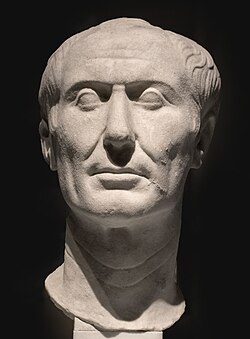
In 59 BC, Julius Caesar secured through the Lex Vatinia the governorship of Cisalpine Gaul, Illyricum, and later Transalpine Gaul, giving him command of legions and a springboard for campaigns beyond the Alps that would launch the Gallic Wars.
Image source: Julius Caesar
58 BC
Caesar intercepted the migrating Helvetii at the Arar (Saône) River in 58 BC, surprising and defeating a portion of their forces as they crossed, marking the opening clash of the Gallic Wars.
Image source: Battle of the Arar

58 BC
Caesar decisively defeated the Helvetii near Bibracte in 58 BC, forcing their return to their homeland and halting their attempted migration across Gaul, thereby establishing Roman dominance early in the war.
Image source: Battle of Bibracte
58 BC
Later in 58 BC, Caesar routed the Germanic king Ariovistus in the Vosges region, expelling Germanic settlers from Gaul and securing the Rhine frontier for Rome.
Image source: Battle of Vosges (58 BC)

57 BC
In 57 BC Caesar marched against the Belgae, a confederation of fierce tribes in northeastern Gaul who feared Roman domination, launching a major campaign to subdue the region.
Image source: Belgae

56 BC
Decimus Brutus, commanding Caesar's fleet, destroyed the Veneti's fleet in the Morbihan Gulf in 56 BC, subduing the maritime tribes of Armorica and securing the Atlantic coast of Gaul.
Image source: Battle of Quiberon Bay

55 BC
In late August 55 BC, Caesar led the first Roman expedition across the Channel to Britain, landing near Deal. The reconnaissance-in-force met stiff resistance but established a precedent for Roman interest in the island.
Image source: Julius Caesar's invasions of Britain

54 BC
In 54 BC Caesar returned to Britain with a larger force of five legions, penetrating further inland and defeating Cassivellaunus, though the expedition yielded little lasting conquest beyond tribute and hostages.
57 BC
The Nervii and allied tribes launched a surprise attack on Caesar's army as it made camp by the Sabis River in 57 BC. Nearly a Roman disaster, Caesar's personal leadership turned the tide into a bloody victory that broke Belgic resistance.
Image source: Battle of the Sabis
55 BC
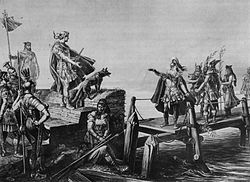
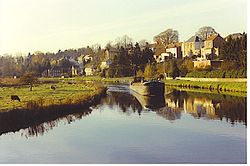
Caesar astonished the ancient world in 55 BC by building a wooden bridge across the Rhine in just ten days, marching into Germanic territory to intimidate the tribes, then dismantling the bridge upon his return.
Image source: Caesar's Rhine bridges

This Gallic Wars timeline was generated with the help of AI, using information found on the internet.
We work hard to keep these timelines accurate, but mistakes do get through. If you spot one, email us at [email protected] and we'll fix it for future visitors.
Generate yours with AI or build it from scratch, for free.