-
Use Cases
-
Resources
-
Pricing
Roman gladiators were professional fighters who battled in arenas across the Roman Republic and Empire, entertaining crowds in spectacles that began as funeral rites and evolved into massive public entertainment. This timeline traces their origins around 264 BCE through their peak under the emperors and the gradual decline of gladiatorial games by the 5th century CE. More Less
800 BC
The Paestum frescoes may represent the continuation of a much older tradition of paired armed combat, acquired or inherited from Greek colonists of the 8th century BC, laying an early cultural foundation for later Roman gladiatorial displays.
Image source: Gladiator
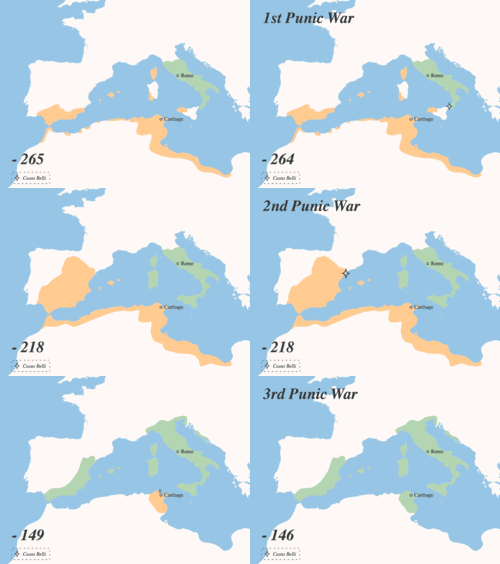
264 BC - 146 BC
There is evidence of gladiatorial combat in funeral rites during the Punic Wars of the 3rd century BC, marking the earliest documented appearance of such fights in Roman practice.
Image source: Punic Wars
250 BC
After their appearance in 3rd-century BC funeral rites, gladiatorial games rapidly became an essential feature of politics and social life throughout the Roman world.
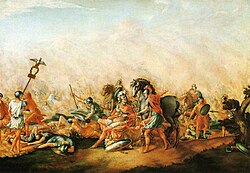
216 BC
The Punic Wars of the late 3rd century BC—in particular the near-catastrophic defeat of Roman arms at Cannae—had long-lasting effects on the Republic, its citizen armies, and the development of the gladiatorial munera.
Image source: Battle of Cannae
20 BC
In the late 1st century BC, Nicolaus of Damascus believed the gladiatorial games were Etruscan in origin, one of the earliest recorded theories about where the tradition began.
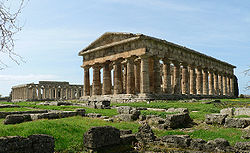
400 BC
Tomb frescoes from the Campanian city of Paestum show paired fighters with helmets, spears and shields engaged in a propitiatory funeral blood-rite that anticipates early Roman gladiator games.
Image source: Paestum
200 BC
Walls in the 2nd century BC 'Agora of the Italians' at Delos were decorated with paintings of gladiators, providing some of the earliest artistic depictions of the combats.
50 BC
Gaius Terentius began the practice of having pictures made of gladiatorial shows and exhibited in public, launching a portraiture tradition that would hold the highest interest in art for many centuries.
150
In Halicarnassus, a 2nd-century AD relief depicts two female combatants named 'Amazon' and 'Achillia'; their match ended in a draw, attesting to women fighting in the arena.
150 - 400
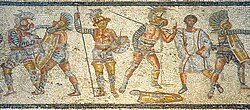
Mosaics dating from the 2nd through 4th centuries AD have been invaluable in the reconstruction of combat and its rules, gladiator types and the development of the munus.
50
George Ville, using evidence from 1st century gladiator headstones, calculated an average age at death of 27, and mortality 'among all who entered the arena' at 19 per 100.
1998
Kyle (1998) proposes that gladiators who disgraced themselves might have been subjected to the same indignities as noxii, denied the relative mercies of a quick death and dragged from the arena as carrion.
100 BC - 200
The gladiator games lasted for nearly a thousand years, reaching their peak between the 1st century BC and the 2nd century AD, when they were at their most popular and elaborate across the Roman world.
100 BC
Alongside condemnation to the beasts, noxii in the 1st century BC were also made to kill each other in the arena, adding lethal spectacle to the games.
100 BC
By the 1st century BC, noxii were being condemned to the beasts (damnati ad bestias) in the arena, with almost no chance of survival.
Image source: Damnatio ad bestias
50 BC
In honour of his grandfather who had adopted him, Gaius Terentius provided thirty pairs of gladiators in the Forum for three consecutive days, and exhibited a picture of the matches in the Grove of Diana.
150
In the same century, an epigraph praises one of Ostia's local elite as the first to 'arm women' in the history of its games, documenting female gladiatorial combat at Ostia.
200
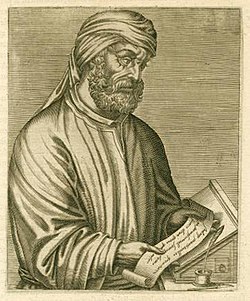
In the early 3rd century AD, the Christian writer Tertullian condemned the attendance of Christians at the gladiatorial games, arguing that witnessing the combats was spiritually and morally harmful.
Image source: Tertullian
200
Tertullian declared that the gladiatorial combats were murder and the gladiator an instrument of pagan human sacrifice, voicing one of the strongest early Christian denunciations of the munera.
222 - 235
A century before the crisis deepened, the emperor Alexander Severus (r. 222–235) ruled during a period when attitudes toward the gladiatorial games were beginning to shift under growing Christian influence.
Image source: Severus Alexander
235 - 284
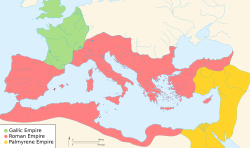
The crisis of the 3rd century imposed increasing military demands on the imperial purse, from which the Roman Empire never quite recovered, undermining funding for public spectacles.
Image source: Crisis of the Third Century
250
Lesser magistrates found their provision of various obligatory munera an increasingly unrewarding tax on the doubtful privileges of office, contributing to the decline of the games.
385
Augustine of Hippo deplored the youthful fascination of his friend Alypius of Thagaste—later a fellow-convert and bishop—with the munera spectacle, viewing it as inimical to a Christian life and salvation.
Image source: Alypius of Thagaste
600
Isidore of Seville also derived the title of 'Charon', an official who accompanied the dead from the Roman gladiatorial arena, from Charun, psychopomp of the Etruscan underworld.
Image source: Charun
600
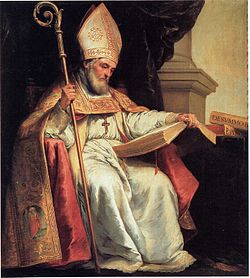
Long after the games had ceased, the 7th century AD writer Isidore of Seville derived Latin lanista (manager of gladiators) from the Etruscan word for 'executioner', preserving a memory of the games' disputed origins.
Image source: Isidore of Seville
Or browse the full history timeline directory, with more than 2,500 topics.
This Roman Gladiators timeline was generated with the help of AI, using information found on the internet.
We work hard to keep these timelines accurate, but mistakes do get through. If you spot one, email us at [email protected] and we'll fix it for future visitors.
Generate yours with AI or build it from scratch, for free.
Export your timeline, add your own events, edit or remove AI-generated events, and much more
No credit card required.
Cancel anytime.
Cancel anytime.
You can create an unlimited number of timelines with up to 10 events on each one, customize how they look, export them to PDF, PNG, PowerPoint, CSV, and Excel, and share them with a link. Paid plans raise the event limit and add features like spreadsheet imports and collaborators.
Yes. You can cancel your subscription from your account page at any time, and you will not be charged again. Your subscription stays active for the rest of the period you already paid for.
Yes. We will email you a reminder before the annual renewal, and we will also email you a receipt.
Yes. You can email us within 15 days of any payment, and we will issue you a full refund.
Check out our pricing docs or send us an email anytime: [email protected].