-
Use Cases
-
Resources
-
Pricing
500 BC - 401 BC
Polygnotos was one of the best-known Greek painters of the mid-5th century BC. His reputation rested particularly on large wall murals.
500 BC - 401 BC
In the mid-5th century BC, the most famous Greek artists included Polygnotos, who was noted for wall murals, and Apollodoros, identified as the originator of chiaroscuro.
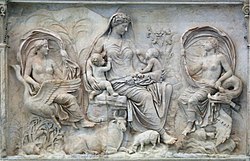
Image source: Ancient Greek art

500 BC - 401 BC
Apollodoros was remembered as the originator of chiaroscuro, the use of contrasting light and darkness to suggest volume and depth in painting.
300 BC - 201 BC
From the 3rd century BC, a specific genre known as Triumphal Paintings appeared. Pliny the Elder referred to this genre in Natural History, book 35, section 22.
300 BC - 201 BC
A surviving painting described as being in the infancy of triumphal painting was probably completed by the beginning of the 3rd century BC to decorate a tomb.
100 BC - 79 AD
The wall paintings of Pompeii, Herculaneum, and nearby sites form the best-known and most important surviving group of Roman painting. They show how residents of wealthy seaside resorts decorated their homes in the century or so before the eruption of Mount Vesuvius in AD 79.
100 BC - 79 AD
Herculaneum and other sites near Pompeii preserve important Roman wall paintings. These works document domestic decoration in wealthy seaside communities before the fatal eruption of Mount Vesuvius.
1 AD - 99 AD
Murals from a house identified with the emperor Augustus date to the beginning of the 1st century AD and provide evidence for elite Roman domestic painting.
1 AD - 99 AD
Murals associated with the house of Augustus’s wife Livia date to the beginning of the 1st century AD. They represent an important surviving example of imperial-period domestic decoration.
79 AD
The eruption of Mount Vesuvius in AD 79 preserved paintings from Pompeii, Herculaneum, and nearby settlements, creating an unusually detailed record of Roman interior decoration.
This Roman Art timeline was generated with the help of AI, using information found on the internet.
We work hard to keep these timelines accurate, but mistakes do get through. If you spot one, email us at [email protected] and we'll fix it for future visitors.
Generate yours with AI or build it from scratch, for free.