-
Use Cases
-
Resources
-
Pricing
McCarthyism refers to the intense anti-communist campaign in the United States during the late 1940s and early 1950s, named after Senator Joseph McCarthy. It involved aggressive investigations, blacklisting, and accusations of communist sympathies against government officials, entertainers, academics, and ordinary citizens, often without proper evidence. More Less
1917 - 1920
% complete
The First Red Scare (1917–20) was inspired by communism's emergence as a recognized political force and widespread social disruption in the United States related to unionizing and anarchist activities. Many factors contributing to later McCarthyism had roots in this period.
Image source: First Red Scare
1930 - 1941
% complete
Owing in part to its success in organizing labor unions, its early opposition to fascism, and offering an alternative to the ills of capitalism during the Great Depression, the Communist Party of the United States increased its membership through the 1930s, reaching a peak of about 75,000 members in 1940–41.
Image source: Communist Party USA

1945
% complete
Although the Igor Gouzenko and Elizabeth Bentley affairs had raised the issue of Soviet espionage in 1945, events in 1949 and 1950 sharply increased the sense of threat in the United States related to communism.
Image source: Igor Gouzenko
Mar 1947
% complete
In a March 1947 address to Congress, Truman enunciated a new foreign policy doctrine that committed the United States to opposing Soviet geopolitical expansion.
Image source: Truman Doctrine
1948
% complete
The Czechoslovak coup by the Communist Party of Czechoslovakia heightened concern in the West about Communist parties seizing power and the possibility of subversion.
Image source: 1948 Czechoslovak coup d'état
1949
% complete
The Soviet Union tested an atomic bomb in 1949, earlier than many analysts had expected, raising the stakes in the Cold War and sharply increasing the sense of threat in the United States.
Image source: Soviet atomic bomb project
1950
% complete
In 1950, the Korean War began, pitting U.S., U.N., and South Korean forces against communists from North Korea and China, further intensifying anti-communist sentiment in America.
Image source: Korean War
1938
% complete
Formed in 1938 and known as the Dies Committee, named for Rep. Martin Dies who chaired it until 1944, HUAC investigated a variety of 'activities', including those of German-American Nazis during World War II. The committee soon focused on communism, beginning with an investigation into communists in the Federal Theatre Project in 1938.
Image source: House Un-American Activities Committee
1942
% complete
The Department of Justice started keeping a list of organizations that it deemed subversive beginning in 1942. This list was first made public in 1948, when it included 78 groups.
Image source: McCarthyism
1946 - 1952
% complete
Anti-communist work became a major assignment that led to the number of FBI agents being increased from 3,559 in 1946 to 7,029 in 1952.
1947 - 1951
% complete
Members of the left-wing National Lawyers Guild were among the few attorneys willing to defend clients in communist-related cases, making the NLG a particular target of Hoover's; the office of the NLG was burgled by the FBI at least 14 times between 1947 and 1951.
Oct 1947
% complete
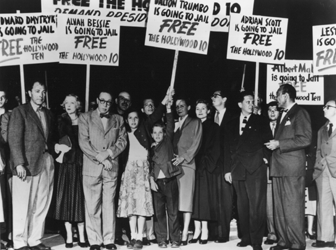
In October 1947, HUAC began to subpoena screenwriters, directors, and other movie-industry professionals to testify about their known or suspected membership in the Communist Party, association with its members, or support of its beliefs.
Image source: Hollywood blacklist
1948
% complete
A significant step for HUAC was its investigation of the charges of espionage brought against Alger Hiss in 1948. In January 1950, Alger Hiss, a high-level State Department official, was convicted of perjury.
Image source: Alger Hiss
1950 - 1953
% complete
Julius and Ethel Rosenberg were arrested in 1950 in the United States on charges of stealing atomic-bomb secrets for the Soviets, and were executed in 1953.
Image source: Julius and Ethel Rosenberg
1950
% complete
In the Senate, the primary committee for investigating communists was the Senate Internal Security Subcommittee (SISS), formed in 1950 and charged with ensuring enforcement of laws relating to 'espionage, sabotage, and the protection of the internal security of the United States'. Between 1949 and 1954, a total of 109 investigations were carried out by these and other committees of Congress.
Feb 9, 1950
% complete
McCarthy's involvement began publicly with a Lincoln Day speech on February 9, 1950, to the Republican Women's Club of Wheeling, West Virginia, where he claimed to have a list of members of the Communist Party USA working in the State Department, attracting substantial press attention.
Image source: Joseph McCarthy
1951 - 1955
% complete
From 1951 to 1955, the FBI operated a secret 'Responsibilities Program' that distributed anonymous documents with evidence from FBI files of communist affiliations on the part of teachers, lawyers, and others.
Image source: J. Edgar Hoover
1952 - 1955
% complete
Owen Lattimore was charged with perjuring himself before the SISS in 1952. After many charges were rejected by a federal judge and one witness confessed to perjury, the case was dropped in 1955.
Image source: Owen Lattimore
1953 - 1954
% complete
McCarthy headed the Senate Permanent Subcommittee on Investigations in 1953 and 1954, and during that time used it for a number of his communist-hunting investigations.
1954
% complete
J. Robert Oppenheimer had received a top-secret clearance in 1947, but was denied clearance in the harsher climate of 1954.
Image source: Oppenheimer security clearance hearing
Apr 1954
% complete
In April 1954, McCarthy was also under attack in the Army–McCarthy hearings, televised proceedings that damaged his credibility with the American public.
Image source: Army–McCarthy hearings
Dec 2, 1954
% complete
On December 2, 1954, the United States Senate voted 67 to 22 to condemn McCarthy for 'conduct that tends to bring the Senate into dishonor and disrepute', effectively ending his influence.
1956
% complete
In 1956, Hoover was becoming increasingly frustrated by Supreme Court decisions that limited the Justice Department's ability to prosecute communists, leading him to launch COINTELPRO, which remained in operation until 1971.
Image source: COINTELPRO
2004
% complete
Documents made public in 2004 revealed that the CIA, under Allen Dulles' orders, had broken into McCarthy's Senate office and fed disinformation to him in order to discredit him and stop his investigation of the agency.
Image source: Central Intelligence Agency
1939
% complete
The Hatch Act of 1939 banned membership in subversive organizations, which was interpreted by many as being anti-labor legislation.
1940
% complete
The Alien Registration Act or Smith Act of 1940 made it illegal to 'knowingly or willfully advocate, abet, advise or teach' the violent overthrow of the government. Hundreds of communists and others were prosecuted under this law between 1941 and 1957.
Mar 21, 1947
% complete
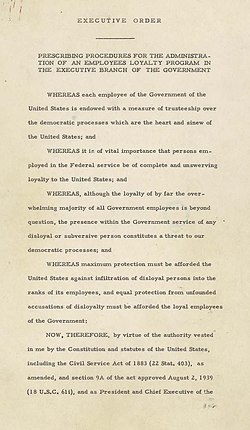
Truman's Executive Order 9835 required that all federal civil-service employees be screened for 'loyalty', screening them for possible association with organizations deemed 'totalitarian, fascist, communist, or subversive'. Truman, a Democrat, was probably reacting in part to the Republican sweep in the 1946 Congressional election.
Image source: Executive Order 9835
1949
% complete
Eleven leaders of the Communist Party were convicted under the Smith Act in 1949 in the Foley Square trial. By 1957, 140 leaders and members of the Communist Party had been charged under the law, of whom 93 were convicted.
1950
% complete
The McCarran Internal Security Act has been described by scholar Ellen Schrecker as 'the McCarthy era's only important piece of legislation'. Truman vetoed it, writing 'In a free country, we punish men for the crimes they commit, but never for the opinions they have,' but his veto was overridden. Its major provisions were found unconstitutional in 1965 and 1967.
1950 - 1952
% complete
By 1952, several states had enacted statutes against criminal anarchy, criminal syndicalism, and sedition; banned communists from public employment; demanded loyalty oaths from public servants; and restricted the Communist Party. In 1950, Michigan enacted life imprisonment for subversive propaganda; in 1951, Tennessee enacted the death penalty for advocating violent overthrow of the government.
1951
% complete
In 1951, 23 other leaders of the Communist Party were indicted under the Smith Act, including Elizabeth Gurley Flynn, a founding member of the American Civil Liberties Union.
Image source: Smith Act trials of Communist Party leaders
1952
% complete
In 1952, the Immigration and Nationality, or McCarran–Walter, Act was passed, adding immigration restrictions during the McCarthy era.
Image source: Immigration and Nationality Act of 1952
1953
% complete
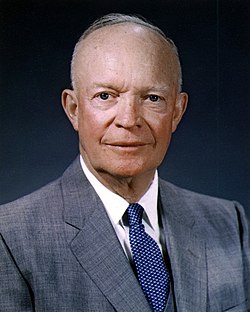
When President Dwight Eisenhower took office in 1953, he strengthened and extended Truman's loyalty review program, while decreasing the avenues of appeal available to dismissed employees.
Image source: Dwight D. Eisenhower
1954
% complete
Jointly drafted by Republican John Marshall Butler and Democrat Hubert Humphrey, the Communist Control Act of 1954 sought to outlaw the Communist Party but never had any significant effect. In 1954 it was used to prevent Communist Party members from appearing on the New Jersey state ballot, and in 1960 it was cited to deny CPUSA recognition as an employer under New York unemployment compensation.
1958
% complete
In 1958, an estimated one of every five employees in the United States was required to pass some sort of loyalty review, showing how far loyalty screening had spread beyond the federal government.
1940
% complete
In 1940, the American Civil Liberties Union ejected founding member Elizabeth Gurley Flynn, saying that her membership in the Communist Party was enough to disqualify her as a civil libertarian. In the mid-20th century, such attitudes were not confined to arch-conservatives.
Image source: Elizabeth Gurley Flynn
Nov 25, 1947
% complete
On November 25, 1947, the day after the House approved contempt citations for the Hollywood Ten, Eric Johnston, president of the Motion Picture Association of America, issued a press release on behalf of the heads of the major studios that came to be known as the Waldorf Statement.
Mar 28, 1950
% complete
The term McCarthyism was published for the first time in late March 1950 in The Christian Science Monitor, along with a political cartoon by Herblock in The Washington Post. The first recorded use was on March 28, 1950: 'Their little spree with McCarthyism is no aid to consultation'.
Jun 1, 1950
% complete
On June 1, 1950, Senator Margaret Chase Smith, a Maine Republican, delivered a speech to the Senate she called a 'Declaration of Conscience', an early rebuke of McCarthy's tactics.
Image source: Declaration of Conscience
1952
% complete
The 1952 Arthur Miller play The Crucible used the Salem witch trials as a metaphor for McCarthyism, suggesting that the process of McCarthyism-style persecution can occur at any time or place.
Image source: The Crucible
1953
% complete
Though he did not block the State Department from carrying out an order to remove allegedly subversive books, President Eisenhower publicly criticized the initiative, telling Dartmouth College graduates in 1953: 'Don't join the book burners!'
Oct 20, 1953
% complete
On October 20, 1953, Murrow's show See It Now aired an episode about the dismissal of Milo Radulovich, a former reserve Air Force lieutenant accused of associating with Communists.
Image source: I Can See Clearly Now
Jan 1954 - Jun 1954
% complete
A Gallup poll found that at his peak in January 1954, 50% of the American public supported McCarthy, while 29% had an unfavorable opinion. His support fell to 34% in June 1954.
Mar 9, 1954
% complete
On March 9, 1954, See It Now aired another episode on the issue of McCarthyism, this one attacking Joseph McCarthy himself, contributing to the erosion of his public support.
Image source: Edward R. Murrow
1956
% complete
In 1956, the Warren Court heard Slochower v. Board of Higher Education, ruling that the privilege against self-incrimination would be reduced to a hollow mockery if its exercise could be taken as equivalent to a confession of guilt. The 1956 Cole v. Young decision also limited the reach of loyalty programs.
Image source: American Civil Liberties Union
1956
% complete
McCarthyite viewpoints led to collisions between radicals and supporters of public-health programs, most notably in the case of the Alaska Mental Health Bill controversy of 1956.
Image source: Alaska Mental Health Enabling Act
1957
% complete
Another key decision was in the 1957 case Yates v. United States, which sharply limited Smith Act prosecutions. Also in 1957, the Supreme Court ruled in Watkins v. United States, limiting Congress's investigative power over witnesses.
1957 - 1962
% complete
Almost uniquely among the many victims of blacklisting, John Henry Faulk decided to sue AWARE in 1957 and finally won the case in 1962, marking a turning point against blacklisting.
1958
% complete
In its 1958 decision in Kent v. Dulles, the Supreme Court ruled that the right to travel is part of personal liberty and cannot be denied without due process, curbing one tactic of the era.
Image source: Kent v. Dulles
1960
% complete
In 1960, Dalton Trumbo, one of the best known members of the Hollywood Ten, was publicly credited with writing the films Exodus and Spartacus, signaling the effective end of the Hollywood blacklist.
Image source: Dalton Trumbo
1965
% complete
The McCarran Act's Communist registration requirement was declared unconstitutional in the 1965 Supreme Court ruling in Albertson v. Subversive Activities Control Board.
1972
% complete
The McCarran Act's Subversive Activities Control Board, which enforced the law's investigation requirement for persons alleged to be involved in 'subversive activities', was officially abolished through Congressional legislation in 1972. The act's detention provision had been repealed in 1971.
Image source: Subversive Activities Control Board
1994 - 1997
% complete
Sociologist Edward Shils criticized an excessive policy of secrecy during the Cold War that led to the misdirection of McCarthyism, which was addressed during the 1994–1997 Moynihan Commission.
2005
% complete
The 2005 film Good Night, and Good Luck by George Clooney starred David Strathairn as broadcast journalist Edward R. Murrow, dramatizing Murrow's confrontation with McCarthyism.
Image source: Good Night, and Good Luck
Or browse the full history timeline directory, with more than 2,000 topics.
This McCarthyism timeline was generated with the help of AI, using information found on the internet.
We work hard to keep these timelines accurate, but mistakes do get through. If you spot one, email us at [email protected] and we'll fix it for future visitors.
Generate yours with AI or build it from scratch, for free.
Export your timeline, add your own events, edit or remove AI-generated events, and much more
No credit card required.
Cancel anytime.
Cancel anytime.
You can create an unlimited number of timelines with up to 10 events on each one, customize how they look, export them to PDF, PNG, PowerPoint, CSV, and Excel, and share them with a link. Paid plans raise the event limit and add features like spreadsheet imports and collaborators.
Yes. You can cancel your subscription from your account page at any time, and you will not be charged again. Your subscription stays active for the rest of the period you already paid for.
Yes. We will email you a reminder before the annual renewal, and we will also email you a receipt.
Yes. You can email us within 15 days of any payment, and we will issue you a full refund.
Check out our pricing docs or send us an email anytime: [email protected].