-
Use Cases
-
Resources
-
Pricing
1944
The Caserta Agreement stipulated that Greek resistance factions would join a new Greek Army under British command, establishing a framework for post-occupation military authority.
1944 - 1945
The dispute over the disarmament and political role of Greek resistance factions deepened the division between the internationally supported Greek government and the leftist resistance movement.
Image source: Greek Civil War
Oct 1944
British and Greek forces landed in Greece in October 1944 as Axis occupational forces gradually withdrew from the country, beginning a difficult postwar struggle over Greece's political future.
Image source: Dekemvriana
Dec 1, 1944
General Ronald Scobie ordered the armed wing of the EAM, ELAS, to unilaterally disarm on December 1, 1944, despite the framework established by the Caserta Agreement.
1945 - 1946
The White Terror was a period of persecution against Greek leftists after the wartime conflict, intensifying political violence and contributing to the outbreak of the Greek Civil War.
1946 - 1948
KKE guerrillas revolted against the internationally recognized Greek government formed after the 1946 elections, creating the crisis that later became a central focus of the Truman Doctrine.
1946
The Greek Civil War broke out in 1946 as the postwar conflict between the Greek government and communist-led forces developed into an armed struggle.
1946
The Communist Party of Greece, or KKE, boycotted the 1946 elections. The internationally recognized Greek government was formed after those elections, while the KKE rejected the political process.
1946
Persecution during the White Terror helped create conditions for the Greek Civil War, linking postwar political repression to the later armed revolt against the Greek government.
1946 - 1948
American assistance supported the Greek government during the civil war, after government forces suffered interim defeats from 1946 to 1948.
1946 - 1947
The collapse of British capacity, the Greek civil war, and Soviet pressure on Turkey combined to make Greece and Turkey an early test of the United States' emerging containment policy.
Image source: Truman Doctrine
1946 - 1947
After Britain warned that it could no longer help Greece and following Tsaldaris's visit, the U.S. State Department formulated a plan for American assistance.
1946
By late 1946, Britain informed the United States that its declining economy prevented it from continuing military and economic support for the Greek government.
Oct 1, 1946 - Dec 31, 1946
Britain's late-1946 notification that it could no longer provide military and economic support made continued American involvement in Greece a pressing policy issue.
Dec 1946
Prime Minister Konstantinos Tsaldaris visited Washington, D.C., in December 1946 to ask the United States for assistance for Greece during the civil war.
Image source: Konstantinos Tsaldaris
1947
The United States dispatched military aid to Turkey after British assistance ended, seeking to ensure that Turkey would retain chief control of the passage.
1947
British assistance to Turkey ended in 1947, creating a need for the United States to assume responsibility for supporting Turkey's security.
1947
Following congressional approval, the United States expanded military and economic assistance to Greece and Turkey under the policy associated with the Truman Doctrine.
Mar 12, 1947
The policy announced by Truman addressed not only the crisis in Greece but also Soviet demands on Turkey, making the security of both countries central to the doctrine.
Mar 12, 1947
Truman announced the doctrine to Congress on March 12, 1947, presenting American assistance to Greece and Turkey as part of a broader effort to oppose communist expansion.
Mar 12, 1947
On March 12, 1947, President Harry S. Truman appeared before a joint session of Congress and announced the policy that became known as the Truman Doctrine.
May 1947
In May 1947, two months after Truman's request, a large majority of Congress approved $400 million in military and economic aid for Greece and Turkey.
1948
Increased American aid assisted the Greek government's defeat of the KKE after the government forces' interim defeats between 1946 and 1948.
Jul 4, 1948
On July 4, 1948, Truman further developed the doctrine by pledging to oppose communist rebellions in Greece and Soviet demands on Turkey.
Jul 4, 1948
Truman's July 4, 1948, pledge reaffirmed opposition to communist rebellions in Greece and extended the doctrine's stated commitment to resisting pressure on Turkey.
1946 - 1947
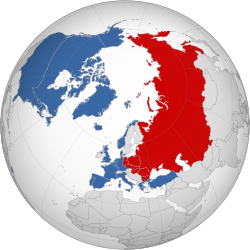
During 1946–1947, the United States and the Soviet Union moved from being wartime allies to adversaries in the emerging Cold War, providing the broader context for the Truman Doctrine.
Image source: Cold War
Feb 1946
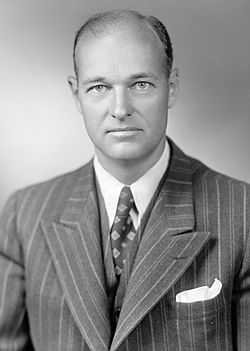
In February 1946, American diplomat George F. Kennan sent his famed Long Telegram from Moscow, analyzing Soviet behavior and its implications for American policy.
Image source: X Article
Feb 1946
Kennan's Long Telegram predicted that the Soviets would respond only to force and argued for a long-term strategy of containment: stopping Soviet geographical expansion.
Mar 12, 1947
In his March 12 address, Truman translated the emerging strategy of containment into a direct commitment to support governments resisting communist rebellion.
1947
The Truman Doctrine became the first in a series of American containment moves designed to resist communist expansion and shape the early Cold War.
1947 - 1948
The Truman Doctrine was followed by economic restoration of Western Europe through the Marshall Plan, extending the broader American effort to contain communist influence.
Image source: Marshall Plan
Mar 12, 1947
Historians often use Truman's March 12, 1947, speech to Congress as the date marking the start of the Cold War.
1949
The Truman Doctrine helped lead to the formation of NATO in 1949, adding a permanent military dimension to American containment in the emerging Cold War.
Image source: NATO
Or browse the full history timeline directory, with more than 2,500 topics.
This Truman Doctrine timeline was generated with the help of AI, using information found on the internet.
We work hard to keep these timelines accurate, but mistakes do get through. If you spot one, email us at [email protected] and we'll fix it for future visitors.
Generate yours with AI or build it from scratch, for free.
Export your timeline, add your own events, edit or remove AI-generated events, and much more
No credit card required.
Cancel anytime.
Cancel anytime.
You can create an unlimited number of timelines with up to 10 events on each one, customize how they look, export them to PDF, PNG, PowerPoint, CSV, and Excel, and share them with a link. Paid plans raise the event limit and add features like spreadsheet imports and collaborators.
Yes. You can cancel your subscription from your account page at any time, and you will not be charged again. Your subscription stays active for the rest of the period you already paid for.
Yes. We will email you a reminder before the annual renewal, and we will also email you a receipt.
Yes. You can email us within 15 days of any payment, and we will issue you a full refund.
Check out our pricing docs or send us an email anytime: [email protected].