-
Use Cases
-
Resources
-
Pricing
Mikhail Gorbachev (1931–2022) was a Soviet statesman who served as the last General Secretary of the Communist Party of the Soviet Union and the final head of state of the USSR. His reform policies of glasnost (openness) and perestroika (restructuring) transformed Soviet society and politics, ultimately contributing to the dissolution of the Soviet Union in 1991. He played a pivotal role in ending the Cold War, for which he was awarded the Nobel Peace Prize in 1990. More Less
Mar 2, 1931
% complete
Mikhail Sergeyevich Gorbachev was born to a peasant family in the village of Privolnoye, Stavropol Krai, in the Soviet Union. He experienced the hardships of collectivization and World War II during his childhood, experiences that shaped his later political outlook.
Image source: Mikhail Gorbachev
1952
% complete
While studying law at Moscow State University, Gorbachev joined the Communist Party of the Soviet Union, beginning a decades-long career within the Soviet political system.
Image source: Communist Party of the Soviet Union
1955
% complete
Gorbachev graduated from Moscow State University's law faculty and returned to Stavropol, where he began working in Komsomol youth organizations and climbing the regional party ladder.
Image source: Moscow State University
Apr 1970
% complete
Gorbachev became the First Secretary of the Stavropol Regional Committee of the Communist Party, overseeing agriculture and economic development in the region and gaining attention from Moscow leadership.
Image source: Stavropol Krai
Nov 1978
% complete
Gorbachev moved to Moscow when he was appointed Secretary of the Central Committee responsible for agriculture, marking his entry into the top echelons of Soviet power.
Image source: Central Committee of the Communist Party of the Soviet Union
Oct 21, 1980
% complete
Gorbachev was elevated to full membership in the Politburo, becoming one of the youngest members of the Soviet Union's most powerful decision-making body and positioning himself as a potential future leader.
Mar 11, 1985
% complete
Following the deaths of Konstantin Chernenko and other aging leaders, Mikhail Gorbachev was elected General Secretary of the Communist Party of the Soviet Union at age 54, becoming leader of the USSR and promising renewal and reform.
Image source: General Secretary of the Communist Party of the Soviet Union
May 1985
% complete
One of Gorbachev's first major domestic policies was an aggressive anti-alcohol campaign intended to combat widespread alcohol abuse, though it caused significant losses to state revenues and fueled black market activity.
Image source: Prohibition in the Russian Empire and the Soviet Union
1986
% complete
Gorbachev promoted glasnost, a policy allowing greater freedom of expression, press freedom, and public discussion of political and social issues, dramatically loosening censorship across the Soviet Union.
Apr 26, 1986
% complete
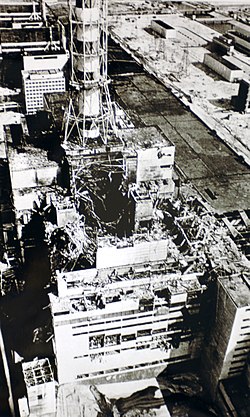
The catastrophic explosion at the Chernobyl nuclear power plant in Ukraine forced the Soviet government under Gorbachev to respond to an unprecedented crisis, and the initial secrecy surrounding it later prompted him to embrace greater transparency.
Image source: Chernobyl disaster
Jun 1987
% complete
Gorbachev launched perestroika, a program of economic and political restructuring intended to modernize the Soviet planned economy by introducing limited market mechanisms, decentralizing decision-making, and encouraging private initiative.
Image source: Perestroika
Mar 15, 1990
% complete
The Congress of People's Deputies elected Gorbachev as the first and only President of the Soviet Union, creating a new executive office as part of his political reforms, though the position would last barely two years.
Image source: President of the Soviet Union
Aug 19, 1991 - Aug 21, 1991
% complete
Hardline communist officials attempted a coup while Gorbachev was detained at his Crimean villa. The putsch collapsed after mass resistance led by Russian Federation president Boris Yeltsin, but it fatally weakened Gorbachev's authority.
Image source: 1991 Soviet coup d'état attempt
Aug 24, 1991
% complete
In the aftermath of the failed August coup, Gorbachev resigned as General Secretary and recommended that the Communist Party's Central Committee dissolve itself, effectively ending communist rule in the Soviet Union.
Oct 11, 1986 - Oct 12, 1986
% complete
Gorbachev met President Ronald Reagan in Reykjavik, Iceland, for talks on eliminating nuclear weapons. Though the summit ended without agreement over missile defense, it laid crucial groundwork for later arms control breakthroughs.
Image source: Reykjavík Summit
Dec 8, 1987
% complete
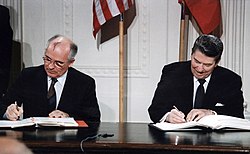
At a Washington summit, Gorbachev and Reagan signed the INF Treaty, agreeing to eliminate all land-based missiles with ranges between 500 and 5,500 kilometers — the first treaty to abolish an entire class of nuclear weapons.
Image source: Intermediate-Range Nuclear Forces Treaty
Feb 8, 1988
% complete
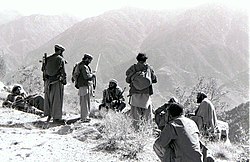
Gorbachev announced the phased withdrawal of Soviet forces from Afghanistan, ending nearly nine years of costly military intervention. The last troops left Afghanistan in February 1989.
Image source: Soviet–Afghan War
Nov 9, 1989
% complete
Gorbachev's decision not to intervene militarily as popular uprisings swept Eastern Europe allowed the Berlin Wall to fall and communist regimes across the region to collapse peacefully, reshaping Europe's postwar order.
Image source: Fall of the Berlin Wall
Oct 15, 1990
% complete
Gorbachev was awarded the Nobel Peace Prize for his leading role in the peace process that transformed East-West relations, his arms control efforts, and his decision to allow Eastern European nations to determine their own futures.
Image source: Nobel Peace Prize
Jul 31, 1991
% complete
Gorbachev and US President George H.W. Bush signed the Strategic Arms Reduction Treaty in Moscow, committing both superpowers to major reductions in deployed strategic nuclear weapons.
Image source: START I
Dec 25, 1991
% complete
With the Soviet state dissolving around him after the Belovezha Accords, Gorbachev resigned as President of the Soviet Union in a televised address. The Soviet hammer-and-sickle flag was lowered from the Kremlin that night, replaced by the flag of Russia.
Image source: Dissolution of the Soviet Union
1992
% complete
After leaving office, Gorbachev established the Gorbachev Foundation, a think tank devoted to research on international relations, perestroika-era history, and global issues such as disarmament and the environment.
Image source: The Gorbachev Foundation
1993
% complete
Gorbachev founded Green Cross International to address environmental challenges including chemical weapons cleanup, water scarcity, and climate change, reflecting his growing commitment to ecological advocacy.
Image source: Green Cross International
1995
% complete
Gorbachev published extensive memoirs defending his reforms and explaining his decisions as Soviet leader, contributing to ongoing debates about the causes and consequences of the USSR's dissolution.
Image source: Memoir
Jun 16, 1996
% complete
Gorbachev ran in the 1996 Russian presidential election but received less than 1% of the vote, demonstrating how unpopular he remained among many Russians who blamed him for the Soviet collapse and subsequent hardship.
Image source: 1996 Russian presidential election
1997
% complete
Gorbachev appeared in a widely viewed Pizza Hut television commercial filmed in Moscow, a surreal pop culture moment in which Russians debated his legacy over pizza, cementing his status as a global celebrity.
Image source: Pizza Hut
2003
% complete
Gorbachev helped establish the World Political Forum, bringing together former heads of state and international figures to discuss pressing global issues such as development, security, and the environment.
Image source: Istanbul World Political Forum
2011
% complete
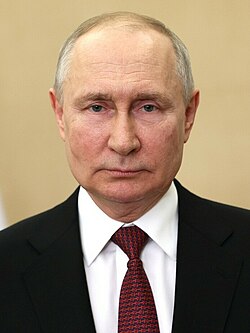
In his later years, Gorbachev increasingly criticized Russian authorities, questioning the fairness of elections and expressing concern about democratic backsliding, even calling for new elections after disputed parliamentary results.
Image source: Vladimir Putin
Mar 2014
% complete
Following Russia's annexation of Crimea, Gorbachev warned that the world risked a new Cold War and called for dialogue, while lamenting the breakdown of trust between Russia and the West that his era had sought to build.
Image source: Russo-Ukrainian War
Aug 30, 2022
% complete
Mikhail Gorbachev died after a long illness at the Central Clinical Hospital in Moscow. He was buried at Novodevichy Cemetery following a funeral that, unlike those of other recent leaders, did not receive full official state honors, reflecting his complicated legacy in modern Russia.
Image source: Death and funeral of Mikhail Gorbachev
Or browse the full history timeline directory, with more than 2,000 topics.
This Mikhail Gorbachev timeline was generated with the help of AI, using information found on the internet.
We work hard to keep these timelines accurate, but mistakes do get through. If you spot one, email us at [email protected] and we'll fix it for future visitors.
Generate yours with AI or build it from scratch, for free.
Export your timeline, add your own events, edit or remove AI-generated events, and much more
No credit card required.
Cancel anytime.
Cancel anytime.
You can create an unlimited number of timelines with up to 10 events on each one, customize how they look, export them to PDF, PNG, PowerPoint, CSV, and Excel, and share them with a link. Paid plans raise the event limit and add features like spreadsheet imports and collaborators.
Yes. You can cancel your subscription from your account page at any time, and you will not be charged again. Your subscription stays active for the rest of the period you already paid for.
Yes. We will email you a reminder before the annual renewal, and we will also email you a receipt.
Yes. You can email us within 15 days of any payment, and we will issue you a full refund.
Check out our pricing docs or send us an email anytime: [email protected].