-
Use Cases
-
Resources
-
Pricing
Charles-Louis de Secondat, Baron de Montesquieu (1689–1755), was a French Enlightenment political philosopher best known for his theory of the separation of powers. His seminal work, The Spirit of the Laws (1748), profoundly influenced modern democratic constitutions, including that of the United States. More Less
1654
% complete
Montesquieu's father, Jacques de Secondat (born 1654), was a soldier with a long noble ancestry, including descent from Richard de la Pole, a Yorkist claimant to the English crown.
1665
% complete
His mother, Marie Françoise de Pesnel (1665–1696), was an heiress who brought the title of Barony of La Brède to the Secondat family through her marriage to Jacques de Secondat.
1688 - 1689
% complete
England declared itself a constitutional monarchy in the wake of its Glorious Revolution, an event that later deeply informed Montesquieu's political thought about balanced government.
Image source: Glorious Revolution
Jan 18, 1689
% complete
Charles Louis de Secondat, baron de La Brède et de Montesquieu, is born. He would grow up to become a French jurist, historian, and political philosopher, best known for his theory of separation of powers.
1696
% complete
Montesquieu's mother died when Charles was only seven years old, a loss that marked his early childhood and led to significant changes in his upbringing.
1700 - 1711
% complete
After the death of his mother, Montesquieu was sent to the Catholic College of Juilly, a prominent school for children of French nobility, where he remained from 1700 to 1711 receiving his education.
1707
% complete
England joined with Scotland in the Union of 1707 to form the Kingdom of Great Britain, creating the constitutional arrangement that Montesquieu would later study admiringly during his travels.
Image source: Acts of Union 1707
1713
% complete
Montesquieu's father died in 1713, and Charles became a ward of his uncle, the Baron de Montesquieu, who would shape his future career and inheritance.
1715
% complete
In 1715 he married the Protestant Jeanne de Lartigue, with whom he eventually had three children, forming a lasting family life alongside his public career.
Image source: Montesquieu
1754
% complete
At the end of 1754, Montesquieu visited Paris and was soon taken ill, beginning the final chapter of his life.
Feb 10, 1755
% complete
Montesquieu died from a fever on 10 February 1755, leaving behind a body of work that profoundly shaped modern political philosophy and constitutional government.
1714
% complete
In 1714, Montesquieu became a counselor of the Bordeaux Parlement, beginning his formal legal and judicial career in one of France's regional sovereign courts.
Image source: Parlement
1715
% complete
France's intermediate powers, including the nobility and the parlements, had been weakened by Louis XIV and welcomed the strengthening of parlementary power after his death in 1715.
Image source: Parlement
1715
% complete
In France, the long-reigning Louis XIV died in 1715 and was succeeded by the five-year-old Louis XV, ushering in a period when intermediate powers like the parlements regained strength.
Image source: Louis XIV
1716
% complete
The Baron de Montesquieu died in 1716, leaving Charles his fortune, his title, and the office of président à mortier in the Bordeaux Parlement, a post he held for twelve years.
1722
% complete
In 1722, Montesquieu went to Paris and entered social circles with the help of friends including the Duke of Berwick, whom he had known when Berwick was military governor at Bordeaux.
1726
% complete
In 1726 he sold his office as président à mortier, bored with the parlement and turning more toward Paris and his literary pursuits.
Jan 1728
% complete
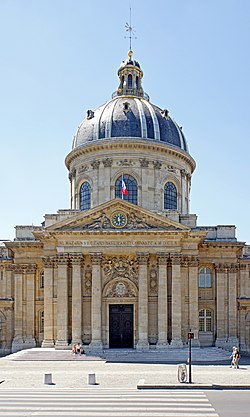
Despite some impediments, Montesquieu was elected to the Académie Française in January 1728, gaining official recognition as one of France's leading men of letters.
Image source: Académie Française
Apr 1728
% complete
In April 1728, with Berwick's nephew Lord Waldegrave as his traveling companion, Montesquieu embarked on a grand tour of Europe, during which he kept a journal of his observations.
Image source: Grand Tour
Oct 1729
% complete
He went to England at the end of October 1729 in the company of Lord Chesterfield, where he was initiated into Freemasonry at the Horn Tavern Lodge in Westminster.
Image source: Freemasonry
1731
% complete
Montesquieu remained in England until the spring of 1731, when he returned to La Brède, bringing with him deep observations of English constitutional government that shaped his later works.
Image source: Château de la Brède
1718 - 1721
% complete
Between 1718 and 1721, Montesquieu presented memoirs and discourses to the Academy of Bordeaux on topics including echoes, renal glands, weight of bodies, transparency of bodies, and natural history.
1721
% complete
He achieved literary success with his 1721 Persian Letters, a satire representing society as seen through the eyes of two Persian visitors to Paris, cleverly criticizing absurdities of contemporary French society.
Image source: Persian Letters
1731 - 1748
% complete
Back at home, he was continuously at work in his study, a fertile ground for ideas containing a 3000-volume historic book collection, preparing his major philosophical works.
1734
% complete
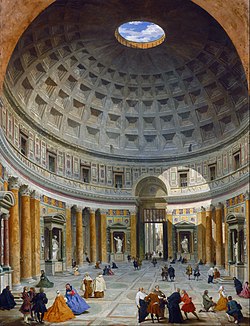
In 1734, he published Considerations on the Causes of the Greatness of the Romans and their Decline, among his three best known books, examining the rise and fall of Rome through historical analysis.
Image source: Considerations on the Causes of the Greatness of the Romans and their Decline
1743
% complete
A direct influence on Montesquieu came from François-Ignace d'Espiard de La Borde's Essai sur le génie et le caractère des nations, published in Brussels in 1743, expressing climate theory and environmental determinism ideas.
Image source: Montesquieu
1748
% complete
In 1748, Montesquieu anonymously published The Spirit of Law, his masterpiece articulating the separation of powers; it was quickly translated into English and met with enthusiastic reception in Britain and America.
Image source: The Spirit of Law
1750
% complete
The Spirit of Law was first translated into English by Thomas Nugent in a 1750 edition, spreading Montesquieu's constitutional ideas throughout Great Britain and the American colonies.
1751
% complete
While The Spirit of Law was enthusiastically received by many in France, it was denounced by the Sorbonne and, in 1751, placed on the Catholic Church's Index of Prohibited Books.
Image source: Index Librorum Prohibitorum
1770 - 1790
% complete
According to political scientist Donald Lutz's survey, Montesquieu was the most frequently quoted authority on government and politics in colonial pre-revolutionary British America, cited more than any source except the Bible.
1981 - 1994
% complete
Between 1981 and 1994, a depiction of Montesquieu appeared on the 200 French franc note, honoring his enduring place in French national heritage.
Image source: French franc
1989
% complete
Since 1989, the annual Montesquieu prize has been awarded by the French Association of Historians of Political Ideas for the best French-language thesis on the history of political thought.
2003 - 2022
% complete
Montesquieu's complete works are being collected in a scholarly edition planned to total 22 volumes, of which all but five have appeared as of February 2022, including volumes 8 and 9 covering his Academy of Bordeaux discourses.
May 9, 2007
% complete
On Europe Day 2007, the Montesquieu Institute opened in The Hague, Netherlands, with a mission to advance research and education on the parliamentary history and political culture of the European Union and its member states.
Image source: Campus The Hague
2008
% complete
The Montesquieu tower in Luxembourg was completed in 2008 as an addition to the headquarters of the Court of Justice of the European Union; until 2019 it stood, with its sister tower Comenius, as the tallest building in the country.
Image source: Court of Justice of the European Union
Or browse the full history timeline directory, with more than 2,000 topics.
This Montesquieu timeline was generated with the help of AI, using information found on the internet.
We work hard to keep these timelines accurate, but mistakes do get through. If you spot one, email us at [email protected] and we'll fix it for future visitors.
Generate yours with AI or build it from scratch, for free.
Export your timeline, add your own events, edit or remove AI-generated events, and much more
No credit card required.
Cancel anytime.
Cancel anytime.
You can create an unlimited number of timelines with up to 10 events on each one, customize how they look, export them to PDF, PNG, PowerPoint, CSV, and Excel, and share them with a link. Paid plans raise the event limit and add features like spreadsheet imports and collaborators.
Yes. You can cancel your subscription from your account page at any time, and you will not be charged again. Your subscription stays active for the rest of the period you already paid for.
Yes. We will email you a reminder before the annual renewal, and we will also email you a receipt.
Yes. You can email us within 15 days of any payment, and we will issue you a full refund.
Check out our pricing docs or send us an email anytime: [email protected].