
-
Use Cases
-
Resources
-
Pricing
Neanderthals (Homo neanderthalensis) were a species of archaic humans who lived across Europe and western Asia. They were skilled hunters, used sophisticated stone tools, controlled fire, buried their dead, and interbred with early modern humans before going extinct roughly 40,000 years ago. More Less
1680
The valley in Germany that would later give Neanderthals their name was named after the late 17th century German theologian and hymn writer Joachim Neander, who often visited the area.
Image source: Neanderthal

1829
The first Neanderthal remains—Engis 2, a child's skull—were discovered in 1829 by Dutch/Belgian prehistorian Philippe-Charles Schmerling in the Grottes d'Engis, Belgium, though their significance was not recognised at the time.
Image source: Engis 2

1848
In 1848, Gibraltar 1 from Forbes' Quarry was presented to the Gibraltar Scientific Society by their Secretary Lieutenant Edmund Henry Réné Flint, but it was thought to be merely a modern human skull.
Image source: Gibraltar 1

Aug 1856
The first recognised Neanderthal fossil, Neanderthal 1, was discovered in 1856 in the Kleine Feldhofer Grotte in the Neander Valley, Germany, becoming the type specimen of the species.
Image source: Neanderthal 1

1900 - 1920
By the early 20th century, numerous other Neanderthal discoveries had been made across Europe, establishing Homo neanderthalensis as a well-recognised group of archaic humans.
1856
In 1856, local schoolteacher Johann Carl Fuhlrott recognised bones from Kleine Feldhofer Grotte in Neander Valley—Neanderthal 1—as distinct from modern humans, an insight that would launch the study of Neanderthals.
Image source: Johann Carl Fuhlrott

1857
In 1857, Johann Carl Fuhlrott gave the Neanderthal 1 remains to German anthropologist Hermann Schaaffhausen to study, beginning formal scientific examination of the specimen.
Image source: Hermann Schaaffhausen

Nov 24, 1859
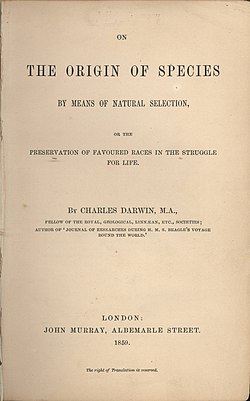
Charles Darwin's 1859 publication On the Origin of Species provided an evolutionary framework that shaped how scientists interpreted the Neanderthal remains discovered just a few years earlier.
Image source: On the Origin of Species
1863
In 1863, Irish geologist William King extended the name 'Neanderthal man' from the individual specimen to the entire species, cementing the identity of the newly recognised group of ancient humans.
Image source: William King (geologist)

1863
The binomial name Homo neanderthalensis was first proposed by William King in a paper read to the 33rd British Science Association in 1863, formally recognising Neanderthals as distinct from modern humans.
This Neanderthals timeline was generated with the help of AI, using information found on the internet.
We work hard to keep these timelines accurate, but mistakes do get through. If you spot one, email us at [email protected] and we'll fix it for future visitors.
Generate yours with AI or build it from scratch, for free.


