-
Use Cases
-
Resources
-
Pricing
The Bronze Age was a period of human history characterized by the widespread use of bronze for tools and weapons, marking major advances in metallurgy, agriculture, urbanization, and long-distance trade. It saw the rise of great civilizations such as Mesopotamia, Egypt, the Indus Valley, and ancient China. More Less
4650 BC
% complete
A 2013 report suggests that the earliest tin-alloy bronze was a foil dated to c. 4650 BC from a Vinča culture site in Pločnik, Serbia. The Vinča culture is not conventionally considered part of the Bronze Age, and the dating of the foil has been disputed.
Image source: Battle of Pločnik
4000 BC
% complete
A 2013 study reported a tin bronze foil from Pločnik dated to c. 4650 BC as well as 14 other artefacts from Serbia and Bulgaria dated before 4000 BC, showing that early tin bronze was more common than previously thought and developed independently in Europe 1500 years before the first tin bronze alloys in the Near East.
Image source: Bronze Age
2200 BC
% complete
Evidence for copper smelting furnaces was found near Agadez, Niger that has been dated as early as 2200 BC. However, evidence for copper production in this region before 1000 BC is debated.
4600 BC - 4200 BC
% complete
The oldest golden artefacts in the world are dated between 4600 and 4200 BC and were found in the Necropolis of Varna, Bulgaria, marking an early flowering of metallurgy in southeastern Europe.
Image source: Varna Necropolis
3300 BC - 2600 BC
% complete
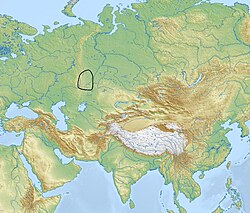
The Yamnaya culture (c. 3300–2600 BC) was a Late Copper Age/Early Bronze Age culture of the Pontic-Caspian steppe associated with early Indo-Europeans.
Image source: Yamnaya culture
3200 BC
% complete
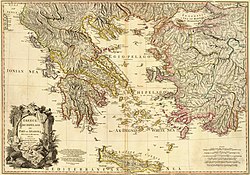
The Aegean Bronze Age began c. 3200 BC, when civilisations first established a far-ranging trade network. Knowledge of navigation was well-developed by this time and reached a peak of skill not exceeded until the invention of the chronometer in 1730.
Image source: Aegean civilization
3000 BC - 2350 BC
% complete
The closely related Corded Ware culture in the forest-steppe region to the north (c. 3000–2350 BC) spread eastwards with the Fatyanovo culture (c. 2900–2050 BC).
Image source: Corded Ware culture
2800 BC - 2200 BC
% complete
The Yamnaya culture was followed on the steppe by the Catacomb culture (c. 2800–2200 BC) and the Poltavka culture (c. 2800–2200 BC), continuing steppe burial traditions into the Bronze Age.
Image source: Catacomb culture
2300 BC - 1600 BC
% complete
In Central Europe, the Early Bronze Age Unetice culture (2300–1600 BC) includes numerous smaller groups like the Straubing, Adlerberg and Hatvan cultures.
Image source: Únětice culture
2280 BC - 1890 BC
% complete
At Alderley Edge in Cheshire, carbon dating has established copper mining at around 2280 to 1890 BC with a 95% probability, among the earliest known mining activity in Britain.
Image source: Alderley Edge
2100 BC - 750 BC
% complete
In Great Britain, the Bronze Age is considered to have been the period from c. 2100 to 750 BC, marked by the introduction of copper alloy tools and weapons.
Image source: Bronze Age Britain
2000 BC - 500 BC
% complete
The Bronze Age in Ireland began c. 2000 BC when copper was alloyed with tin and used to manufacture Ballybeg type flat axes and associated metalwork. The period is divided into Early (2000–1500 BC), Middle (1500–1200 BC), and Late (1200 – c. 500 BC) phases.
Image source: Prehistoric Ireland
1800 BC - 200 AD
% complete
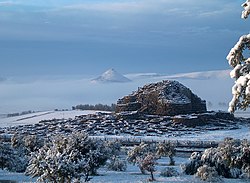
Located in Sardinia and Corsica, the Nuragic civilisation lasted from the early Bronze Age (18th century BC) to the 2nd century AD, when the islands were already Romanised. It developed in the Middle and Late Bronze Age during the 17th–13th centuries BC.
Image source: Nuragic civilization
1700 BC - 500 BC
% complete
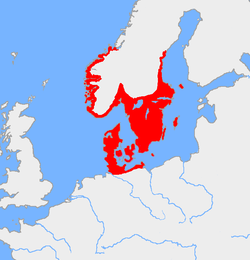
The Northern Bronze Age was both a period and a Bronze Age culture in Scandinavian pre-history, c. 1700–500 BC, with sites as far east as Estonia.
Image source: Nordic Bronze Age
1630 BC
% complete
The Thera eruption occurred c. 1600 BC, 110 km (68 mi) north of Crete; it is usually dated to c. 1630 BC. A tsunami may have destroyed the Cretan navy, and the eruption may have triggered instability that led to the collapse first of Knossos and then of Bronze Age society overall.
Image source: Minoan eruption
1600 BC
% complete
The Santorini eruption is usually dated to c. 1630 BC, while the Mycenaean Greeks first enter the historical record a few decades later, c. 1600 BC, rising to dominate the Aegean world.
Image source: Mycenaean Greece
1450 BC
% complete
In the LMIB/LMII event (c. 1450 BC) the cities of Crete burned and the Mycenaean civilisation conquered Knossos. The later Mycenaean assaults on Crete (c. 1450 BC) and Troy (c. 1250 BC) would have been a continuation of the steady encroachment of the Greeks upon the weakened Minoan world.
Image source: Minoan civilization
1400 BC - 1100 BC
% complete
The Deverel-Rimbury culture began to emerge in the second half of the Middle Bronze Age (c. 1400–1100 BC) in southern Britain, exploiting favourable environmental conditions.
1350 BC - 700 BC
% complete
The Atlantic Bronze Age as a cultural complex of the final phase of the Bronze Age period is dated between c. 1350 and 700 BC, including cultures in Atlantic Iberia, Atlantic France, Britain and Ireland.
Image source: Atlantic Bronze Age
1300 BC - 700 BC
% complete
The late Bronze Age Urnfield culture (1300–700 BC) was characterised by cremation burials. It included the Lusatian culture in eastern Germany and Poland (1300–500 BC) that continues into the Iron Age.
Image source: Urnfield culture
1300 BC
% complete
The Canegrate culture developed from the mid-Bronze Age (13th century BC) until the Iron Age in the Pianura Padana, in what are now western Lombardy, eastern Piedmont, and Ticino. It takes its name from the township of Canegrate, where some fifty tombs with ceramics and metal objects were found in the 20th century.
Image source: Canegrate culture
1200 BC - 1100 BC
% complete
The earliest identified metalworking site in Somerset (Sigwells) came much later than earlier British mining, dated by globular urn-style pottery to c. the 12th century BC.
Image source: Sigwells
900 BC - 400 BC
% complete
Remains of the Golasecca culture span an area of about 20,000 km² south to the Alps, between the Po, Sesia, and Serio rivers, dating to the 9th–4th centuries BC. It takes its name from Golasecca, where abbot Giovanni Battista Giani excavated its first findings in the early 19th century.
Image source: Golasecca culture
3500 BC
% complete
The Mesopotamian Bronze Age began c. 3500 BC and ended with the Kassite period (c. 1500 – c. 1155 BC), encompassing the rise of Sumer, Akkad, Babylon, and Assyria.
3150 BC
% complete
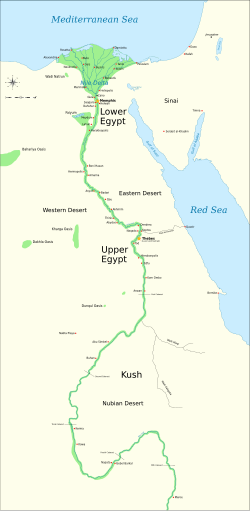
In Ancient Egypt, the Bronze Age began in the Protodynastic Period c. 3150 BC, marking the start of metal-based civilisation along the Nile.
3100 BC
% complete
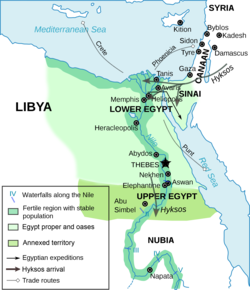
The archaic Early Bronze Age of Egypt, known as the Early Dynastic Period, immediately followed the unification of Lower and Upper Egypt c. 3100 BC under the first pharaohs.
Image source: Early Dynastic Period (Egypt)
3100 BC - 2686 BC
% complete
The Early Dynastic Period is generally taken to include the First and Second dynasties, lasting from the Protodynastic Period until c. 2686 BC, or the beginning of the Old Kingdom.
Image source: First Dynasty of Egypt
2600 BC
% complete
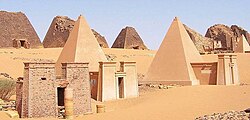
Egyptians introduced copper smelting to the Nubian city of Meroë in present-day Sudan c. 2600 BC, spreading metallurgy south along the Nile.
Image source: Meroë
2335 BC - 2154 BC
% complete
The Akkadian Empire (2335–2154 BC) became the dominant power in Mesopotamia, conquering large areas of the Levant and setting a model for later empires of the region.
Image source: Akkadian Empire
2300 BC
% complete
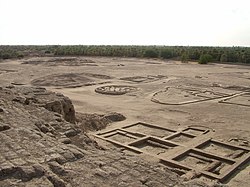
The Bronze Age in Nubia started as early as 2300 BC. A furnace for bronze casting found in Kerma has been dated to 2300–1900 BC.
Image source: Kerma culture
2181 BC - 2055 BC
% complete
The First Intermediate Period of Egypt, often described as a 'dark period' in ancient Egyptian history, spanned about 100 years after the end of the Old Kingdom from about 2181 to 2055 BC.
Image source: First Intermediate Period of Egypt
2055 BC - 1650 BC
% complete
The Middle Kingdom of Egypt spanned between 2055 and 1650 BC, a period of reunification and cultural flourishing in the Nile valley.
Image source: Middle Kingdom of Egypt
2000 BC - 1600 BC
% complete
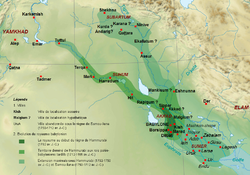
The Akkadians conquered large areas of the Levant and were followed by the Amorite kingdoms, c. 2000–1600 BC, which arose in Mari, Yamhad, Qatna, and Assyria.
Image source: Amorites
1971 BC - 1926 BC
% complete
The earliest-known contact of Ugarit with Egypt comes from a carnelian bead identified with the Middle Kingdom pharaoh Senusret I, whose reign is dated to 1971–1926 BC, providing the first exact dating of Ugaritic civilisation.
Image source: Ugarit
1894 BC
% complete
The Amorite dynasty established the city-state of Babylon in the 19th century BC. The earliest mention of Babylon as a small administrative town appears on a tablet from the reign of Sargon of Akkad in the 23rd century BC.
Image source: Babylon
1800 BC - 1600 BC
% complete
Over a century after its establishment, Babylon briefly took over the other city-states and formed the short-lived First Babylonian Empire during what is also called the Old Babylonian Period. By that time, the Sumerian language was no longer spoken but remained in religious use in Assyria and Babylonia until the 1st century AD.
Image source: Old Babylonian Empire
1800 BC
% complete
The Hittite Empire was established during the 18th century BC in Hattusa, northern Anatolia, becoming one of the great powers of the Late Bronze Age Near East.
Image source: Hittites
1800 BC - 1600 BC
% complete
Assyria, along with the Old Assyrian Empire (c. 1800–1600 BC), became a regional power under the Amorite king Shamshi-Adad I.
Image source: Assyria
1600 BC - 1300 BC
% complete
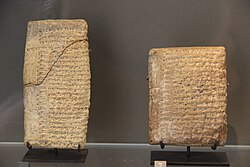
From the 16th to the 13th century BC, Ugarit remained in constant contact with Egypt and Cyprus (Alashiya). In the Amarna letters, messages from Ugarit c. 1350 BC written by Ammittamru I, Niqmaddu II, and his queen have been discovered.
1550 BC - 1069 BC
% complete
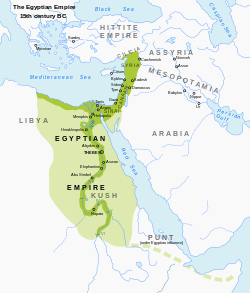
The New Kingdom of Egypt, also referred to as the Egyptian Empire, existed during the 16th–11th centuries BC. The later New Kingdom, comprising the Nineteenth and Twentieth dynasties (1292–1069 BC), is also known as the Ramesside period, after the eleven pharaohs who took the name of Ramesses.
Image source: New Kingdom of Egypt
1500 BC - 1300 BC
% complete
Mitanni was a loosely organised state in northern Syria and south-east Anatolia, emerging c. 1500–1300 BC. At the height of its power during the 14th century BC, Mitanni had outposts centred on its capital, Washukanni, located on the headwaters of the Khabur River.
Image source: Mitanni
1500 BC - 600 BC
% complete
The Israelites were an ancient Semitic-speaking people of the Ancient Near East who inhabited part of Canaan during the tribal and monarchic periods (15th–6th centuries BC). The name 'Israel' first appears c. 1209 BC on the Merneptah Stele raised by the Egyptian pharaoh Merneptah.
Image source: Israelites
1400 BC - 1300 BC
% complete
At its height in the 14th century BC, the Hittite Kingdom encompassed central Anatolia, southwestern Syria as far as Ugarit, and upper Mesopotamia. Around 1400 BC, the Hittites under Tudhaliya I defeated the Assuwa league, a confederation of states in western Anatolia.
1180 BC
% complete
After 1180 BC, amid general turmoil in the Levant conjectured to be associated with the sudden arrival of the Sea Peoples, the Hittite kingdom disintegrated into several independent 'Neo-Hittite' city-states, some of which survived into the 8th century BC.
Image source: Neo-Hittite states
3300 BC
% complete
The Bronze Age on the Indian subcontinent began c. 3300 BC with the beginning of the Indus Valley Civilization, one of the world's earliest urban cultures.
Image source: Indus Valley Civilisation
3000 BC - 2000 BC
% complete
Konar Sandal is associated with the hypothesized Jiroft culture, a 3rd-millennium BC culture postulated based on a collection of artefacts confiscated in 2001.
Image source: Jiroft culture
2500 BC - 2000 BC
% complete
The Kulli culture, similar to that of the Indus Valley Civilisation, was located in southern Balochistan (Gedrosia) c. 2500–2000 BC.
Image source: Kulli culture
2400 BC - 1600 BC
% complete
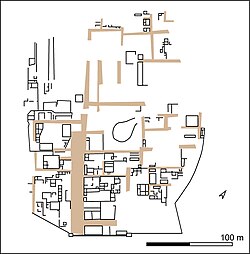
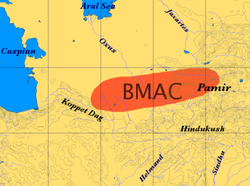
The Bactria–Margiana Archaeological Complex (BMAC), also known as the Oxus civilisation, was a Bronze Age civilisation in Central Asia dated c. 2400 – c. 1600 BC, located in present-day northern Afghanistan, eastern Turkmenistan, southern Uzbekistan and western Tajikistan, centred on the upper Amu Darya (Oxus River). Its sites were discovered and named by Soviet archaeologist Viktor Sarianidi in 1976.
Image source: Bactria–Margiana Archaeological Complex
2300 BC - 1700 BC
% complete
The Oxus civilization was a Bronze Age Central Asian culture dated c. 2300–1700 BC centred on the upper Amu Darya. The height of this urban development was reached in the Middle Bronze Age c. 2300 BC, corresponding to level V at Namazga-Depe.
2200 BC - 1750 BC
% complete
The Fatyanovo culture developed into the Abashevo culture (c. 2200–1850 BC) and the Sintashta culture (c. 2200–1750 BC). The Sintashta culture expanded further eastwards into central Asia becoming the Andronovo culture, while the Srubnaya culture (c. 1900–1200 BC) continued the use of chariots in eastern Europe.
Image source: Sintashta culture
2100 BC - 1700 BC
% complete
In Ban Chiang, Thailand, bronze artefacts have been discovered that date to 2100 BC. With a rough date range from the late 3rd millennium BC to the 1st millennium AD, this site has artefacts such as burial pottery (dated 2100–1700 BC) and fragments of bronze and copper-base bangles.
Image source: Ban Chiang
2000 BC - 771 BC
% complete
The United States National Gallery of Art defines the Chinese Bronze Age as c. 2000 – c. 771 BC, a period that begins with the Erlitou culture and ends abruptly with the disintegration of Western Zhou rule.
Image source: Erlitou culture
2000 BC
% complete
It is conjectured that changes in climate in Central Asia c. 2000 BC, and the ensuing ecological, economic, and political changes, triggered a rapid and massive migration westward into northeast Europe, eastward into China, and southward into Vietnam and Thailand across a frontier of some 4,000 mi (6,000 km).
1900 BC - 1400 BC
% complete
The Late Harappan culture (1900–1400 BC) overlapped the transition from the Bronze Age to the Iron Age on the Indian subcontinent; thus it is difficult to date this transition accurately.
1600 BC - 1046 BC
% complete
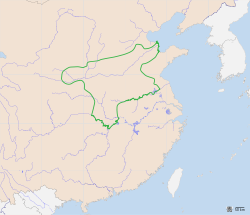
The 'Early Bronze Age' in China is sometimes taken to be coterminous with the reign of the Shang dynasty (16th–11th centuries BC), and the Later Bronze Age with the subsequent Zhou dynasty (11th–3rd centuries BC).
Image source: Shang dynasty
1046 BC - 256 BC
% complete
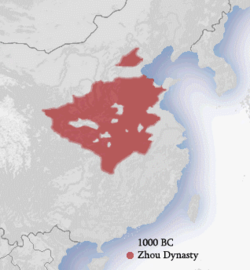
Iron use in China dates as early as the Zhou dynasty (c. 1046 – 256 BC), but remained minimal. Chinese literature authored during the 6th century BC attests to knowledge of iron smelting, yet bronze continues to occupy the seat of significance in the archaeological record for some time after this.
Image source: Zhou dynasty
1000 BC - 800 BC
% complete
On the Korean Peninsula, the Bronze Age began c. 1000–800 BC, marking the arrival of bronze metallurgy in northeast Asia beyond China.
Image source: History of Korea
1000 BC
% complete
Some scholars believe that copper-based metallurgy was disseminated from northwest and central China south and southwest via areas such as Guangdong and Yunnan and finally into southeast Asia c. 1000 BC.
Or browse the full history timeline directory, with more than 2,000 topics.
This Bronze Age timeline was generated with the help of AI, using information found on the internet.
We work hard to keep these timelines accurate, but mistakes do get through. If you spot one, email us at [email protected] and we'll fix it for future visitors.
Generate yours with AI or build it from scratch, for free.
Export your timeline, add your own events, edit or remove AI-generated events, and much more
No credit card required.
Cancel anytime.
Cancel anytime.
You can create an unlimited number of timelines with up to 10 events on each one, customize how they look, export them to PDF, PNG, PowerPoint, CSV, and Excel, and share them with a link. Paid plans raise the event limit and add features like spreadsheet imports and collaborators.
Yes. You can cancel your subscription from your account page at any time, and you will not be charged again. Your subscription stays active for the rest of the period you already paid for.
Yes. We will email you a reminder before the annual renewal, and we will also email you a receipt.
Yes. You can email us within 15 days of any payment, and we will issue you a full refund.
Check out our pricing docs or send us an email anytime: [email protected].