-
Use Cases
-
Resources
-
Pricing
The High Middle Ages was a period of European history from roughly 1000 to 1300 CE marked by population growth, agricultural expansion, the rise of towns and trade, the development of universities and Gothic architecture, and significant political developments such as the strengthening of monarchies in England and France and the Crusades to the Holy Land. More Less
950 - 1050
% complete
From the mid-10th to the mid-11th centuries, the Scandinavian kingdoms were unified and Christianized, resulting in an end of Viking raids and greater involvement in European politics.
Image source: Christianization of Scandinavia
960
% complete
In the mid-10th century Poland emerged as a duchy after Mieszko I, the ruler of the Polans, conquered the surrounding Lechitic tribes in the region, laying the foundations of the Polish state.
Image source: Mieszko I
1000
% complete
The Christian Kingdom of Hungary was established in 1000 under King Saint Stephen I, and was ruled by the Árpád dynasty for the following centuries. By 1000 it had become a recognized state in Central Europe, forming alliances with regional powers.
Image source: Kingdom of Hungary (1000–1301)
1025
% complete
In 1025, under the rule of Bolesław I the Brave, Poland became a kingdom, elevating its status among the Christian monarchies of Europe.
Image source: Bolesław I the Brave
1035
% complete
After Cnut's death in 1035, England and Norway were both lost from his North Sea empire, marking the fragmentation of Danish dominance over the region.
Image source: Cnut
1066
% complete
The Norman Conquest of 1066 resulted in a kingdom ruled by a Francophone nobility, transforming English society, language, and governance for centuries to come.
Image source: Norman Conquest
1085
% complete
A key geo-strategic development in the Iberian Peninsula was the Christian conquest of Toledo in 1085, an important step in the Reconquista against Muslim rule in Spain.
Image source: Siege of Toledo (1085)
1089 - 1125
% complete
During the successful reign of King David IV of Georgia (1089–1125), the Kingdom of Georgia grew in strength and expelled the Seljuk Empire from its lands, ushering in the Georgian Golden Age.
Image source: David IV
1102
% complete
The Kingdom of Hungary expanded to the Adriatic coast and entered a personal union with Croatia in 1102; through other vassal states, Hungary became a small empire controlling Southeast Europe and the Carpathian region.
Image source: Croatia in personal union with Hungary
1121
% complete
David's decisive victory at Didgori in 1121 against the Seljuk Turks, as a result of which Georgia recaptured its lost capital Tbilisi, marked the beginning of the Georgian Golden Age.
Image source: Battle of Didgori
1130
% complete
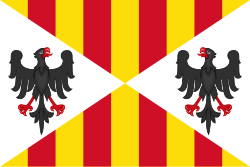
In 1130, Norman conquests in southern Italy, including Sicily and the southern third of the Italian Peninsula (including Benevento), were united as the Kingdom of Sicily.
Image source: Kingdom of Sicily
1169
% complete
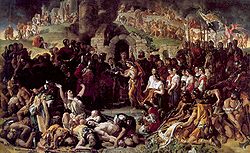
The Normans invaded Ireland in 1169 and soon established themselves in most of the country, although their stronghold remained the southeast.
Image source: Anglo-Norman invasion of Ireland
1176
% complete
Backed by Pope Alexander III, the 1167 alliance of northern Italian cities defeated the Holy Roman Empire at the Battle of Legnano in 1176 and won effective independence in the Peace of Constance (1183).
Image source: Battle of Legnano
1204 - 1261
% complete
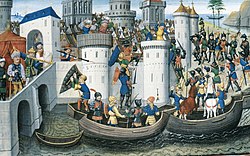
Despite occasional co-operation during the 12th century, in 1204 the Fourth Crusade treacherously captured Constantinople, founding the Latin Empire (1204–1261) and severely damaging Byzantine power.
Image source: Fourth Crusade
1205
% complete
The power of the Latin Empire was short-lived after the Crusader army was routed by Bulgarian Emperor Kaloyan at the Battle of Adrianople in 1205.
Image source: Battle of Adrianople (1205)
1210 - 1263
% complete
During the High Middle Ages Lithuania emerged as a Duchy of Lithuania in the early 13th century, briefly becoming the Kingdom of Lithuania from 1251 to 1263.
Image source: Grand Duchy of Lithuania
1215
% complete
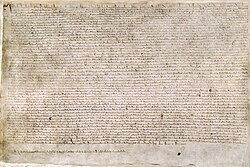
In 1215, after the loss of Normandy, King John signed the Magna Carta into law, limiting the power of English monarchs and establishing principles of rule of law.
Image source: Magna Carta
1261
% complete
The Byzantine Empire was reestablished in 1261 with the recapture of Constantinople from the Latins, though no longer a major power, it continued to falter through the 14th century with remnants until the mid-15th century.
Image source: Byzantine Empire under the Palaiologos dynasty
1266
% complete
Norwegian influence over Scotland declined, marked by the Treaty of Perth of 1266, which ceded the Hebrides and Man to Scotland.
Image source: Treaty of Perth
1282
% complete
Wales had remained largely under independent native princes until the death of Llywelyn ap Gruffydd in 1282, after which it fell under English rule.
Image source: Llywelyn ap Gruffudd
1046
% complete
In 1046 Holy Roman Emperor Henry III deposed Pope Gregory VI, who had purchased the papacy, along with two other claimants, beginning the process of freeing the papacy from the control of the local Roman nobility.
Image source: Henry III, Holy Roman Emperor
1054
% complete
After centuries of growing rivalry, Pope Leo IX's dynamic papacy precipitated the East–West Schism that split the Latin Church from the Eastern Orthodox Church of the Byzantine Empire in 1054.
Image source: East–West Schism
1059
% complete
Pope Nicholas II (r. 1059–1061), with advisor Cardinal Hildebrand of Sovana, issued In nomine Domini, which stripped the Holy Roman Emperor of his role in appointing popes and established the College of Cardinals as sole electors.
Image source: In nomine Domini
1073 - 1122
% complete
Pope Gregory VII (r. 1073–1085) worked to improve clergy morality and establish Church freedom from secular interference. By denying Emperor Henry IV (r. 1084–1105) the right to appoint church officials, he began the Investiture Controversy, a struggle for supremacy between Church and secular monarchies.
Image source: Investiture Controversy
1080
% complete
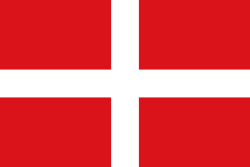
The Knights Hospitaller were originally a Christian organization founded in Jerusalem around 1080 to provide care for poor, sick, or injured pilgrims to the Holy Land.
Image source: Knights Hospitaller
1095 - 1291
% complete
In 1095 Byzantine emperor Alexios I Komnenos requested military support against the Seljuk Empire, and Urban II spread a message of holy war across Europe. The ensuing Crusades led to small Catholic states in the Levant lasting until Acre fell in 1291.
Image source: Crusades
1175 - 1184
% complete
Peter Waldo of Lyon gave up his wealth around 1175 after a religious experience and became a preacher. Denied preaching rights by the Third Lateran Council in 1179, he continued speaking freely until excommunicated in 1184.
Image source: Peter Waldo
1190 - 1410
% complete
The Teutonic Knights were a German religious order formed in 1190 at Acre to aid pilgrims. After Muslims captured the Holy Land they moved to Transylvania (1211) then invaded pagan Prussia; their power was broken at Grunwald in 1410.
Image source: Teutonic Order
1291
% complete
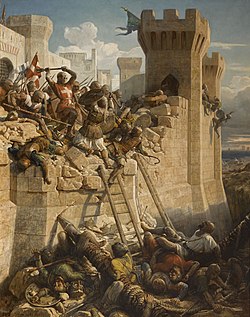
The Catholic states founded in the Levant during the Crusades lasted two centuries until their final outpost, Acre, fell to the Mamluk Sultanate in 1291.
Image source: Siege of Acre (1291)
1158 - 1159
% complete
The Hanseatic League, a federation of free cities advancing sea trade, was founded in the 12th century with Lübeck, founded in 1158–1159, later dominating the League.
Image source: Hanseatic League
1256
% complete
In 1256, Bologna's Liber Paradisus purchased the freedom of nearly 6,000 serfs, the first abolition of serfdom in Europe.
Image source: Liber Paradisus
1270 - 1295
% complete
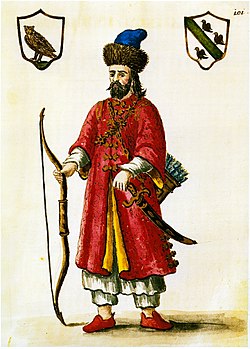
In the late 13th century, Venetian explorer Marco Polo became one of the first Europeans to travel the Silk Road to China, opening European eyes to East Asian civilizations.
Image source: Marco Polo
1202
% complete
Fibonacci introduced Hindu-Arabic numerals to Europe with his book Liber Abaci in 1202, revolutionizing European mathematics and commerce.
Image source: Liber Abaci
Or browse the full history timeline directory, with more than 2,000 topics.
This High Middle Ages timeline was generated with the help of AI, using information found on the internet.
We work hard to keep these timelines accurate, but mistakes do get through. If you spot one, email us at [email protected] and we'll fix it for future visitors.
Generate yours with AI or build it from scratch, for free.
Export your timeline, add your own events, edit or remove AI-generated events, and much more
No credit card required.
Cancel anytime.
Cancel anytime.
You can create an unlimited number of timelines with up to 10 events on each one, customize how they look, export them to PDF, PNG, PowerPoint, CSV, and Excel, and share them with a link. Paid plans raise the event limit and add features like spreadsheet imports and collaborators.
Yes. You can cancel your subscription from your account page at any time, and you will not be charged again. Your subscription stays active for the rest of the period you already paid for.
Yes. We will email you a reminder before the annual renewal, and we will also email you a receipt.
Yes. You can email us within 15 days of any payment, and we will issue you a full refund.
Check out our pricing docs or send us an email anytime: [email protected].